Panel proposes four-phase transition to state police
The Steering Committee on the Establishment of State Police has recommended a four-phase transition framework for the creation and rollout of state policing across Nigeria.
The proposal is contained in the committee’s report, sighted on Friday, which outlines a structured 60-month roadmap for implementation.
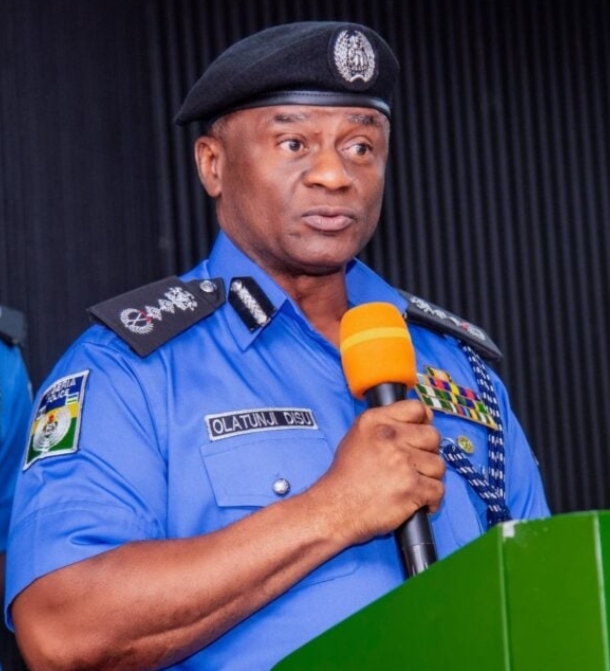
*Disu
Nathan Tamarapreye
The Steering Committee on the Establishment of State Police has recommended a four-phase transition framework for the creation and rollout of state policing across Nigeria.
The proposal is contained in the committee’s report, sighted on Friday, which outlines a structured 60-month roadmap for implementation.
The committee, inaugurated on March 4 by the Inspector-General of Police, Mr Olatunji Disu, is chaired by Prof. Olu Ogunsakin, Director-General of the National Institute of Police Studies. The eight-member panel was tasked with developing an operational framework for state policing within one month.
According to the report, the phased approach is designed to ensure a smooth transition from the current federal policing structure to a decentralised system capable of addressing growing security challenges.
The first phase, spanning months one to 12, will focus on legal processes, including amendments to Sections 213 and 215 of the 1999 Constitution, the enactment of a State Police Act by the National Assembly, and the passage of corresponding laws in all 36 states and the Federal Capital Territory.
Phase two (months 13 to 24) will involve voluntary transfer programmes, allowing federal police officers to move into state police services, alongside the commencement of recruitment and training of new personnel.
In phase three (months 25 to 42), state police formations will begin full operations, taking over local policing responsibilities, while the Federal Police Service withdraws to focus on national duties.
The final phase (months 43 to 60) will centre on consolidation, including the full reorganisation of the federal police structure and integration of systems nationwide.
The committee stressed that legal and constitutional reforms must precede all other steps, including the establishment of State Police Service Commissions and ombudsman offices in each state.
It also recommended building state police institutions from the ground up, including recruitment, training facilities, ICT infrastructure, forensic systems and community policing frameworks at the local government level.
To ensure standardisation, the report proposed the creation of a National Police Standards Board with oversight functions across six zonal offices.
The committee estimated the total cost of establishing state police services at between ₦589 billion and ₦813 billion over five years, noting that the investment cannot be accommodated within a shorter timeframe.
It also projected an additional ₦65 billion to ₦95 billion for national ICT systems, including a National Police Intelligence Portal, a centralised criminal records database and an upgraded Automated Fingerprint Identification System.
The report emphasised that all state police services must recruit and train new officers alongside receiving transferred personnel, with the first batch of recruits expected to begin training in phase two and deployment in phase three.
It further recommended a mandatory 40-hour continuous professional development programme for all officers.
On welfare, the committee underscored the need to protect the rights of serving officers, stating that no personnel should be dismissed involuntarily and that pensions and entitlements must be fully preserved.
The report concluded that a 60-month transition period represents the minimum realistic timeframe to restructure Nigeria’s policing architecture, allowing for the movement of over 273,000 officers, the establishment of 37 new police services, and the development of necessary legal, institutional and technological frameworks while maintaining public safety.