Osun poll: Police deploy 15,000 officers, 30 CPs
The Nigeria Police Force has deployed more than 15,000 personnel, 30 Commissioners of Police and a Deputy Inspector-General of Police to Osun State ahead of Saturday’s governorship election.
The Force Public Relations Officer, CSP Anietie Iniedu, disclosed this on Friday in Osogbo while briefing journalists on security arrangements for the poll.

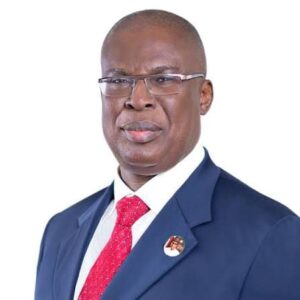
*IGP Olatunji-Disu
The Nigeria Police Force has deployed more than 15,000 personnel, 30 Commissioners of Police and a Deputy Inspector-General of Police to Osun State ahead of Saturday’s governorship election.
The Force Public Relations Officer, CSP Anietie Iniedu, disclosed this on Friday in Osogbo while briefing journalists on security arrangements for the poll.
Iniedu said the deployment, which began three weeks before the election, was designed to ensure adequate security across the state’s 30 local government areas.
He said each local government area would have a Police Mobile Force unit of about 60 personnel, coordinated by a Commissioner of Police, while a Deputy Commissioner of Police and a Mobile Police commander of Assistant Commissioner of Police rank would also be assigned to each area.
Two additional Mobile Police Force units have been deployed to the headquarters of the Independent National Electoral Commission in Osogbo.
The police have also deployed a helicopter and drone units for aerial and area surveillance before, during and immediately after the election.
Iniedu said the state would effectively be placed under a security lockdown from midnight on Saturday, with vehicular movement restricted to essential services, security personnel and voters travelling to cast their ballots.
“We will be locking down the state. We will not be allowing any vehicular movement apart from those on essential duty, security duties and those going to cast their franchise,” he said.
He urged parents to warn their children against electoral offences, including intimidation, stalking, vote-buying and ballot-box snatching, adding that a mobile court would be available to handle electoral offence cases.
Iniedu also disclosed that security operatives had recovered 34 illegal firearms in the state, although investigations into the seizures were continuing.
The police spokesman said the Army would also secure the state’s border routes as part of measures to prevent the movement of criminal elements into Osun during the election.
Meanwhile, the Independent National Electoral Commission has urged political parties and candidates to honour the peace accord they signed ahead of the poll and refrain from actions capable of triggering violence.
INEC said it had completed the deployment of non-sensitive materials to the local government areas, while sensitive materials would be moved from the Central Bank of Nigeria vaults to local government offices before being distributed to Registration Area Centres.
The commission said all 3,700 polling units in the state were expected to have election officials in place by 8am on election day, with voting scheduled to begin by 8.30am.
INEC also said it had tested its Bimodal Voter Accreditation System through a mock accreditation exercise and upgraded the devices for the election. Its backup BVAS devices have reportedly increased from about 600 to more than 1,300.
The commission said more than 2.3 million registered voters were eligible to participate in the election.
It disclosed that 1,906,390 Permanent Voter Cards had been collected, representing 81.50 per cent of the 2,339,233 registered voters in the state.
The remaining 426,842 PVCs, representing 18.50 per cent, have been deposited with the Central Bank of Nigeria, according to the commission.
INEC also said 6,101 voters who applied for replacement of damaged, defaced or lost PVCs had printed downloadable copies of their cards.
The commission urged voters to reject misinformation, remain peaceful and report electoral irregularities through the appropriate channels rather than confronting suspected offenders. It also warned that vote-buying remained a criminal offence under the Electoral Act and urged both voters and political actors to avoid any attempt to influence the election through cash or other inducements.