Floods expose need for Attah’s planning expertise
The devastating floods that recently inundated parts of Uyo and several communities across Akwa Ibom State have once again exposed critical weaknesses in urban planning, drainage infrastructure and environmental management. While the immediate priority is providing relief to affected residents and repairing damaged infrastructure, the disaster has also sparked a broader conversation about the future of development in one of Nigeria’s fastest-growing states.
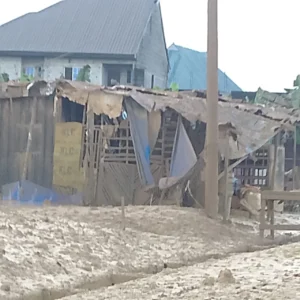
Homes were submerged, roads became impassable, businesses were forced to close, public facilities were disrupted, and thousands of residents struggled to move around as prolonged rainfall overwhelmed existing drainage systems. Entire neighbourhoods were inundated, underscoring the widening gap between the state’s rapid urban expansion and the infrastructure needed to support it.

*Attah
Dennis Udoma
The devastating floods that recently inundated parts of Uyo and several communities across Akwa Ibom State have once again exposed critical weaknesses in urban planning, drainage infrastructure and environmental management. While the immediate priority is providing relief to affected residents and repairing damaged infrastructure, the disaster has also sparked a broader conversation about the future of development in one of Nigeria’s fastest-growing states.
Homes were submerged, roads became impassable, businesses were forced to close, public facilities were disrupted, and thousands of residents struggled to move around as prolonged rainfall overwhelmed existing drainage systems. Entire neighbourhoods were inundated, underscoring the widening gap between the state’s rapid urban expansion and the infrastructure needed to support it.
The flooding was not solely the result of unusually heavy rainfall. It also highlighted the consequences of urban growth without continuous planning reviews and effective environmental management. As cities expand, natural waterways become constricted, wetlands disappear, drainage channels are blocked, and increasing areas of paved surfaces generate greater surface runoff, making floods more frequent and destructive.
Recognising the seriousness of the situation, Governor Umo Eno directed a review of the state’s drainage master plan and announced measures to prevent future disasters. These include redesigning aspects of urban development, strengthening environmental sanitation, establishing environmental brigades and improving drainage infrastructure in flood-prone communities.
These are necessary and commendable initiatives. However, they should mark the beginning of a broader review of Akwa Ibom’s long-term development strategy.
The floods present an opportunity to ask fundamental questions. Is the state’s original urban development blueprint still adequate for present-day realities? Have planning regulations kept pace with population growth? Are drainage systems expanding alongside new residential and commercial developments? Are natural flood channels sufficiently protected from encroachment?
Answering these questions requires not only technical studies but also institutional memory and a clear understanding of the principles that shaped the state’s physical development.
Against this backdrop, there is a compelling case for former governor Obong Victor Attah to serve in an advisory capacity as Akwa Ibom reviews its development strategy.
Such a proposal should not be viewed through a political lens but rather through the prism of professional competence, technical expertise and strategic planning.

Long before entering politics, Attah established himself as a respected architect, urban planner and development strategist. Educated in Nigeria, the United Kingdom and the United States, he specialised in architecture, advanced planning and public administration before founding Vatt Associates, where he led numerous architectural and development projects across Nigeria.
When he became governor in 1999, he brought that professional background into public service.
Rather than pursuing isolated infrastructure projects, his administration adopted an integrated approach to development. Roads formed part of a comprehensive urban plan, residential layouts accommodated future expansion, while environmental improvements, tree planting and beautification complemented physical infrastructure.
The transformation of Uyo during that period is widely regarded as one of Nigeria’s notable examples of planned urban renewal. The state capital evolved from a relatively quiet provincial town into one of the country’s best-planned cities, characterised by dual carriageways, landscaped medians, improved drainage systems, modern public buildings and organised residential districts.
More importantly, these developments were guided by a master plan rather than short-term political considerations.
Successive administrations have sustained many of those initiatives, contributing to Akwa Ibom’s reputation as one of Nigeria’s fastest-developing states. Yet development is never static.
Today, the state faces challenges that differ significantly from those of two decades ago. Population growth has accelerated, urban migration has intensified, new housing estates continue to emerge, and commercial and industrial expansion is placing increasing pressure on available land.
Climate change has compounded these challenges. Rainfall has become more intense and concentrated, while flooding now affects areas previously considered low risk. Addressing these realities requires more than routine drainage maintenance. It demands regular reviews of urban planning policies, stricter enforcement of development regulations and infrastructure capable of withstanding changing climatic conditions.
Unfortunately, several factors have weakened existing planning frameworks. In many areas, natural drainage channels have been narrowed or obstructed by buildings. Wetlands that once absorbed excess water have disappeared due to construction, while indiscriminate waste disposal and illegal developments along waterways have reduced the efficiency of drainage systems.
The recent floods therefore represent more than a seasonal environmental event. They demonstrate the need for infrastructure planning to evolve alongside urban growth.
Around the world, flood-prone cities increasingly combine engineering solutions with wetland conservation, digital flood mapping, climate adaptation and stricter land-use regulation. They also benefit from experienced professionals who understand both historical planning frameworks and contemporary environmental challenges.
Akwa Ibom can adopt a similar approach
This is where Attah’s institutional memory could prove particularly valuable. Having played a central role in designing much of the state’s early development framework, he possesses insights that extend beyond what technical documents alone can provide.
His understanding of drainage corridors, road alignments, future expansion plans and the environmental considerations that informed earlier planning decisions could complement the work of engineers, architects, environmental scientists and policymakers currently addressing the state’s flooding challenges.
An advisory role would not replace existing government institutions or professional agencies. Rather, it would provide strategic guidance, historical perspective and independent technical advice capable of strengthening long-term policy decisions.
Many governments routinely engage former leaders, retired public servants and accomplished professionals on advisory councils to preserve institutional knowledge and ensure continuity in development planning. Akwa Ibom should be no exception.
Governor Umo Eno has demonstrated responsiveness by visiting affected communities, ordering immediate interventions and committing to long-term drainage improvements. His administration has also intensified environmental sanitation and pledged stronger enforcement against activities that contribute to flooding.
These initiatives deserve broad public support
However, sustainable urban development requires collaboration. Government agencies, professional bodies, engineers, architects, environmental experts, academics, traditional institutions and community organisations all have vital roles to play.

The state must also strengthen development control. Building approvals should strictly comply with planning regulations, Environmental Impact Assessments should be rigorously enforced for major projects and developers who obstruct natural waterways should face appropriate sanctions. Existing drainage infrastructure must also be inspected and maintained regularly.
Public awareness is equally important. Residents must recognise that indiscriminate waste disposal, illegal structures and encroachment on drainage channels significantly increase flood risks. Building climate resilience is a shared responsibility that extends beyond government.
Technology should also become central to future planning. Modern cities increasingly rely on Geographic Information Systems (GIS), digital mapping, flood-risk modelling and real-time environmental monitoring to guide infrastructure development and disaster preparedness. Integrating these tools into Akwa Ibom’s planning processes would significantly strengthen resilience.
The recent floods have delivered a clear message. Equally strong investments must now match the state’s impressive physical development in environmental resilience and sustainable planning. Economic growth loses much of its value if homes, businesses and public infrastructure remain vulnerable to recurring floods.
Development should not be measured solely by the number of roads built or buildings erected. It should also be judged by how effectively communities are protected, the environment preserved and cities prepared for emerging challenges.
In that regard, Obong Victor Attah’s experience as an architect, planner and former governor represents a valuable reservoir of technical knowledge and institutional memory that could enrich ongoing efforts to strengthen Akwa Ibom’s development strategy.
Engaging him in an advisory capacity should therefore be viewed not as a political gesture or a return to the past, but as a pragmatic investment in expertise.
The recent floods should become more than another seasonal emergency. They should serve as a turning point in how Akwa Ibom plans, builds and protects its future. By combining contemporary innovation with the experience of those who helped shape its development, the state can emerge stronger, more resilient and better prepared for the challenges of climate change and rapid urbanisation.
Dennis Udoma is a journalist and public affairs commentator based in Uyo, Akwa Ibom State. The views expressed are solely those of the author.