Bassey calls for community-led energy future
Environmentalist and founder of the Health of Mother Earth Foundation, Dr Nnimmo Bassey, has urged a shift from extractive economic systems to community-led models that prioritise ecological protection, justice and shared stewardship.
Bassey made the call in Lagos while delivering an address at the School of Ecology programme on Commons, Care and Community Energy Sovereignty.
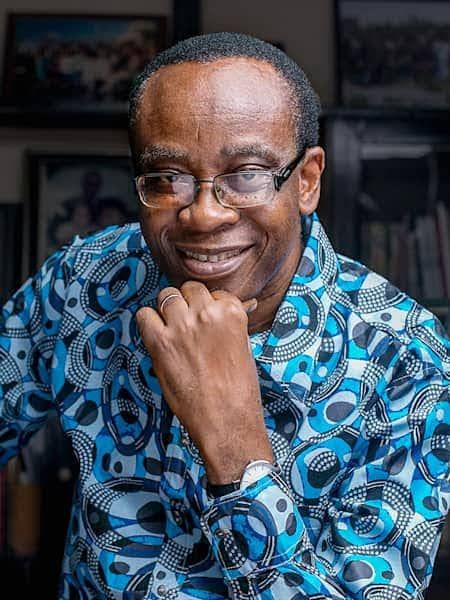
*Bassey
Nathan Tamarapreye, Yenagoa
Environmentalist and founder of the Health of Mother Earth Foundation, Dr Nnimmo Bassey, has urged a shift from extractive economic systems to community-led models that prioritise ecological protection, justice and shared stewardship.
Bassey made the call in Lagos while delivering an address at the School of Ecology programme on Commons, Care and Community Energy Sovereignty.
The recipient of the national honour of Member of the Order of the Federal Republic (MFR) said many of today’s socio-ecological crises stem from humanity’s growing disconnect from nature and the erosion of collective responsibility.
According to him, extractive systems have commodified nature, weakened communities and accelerated environmental degradation.
Bassey argued that Nigeria and several other African countries remain trapped in a colonial extractivist model that prioritises foreign exchange earnings over environmental protection and the wellbeing of local communities.
He said the model has driven the expansion of fossil fuel and critical mineral extraction through land acquisition, community displacement and the erosion of local control over natural resources.
The environmental advocate also criticised the privatisation of land and water, the concentration of decision-making powers and the treatment of nature primarily as a commercial asset.
He noted that recent gatherings across Africa, Southeast Asia and Latin America explored pathways to ecological justice, with discussions centred on the commons, care and community energy sovereignty.
According to Bassey, participants drew on indigenous knowledge, languages and cultural traditions to develop more equitable systems rooted in collective stewardship.
He stressed that a meaningful socio-ecological transition must go beyond changing energy sources and address deeper questions of ownership, power, justice and democratic participation.
“The question is who governs life, land and livelihoods, and on whose terms,” he said.
Bassey warned that without commons-based governance, the global energy transition could merely replace one form of resource extraction with another.
He questioned whether moving from oil wells to lithium mines, or from pipelines to large-scale renewable energy infrastructure, could truly be considered progress if communities remain excluded from decisions affecting their land and livelihoods.
“If communities remain displaced, if land remains enclosed, if water remains commodified, and if people remain excluded from decisions, can we truly call that a transition?” he asked.
Bassey maintained that the crisis extends beyond energy to humanity’s broader relationship with land, water, forests, minerals and communities.
He said the concept of the commons demonstrates how societies have historically relied on systems of sharing, care, collective governance and protection beyond conventional market structures.
“When these relationships are broken, something greater than ownership is lost. We lose memory, knowledge and the ability to decide together,” he said.
He warned that communities deprived of control over the conditions of their survival become increasingly vulnerable to destructive extraction.
Bassey therefore called for an energy transition that gives communities a decisive role in determining how energy is produced, distributed and consumed.
According to him, the transition should move society from extraction to regeneration, from enclosure to shared stewardship, and from concentrated power to democratic control.
He also advocated regenerative economies, agroecology, reparative justice and a more equitable distribution of economic and political power.
Bassey expressed optimism that cooperation and solidarity would ultimately replace competition and destructive extraction in building what he described as a post-extractivist future.