Udonsek urges parents to raise responsible citizens
Parents must look beyond raising wealthy or successful children and deliberately nurture responsible citizens who are committed to the wellbeing of their communities and country, the Diocesan Bishop of Akwa Ibom State, Christ Army Church (GBC), Rt. Rev. Dr David E. Udonsek, has said.
Udonsek made the call during a Sunday service at the City of King David Cathedral, Onna, Akwa Ibom State, where he preached on “Victory and Peace Over Our Land and Territories” with a sub-theme, “Keys to Bringing Healing Upon Our Land.”
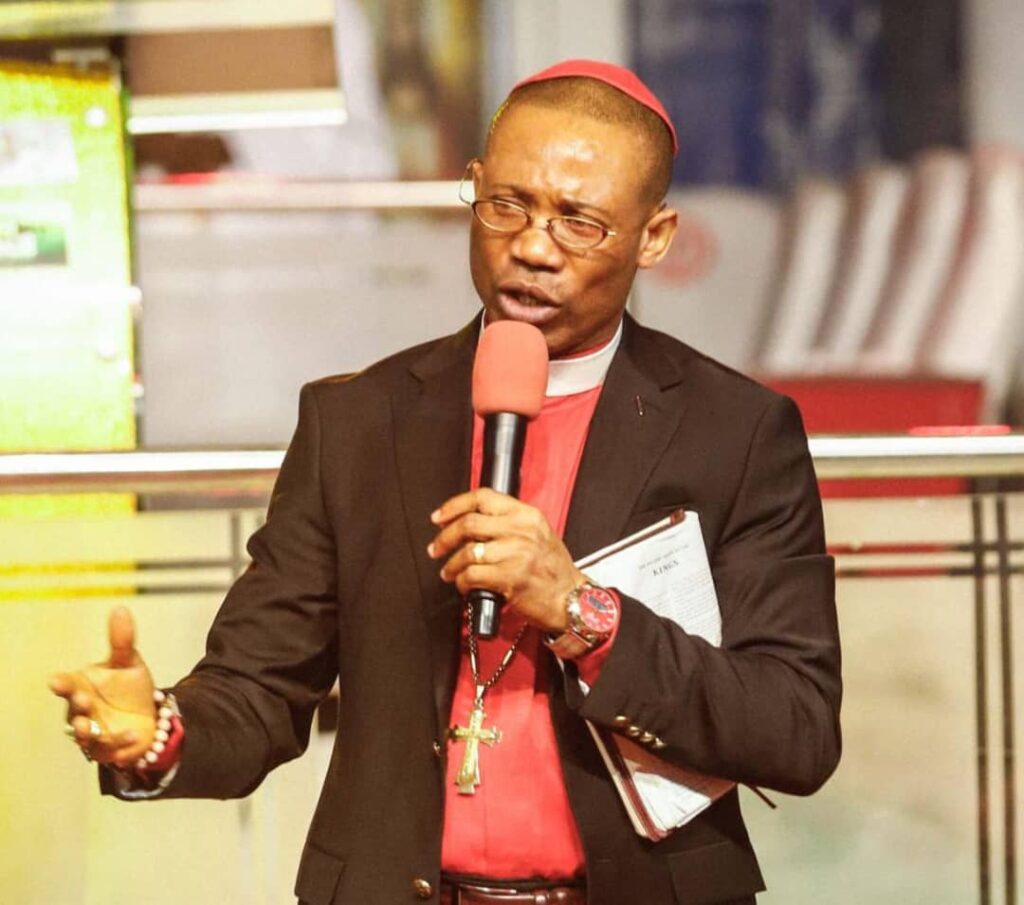
*Rt. Rev. Dr David E. Udonsek
Nathan Tamarapreye
Parents must look beyond raising wealthy or successful children and deliberately nurture responsible citizens who are committed to the wellbeing of their communities and country, the Diocesan Bishop of Akwa Ibom State, Christ Army Church (GBC), Rt. Rev. Dr David E. Udonsek, has said.
Udonsek made the call during a Sunday service at the City of King David Cathedral, Onna, Akwa Ibom State, where he preached on “Victory and Peace Over Our Land and Territories” with a sub-theme, “Keys to Bringing Healing Upon Our Land.”
The bishop argued that the quality of citizenship cultivated within families would ultimately influence the quality of leadership and governance in society.
He cautioned parents against placing excessive emphasis on money, personal comfort and individual achievement at the expense of patriotism, service and social responsibility.
“Raise citizens, not merely successful individuals; patriots, not merely wealthy people; and servants of society, not owners of society,” he said.
According to him, Nigeria needs citizens who are willing to confront social problems rather than remain indifferent to difficulties affecting their communities.
He described responsible citizens as “watchmen” who must speak up when they see injustice, hardship or danger, stressing that leadership should be regarded as a responsibility to serve rather than an avenue for personal gain.
Udonsek also challenged political leaders to be deliberate about the people they appoint to positions of authority. He advised them to choose individuals who understand and share their vision instead of allowing sentiment, favouritism or personal relationships to determine appointments.
Drawing from the biblical account of the healing of the waters of Jericho in 2 Kings 2:19-20, the bishop said the first step towards solving a problem was acknowledging its existence and seeking appropriate intervention.
He also referred to 2 Chronicles 7:14, which he said underscored humility, prayer, repentance and a return to God as essential elements in the restoration of a troubled society.
Another requirement for healing the land, he said, was recognising and listening to people of wisdom and substance within the community.
Udonsek noted that the people of Jericho recognised Elisha’s prophetic authority and approached him for help but regretted that modern society sometimes marginalises individuals capable of offering sound counsel while looking outside their communities for solutions.
He urged leaders to cultivate humility and remain open to wise advice, warning that even a sound vision could fail when those in authority refuse to listen.
Quoting Proverbs 11:14, he said, “Where there is no counsel, the people fall; but in the multitude of counsellors there is safety.”
The bishop further identified unity as indispensable to societal renewal, particularly among Christian leaders and Nigerians generally.
He urged citizens to put aside unnecessary divisions, personal ambitions and narrow interests and instead identify common problems, seek solutions collectively and support one another.
“Division weakens us, but unity gives us strength to confront challenges that would be impossible for individuals to overcome alone,” he said.
Udonsek clarified that unity did not mean uniformity but required people with different backgrounds and perspectives to recognise their shared interests and work towards a common purpose.
He therefore called on families to become training grounds for responsible citizenship, leaders to seek wisdom and citizens to remain alert to the needs of their communities.
The bishop expressed optimism that Nigeria could overcome many of its difficulties if citizens embraced their responsibilities, pursued unity and returned to the values of faith, humility and service.
Quoting 2 Kings 2:22, he said: “The waters were healed unto this day,” stressing that the condition of a troubled society was not beyond restoration.