HOMEF demands cleanup of abandoned Akwa Ibom oil wells
The Health of Mother Earth Foundation (HOMEF) has called for the immediate decommissioning of abandoned oil wells and restoration of polluted ecosystems in communities across Ikono and Ibiono Ibom Local Government Areas of Akwa Ibom State.
HOMEF made the demand at a capacity-sharing dialogue organised under its Fossil Politics project in Ikot Enua, Ikono LGA, where residents, traditional rulers, women and youths from eight affected communities detailed decades of environmental degradation, livelihood losses and alleged neglect linked to abandoned oil infrastructure.
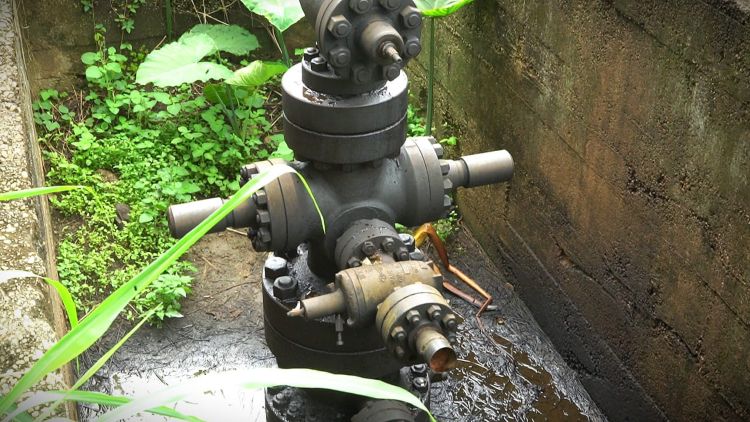
Abandoned oil facility
Nathan Tamarapreye, Yenagoa
The Health of Mother Earth Foundation (HOMEF) has called for the immediate decommissioning of abandoned oil wells and restoration of polluted ecosystems in communities across Ikono and Ibiono Ibom Local Government Areas of Akwa Ibom State.
HOMEF made the demand at a capacity-sharing dialogue organised under its Fossil Politics project in Ikot Enua, Ikono LGA, where residents, traditional rulers, women and youths from eight affected communities detailed decades of environmental degradation, livelihood losses and alleged neglect linked to abandoned oil infrastructure.
The organisation urged the Federal Government, Shell Nigeria, regulatory agencies and the Akwa Ibom State Government to assess and remove the abandoned facilities, clean up affected areas and compensate communities whose livelihoods have been damaged.
The oil wells were reportedly drilled and capped by Shell in the 1950s after being deemed commercially unviable. Although commercial oil production is no longer taking place in the affected areas, residents said the abandoned infrastructure continues to pose environmental, economic and security challenges.
Community members reported declining crop yields, destruction of economic trees, polluted streams, reduced fish and snail populations, damaged property and loss of traditional livelihoods.
At Ikot Enua, Chief Felix Vincent Udoh said oil palm seedlings were dying and agricultural productivity had fallen, while some species once common in the area had disappeared.
He also raised security concerns around the abandoned wells, alleging that armed men suspected to be militants had been visiting the facilities to steal equipment.
Udoh said Ikot Enua had secured judgments against Shell at the High Court and Court of Appeal in 2013, but alleged that the company had yet to comply with the decisions more than 13 years later.
In Uyo Afaha Nkan, Barrister Trust Udoh said oil pollution had contaminated community water sources and made farming increasingly difficult.
“We can’t plant in my farm anymore,” he said, calling for the removal of the abandoned oil installation to enable residents to regain access to their farmlands.
Residents of Adara Abom, Ikot Idaha, Edem Udua, Ediene Atai, Ntan Mbat and Nkara Obio also reported declining fishing activities, destruction of economic trees, poor crop yields, polluted streams and the rapid deterioration of corrugated roofing sheets.
HOMEF Executive Director, Dr Nnimmo Bassey, said the situation illustrated the long-term environmental cost of an extractive system in which communities continued to bear the consequences after the commercial value of resources had been exhausted.
“The money needed to clean up pollution in the Niger Delta is more than the money the oil companies have generated. Abandonment cannot be the final stage of extraction,” Bassey said.
He said companies and government agencies had a continuing responsibility to restore communities affected by petroleum activities.
“The wells may have been abandoned, but responsibility cannot be abandoned. The land must be restored, the people must be heard, and the cycle of extractive harm must end,” he said.
Bassey said the experiences of communities in Ikono and Ibiono Ibom underscored the need to put environmental restoration and community rights at the centre of decisions involving petroleum infrastructure.
He argued that decades of oil exploration had not translated into sustainable development for many oil-producing communities.
“No host community in Nigeria has developed from the mere discovery or exploration of oil on its land,” Bassey said, citing communities including Bille, Ogoniland, Nembe, Ayetoro, Ibeno and Obodo as examples of areas that have faced pollution, livelihood losses, inadequate infrastructure and prolonged struggles for environmental justice.
He said the response to abandoned oil wells should focus on decommissioning hazardous infrastructure, cleaning up pollution, restoring damaged ecosystems, compensating affected communities and supporting sustainable livelihoods.
HOMEF therefore called on Shell, the Federal Government, regulatory agencies and the Akwa Ibom State Government to ensure compliance with the 2013 Court of Appeal judgment in case number CA/C/70/2011 and address outstanding environmental and other issues linked to the abandoned Ikono 1 oil well.
It also demanded comprehensive assessments and decommissioning of abandoned oil wells and associated hazardous infrastructure across affected communities in Ikono and Ibiono Ibom.
The organisation called for the cleanup and ecological restoration of polluted farmlands, streams, wetlands and other affected ecosystems, as well as compensation for individuals and communities who had lost farmland, crops, economic trees, fishing grounds, property and other sources of livelihood.
HOMEF further urged authorities to investigate reported health concerns, provide appropriate healthcare and environmental health assessments, and establish long-term monitoring programmes for affected communities.
It called for meaningful community participation in decisions on environmental assessments, remediation and restoration, while urging authorities and other stakeholders to support non-extractive livelihoods, including sustainable farming, fishing, ecological restoration and other community-led economic activities.
HOMEF said communities in Ikono and Ibiono Ibom deserved to have their lands and waterways restored, their rights respected and their livelihoods strengthened.
It maintained that declaring an oil well commercially unviable must not become a justification for abandoning environmental responsibility or leaving communities to bear the consequences of past extraction.