FG defends $5bn Abu Dhabi loan, rejects spending disclosure
The Federal Government has refused to publish a detailed breakdown of how it intends to spend money drawn from its controversial $5bn financing arrangement with First Abu Dhabi Bank, insisting that the facility was lawfully approved and designed primarily to reduce the cost of existing debt.
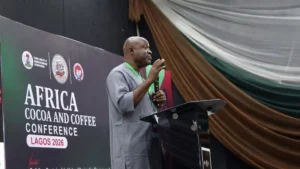
Minister of Finance and Coordinating Minister of the Economy, Taiwo Oyedele, made the position clear on Wednesday at a media briefing in Abuja, pushing back against growing demands for greater transparency over the transaction.

Etim Ekpimah
The Federal Government has refused to publish a detailed breakdown of how it intends to spend money drawn from its controversial $5bn financing arrangement with First Abu Dhabi Bank, insisting that the facility was lawfully approved and designed primarily to reduce the cost of existing debt.
Minister of Finance and Coordinating Minister of the Economy, Taiwo Oyedele, made the position clear on Wednesday at a media briefing in Abuja, pushing back against growing demands for greater transparency over the transaction.
Nigeria has so far drawn about $1.5bn from the $5bn Total Return Swap facility, the first tranche of an arrangement that has attracted scrutiny from the International Monetary Fund and Fitch Ratings over its structure, transparency and potential implications for sovereign debt.
Oyedele said the government had no reason to treat the Abu Dhabi facility differently from other forms of borrowing.
“We will not publish how we are spending it. We will publish how we spend government money. There’s nothing special about that loan,” he said.
He argued that the transaction had already undergone public scrutiny because it was approved by the National Assembly on March 31, 2026, after receiving approval from the Federal Executive Council.
“The loan was approved not only by FEC, it was taken to National Assembly,” Oyedele said, questioning why critics were demanding a level of disclosure that had not been sought for other government borrowing arrangements.
He cited World Bank loans, Eurobonds and Sukuk as examples of other financing instruments whose proceeds were not subjected to similar demands for transaction-specific spending disclosures.
The minister also rejected suggestions that the facility was being accessed recklessly. He said the government was drawing the funds in phases to avoid paying financing costs on money that had not yet been deployed.
“We’re assessing it in phases. You don’t want to take all the money at once because if you don’t spend it at once, you incur cost on the extra amount you’ve taken,” he said.
The financing, he explained, differs from conventional fixed-rate borrowing because its interest rate is flexible. That structure means Nigeria could pay more if global rates rise but benefit if borrowing costs fall.
Oyedele said the arrangement was intended to refinance more expensive existing obligations and ultimately lower the government’s overall borrowing costs.
He pointed to Nigeria’s existing Eurobonds, some of which were issued at double-digit coupon rates, arguing that the country could not take advantage of falling market yields on those fixed-rate instruments.
“This First Abu Dhabi Bank transaction is flexible rates. It means if rates go up, we pay more. If rates come down, we benefit more,” he said.
According to the minister, the “all-in” cost of the Abu Dhabi facility is lower than the cost of Nigeria’s existing debt portfolio.
The arrangement, however, comes with significant collateral requirements. Nigeria is expected to pledge securities worth about 133 per cent of the amount drawn under the facility.
The structure has prompted concerns from international institutions. The IMF has warned that derivative-based financing arrangements such as total return swaps can be difficult to track and value in real time, potentially making a government’s financial obligations less transparent.
Fitch Ratings has similarly cautioned that the $5bn arrangement could heighten sovereign debt risks and complicate public debt reporting.
Oyedele maintained that the government had carefully assessed the risks before proceeding and dismissed suggestions that the transaction was concluded outside established procedures.
He nevertheless said the Ministry of Finance and the Debt Management Office would publish frequently asked questions on the facility to address concerns and explain its workings.
“In the next few days, you will see on the website both the Ministry of Finance and DMO the frequently asked questions about this particular debt or bond,” he said.
The minister said the government’s decision to draw the facility gradually was part of a broader strategy to manage borrowing costs rather than an attempt to obscure its use.
For now, however, the government’s position remains that while it will account for public expenditure generally, it will not release a separate spending blueprint for the funds obtained through the First Abu Dhabi Bank facility.