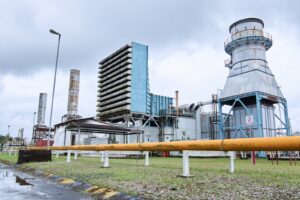
Black sand boom threatens Unyenge’s survival
The promise of economic prosperity from black sand mining is rapidly turning into a source of anxiety in Unyenge, a historic coastal community in Mbo Local Government Area of Akwa Ibom State, where residents fear that unchecked mineral extraction could inflict irreversible environmental damage while yielding little benefit to the people whose land is being exploited.
For decades, Unyenge, one of the oldest coastal settlements in Nigeria’s Niger Delta, has borne the environmental burden of oil exploration with little to show in terms of development. Despite the vast wealth extracted from its surrounding waters, the community continues to grapple with poor infrastructure, widespread poverty and decades of environmental neglect.
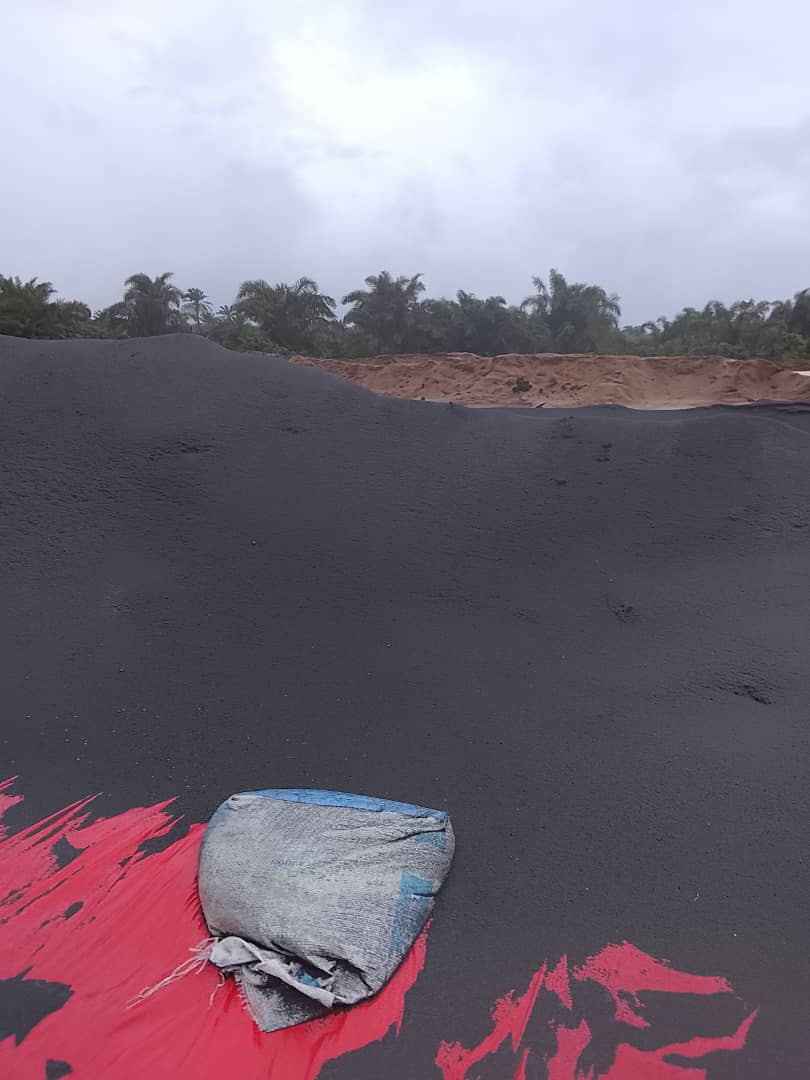
*Mined black sand
Foreign demand for black sand is fuelling unregulated mining in Akwa Ibom’s Unyenge community, raising fears of environmental devastation, disappearing livelihoods and weak regulatory oversight, writes our Investigative Correspondent
The promise of economic prosperity from black sand mining is rapidly turning into a source of anxiety in Unyenge, a historic coastal community in Mbo Local Government Area of Akwa Ibom State, where residents fear that unchecked mineral extraction could inflict irreversible environmental damage while yielding little benefit to the people whose land is being exploited.
For decades, Unyenge, one of the oldest coastal settlements in Nigeria’s Niger Delta, has borne the environmental burden of oil exploration with little to show in terms of development. Despite the vast wealth extracted from its surrounding waters, the community continues to grapple with poor infrastructure, widespread poverty and decades of environmental neglect.
The community has no tarred roads, no public electricity supply, limited access to clean drinking water and no vocational training centres. Residents say the only notable public institution is a community secondary school sustained largely through contributions from parents who pay the salaries of volunteer teachers.
Against this backdrop, the discovery and commercial exploitation of black sand deposits appeared, at first glance, to offer a fresh opportunity for economic growth. Instead, community members say the mining activities have introduced another environmental threat, one that is unfolding with little transparency or regulatory oversight.
Concerns over secretive operations
According to residents, heavy earth-moving equipment began arriving in the community after a local intermediary reportedly facilitated the entry of a Chinese-owned mining company to exploit the area’s rich black sand deposits.
Community leaders allege that there was no clear agreement outlining the operational boundaries, environmental safeguards or expected benefits for residents before mining commenced.
The miners are said to have excavated large sections of land on both sides of an untarred community road, while several freshwater channels that naturally drain into nearby rivers and eventually the Atlantic Ocean have reportedly been blocked or altered.
A community chief, Mr Asuquo Ekong, questioned both the transparency of the operation and the benefits accruing to the host community.
According to him, residents remain largely unaware of the terms under which the company is operating or what long-term gains the community stands to receive.
He also expressed concern over whether the company had secured all the necessary approvals from the appropriate regulatory authorities.
“They arrived with machines under the cover of a local political figure, and since then they have treated our land like an unregulated gold mine,” Ekong said.
“If a catastrophic environmental disaster or severe flooding occurs tomorrow, this ghost company could simply pack up and leave us to deal with the consequences.”
Ekong identified the operator as Shimao Mining Investment Nigeria Limited, alleging that the mining activities are benefiting only a few individuals while exposing the wider community to serious environmental risks.
“The little money some people receive from the company cannot transform the lives of our people,” he said.
“The person who brought these operators into our community failed to consider the long-term consequences. We are sacrificing our environment without knowing what the future holds.”
He continued: “If everything they are doing is legitimate, why are the operations conducted with so much secrecy? If a landslide or any environmental disaster occurs, who will take responsibility? No community should allow a company to operate without a clear and transparent agreement.”
Residents also alleged that access to the mining sites is tightly controlled by private security personnel who reportedly prevent non-indigenes from entering.
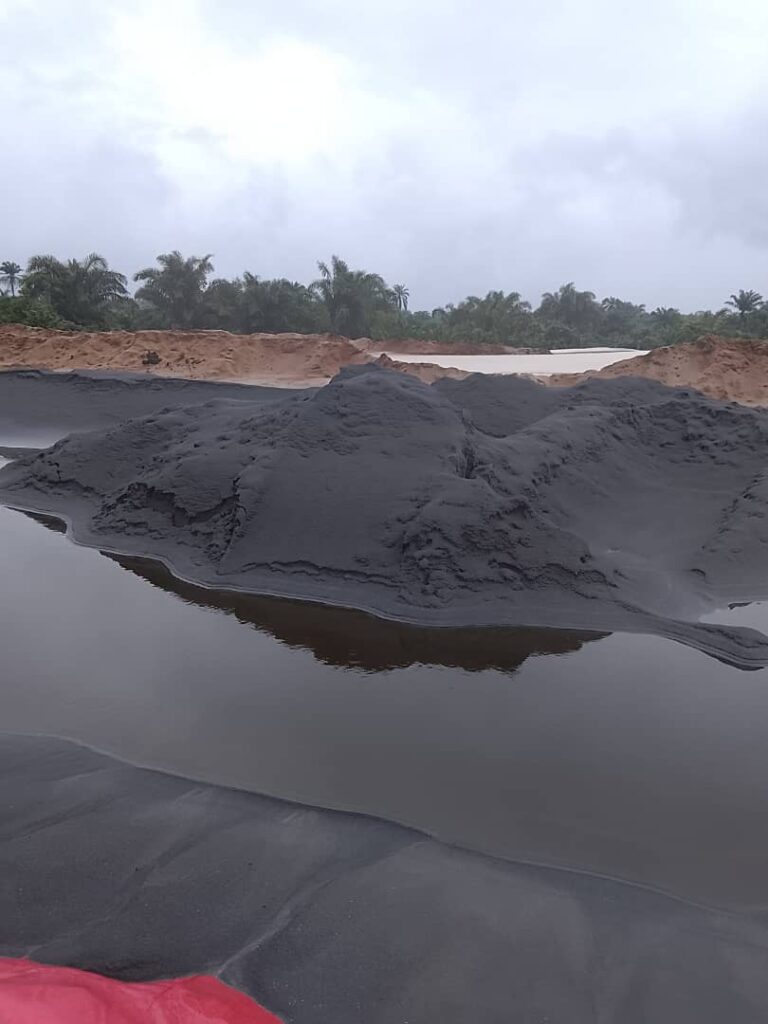
Unlike multinational oil companies, which typically operate through registered local subsidiaries and maintain formal engagement with host communities, residents say little is known about the mining company’s ownership, regulatory compliance or environmental responsibilities.
Why black sand is attracting global interest
The growing interest in Unyenge’s coastline is driven by the high commercial value of black sand, a heavy mineral deposit rich in ilmenite, one of the world’s most important sources of titanium.
Although it resembles ordinary beach sand, ilmenite contains titanium dioxide, an industrial mineral used extensively in manufacturing because of its exceptional brightness, durability and resistance to ultraviolet radiation.
Titanium dioxide is widely used in paints, industrial coatings, plastics, printing inks, paper, cosmetics and many household products.
Beyond pigments, ilmenite serves as the principal raw material for producing titanium metal, a high-performance material valued for its strength, low weight and resistance to corrosion.
Titanium has become indispensable in the aerospace and defence industries, where it is used in aircraft engines, military equipment and spacecraft components. It is equally important in medicine, forming the basis of surgical instruments, dental implants and orthopaedic replacements because of its compatibility with the human body.
The automotive industry is also increasing its use of titanium alloys in lightweight vehicle structures and battery systems as manufacturers seek to improve the efficiency of electric vehicles.
In heavy engineering, ilmenite is used in welding electrodes and in the manufacture of specialised ceramics and radiation-shielding materials.
The expanding global demand for these industrial materials has significantly increased interest in coastal black sand deposits across many developing countries, including Nigeria.
Opportunity overshadowed by environmental fears
Experts say that if properly regulated, black sand mining could generate employment, stimulate local economic development and diversify government revenue beyond crude oil.
However, environmental specialists warn that poorly regulated mining can permanently damage fragile coastal ecosystems and undermine the livelihoods of host communities.
Unlike ordinary sand excavation, black sand mining removes dense mineral deposits that help stabilise coastlines against erosion.
Once these protective layers are stripped away, coastal or mangrove communities become increasingly vulnerable to shoreline retreat, flooding and storm surges.
With climate change already contributing to rising sea levels and coastal erosion across the Niger Delta, scientists warn that uncontrolled extraction could accelerate environmental degradation.
The destruction extends beyond the shoreline
Mining operations frequently disturb mangrove forests, which provide critical breeding grounds for fish, crabs and other aquatic species while serving as natural buffers against coastal erosion.
The excavation process also increases water turbidity by releasing fine sediments into rivers and creeks, reducing water quality and disrupting fish breeding habitats.
For communities such as Unyenge, where fishing remains the principal source of income and food security, any significant decline in fish stocks could have devastating economic and social consequences.

“The water has turned a murky, unnatural grey, and the fish are disappearing from our nets,” said Mr Edet Asuquo, an elder in the local fishing cooperative.
“We survived years of oil pollution, but this sand dredging is blocking the creeks completely. It is cutting off our means of survival.”
Government promises investigation
Responding to the concerns raised by residents, Akwa Ibom State Commissioner for Environment, Mr Nsikak Ekong, said the ministry does not know such a company exists in the state.
He assured that government officials would inspect the mining site.
“We will mobilise and visit the site as soon as possible,” the commissioner said.
Residents hope the visit will establish whether the company possesses the required mining licences, environmental permits and approvals from relevant federal and state agencies.
Calls for stronger regulation
The situation in Unyenge reflects wider concerns across Nigeria’s coastal states, where communities have increasingly raised alarm over illegal or poorly regulated solid mineral extraction.
Environmental advocates argue that rather than prohibiting mining outright, governments should strengthen enforcement of existing environmental and mining laws.
They recommend mandatory Environmental Impact Assessments before mining begins, regular environmental monitoring by independent experts, transparent engagement with host communities and legally enforceable land restoration and mangrove reforestation programmes after mining activities end.
They also urge federal and state regulators to increase their presence in remote coastal communities where illegal mining operations often flourish beyond effective government supervision.
An uncertain future
For Unyenge, the black sand beneath its beaches represents both an opportunity and a threat.
If managed responsibly, the resource could attract investment, create jobs and contribute to local development.
But residents fear that without transparency, effective regulation and meaningful community participation, the short-term profits from mineral extraction will come at the cost of destroyed ecosystems, shrinking coastlines and disappearing livelihoods.
Having already endured decades of environmental degradation from oil exploration, many residents say they cannot afford another cycle of resource exploitation that enriches outsiders while leaving the host community to bear the consequences.
For the people of Unyenge, the debate over black sand mining is about far more than the value of an industrial mineral. It is about safeguarding their environment, protecting the waters that sustain their livelihoods and ensuring that the natural wealth beneath their land does not become the source of yet another environmental tragedy.