Akwa Ibom community protests bridge collapse, oil firms’ neglect
Hundreds of Unyenge indigenes in Mbo Local Government Area of Akwa Ibom State have staged a massive, peaceful protest on Thursday against oil exploration and production companies operating in their ancestral homeland, citing decades of alleged neglect, systemic marginalisation, severe environmental degradation and a crippling lack of basic infrastructure.
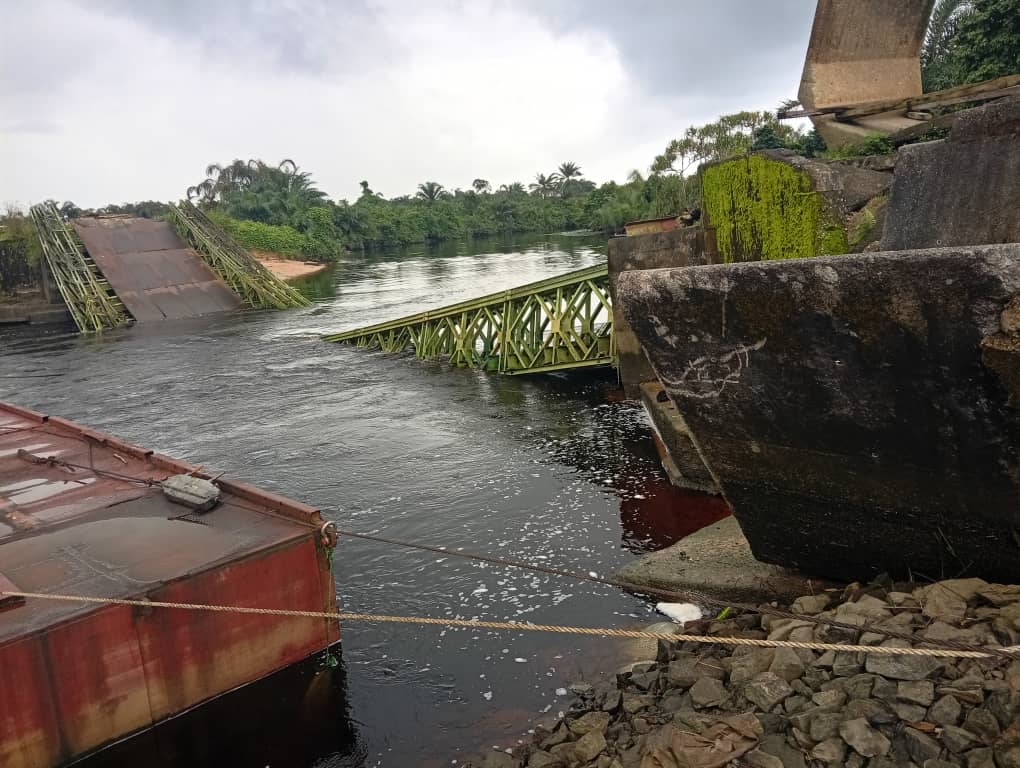
The immediate trigger for the demonstration was the catastrophic collapse of the community’s only access bridge on 15 October 2025.
Etim Ekpimah
Hundreds of Unyenge indigenes in Mbo Local Government Area of Akwa Ibom State have staged a massive, peaceful protest on Thursday against oil exploration and production companies operating in their ancestral homeland, citing decades of alleged neglect, systemic marginalisation, severe environmental degradation and a crippling lack of basic infrastructure.
The immediate trigger for the demonstration was the catastrophic collapse of the community’s only access bridge on 15 October 2025.
According to local sources, the structure collapsed under the weight of a heavy-duty truck conveying industrial equipment for one of the oil firms operating in the area.
The loss of the bridge brought economic activity in the community to an abrupt halt, particularly lumbering, which remains the mainstay of the local economy and the primary occupation of most households.
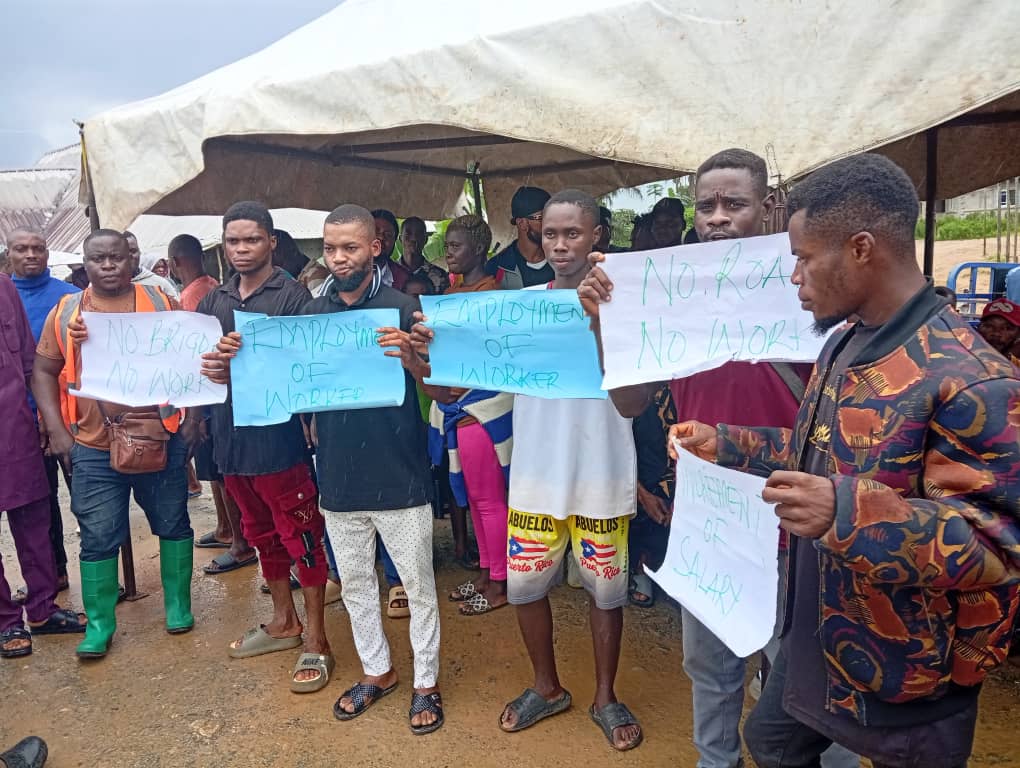
Frustrated by years of unfulfilled assurances and deteriorating living conditions, protesters, including youth groups, women leaders and community elders, gathered at the riverbank in the early hours of Thursday, 30 July 2026, carrying placards and chanting solidarity songs.
The crowd vowed to occupy the site indefinitely until executives of the oil companies formally address their long-standing demands.
Inscriptions on the placards read: “No bridge, no work,” “Employment for our youths now,” and “No road, no work,” among others. The protesters specifically named Savannah Energy Nigeria Limited, Tulcan Energy Resources Limited, Shimao and Jeosco, urging the firms to act without further delay.
Addressing the protesters and journalists at the scene, Chief Godwin Matthew, who spoke on behalf of the Unyenge group of villages, accused Savannah Energy of consistently reneging on its commitments to its host community. He said community representatives had engaged the company in dialogue for over 17 years over the provision of essential amenities, but had been met with indifference.
“For over 17 years since Savannah Energy commenced operations in our community, we have not been provided with a functional access road,” Chief Matthew said. “Regarding the bridge, we pleaded with them repeatedly and dispatched numerous official letters, but every single effort has proved abortive.”
He also decried the poor treatment of indigenous workers engaged by the firms and their subcontractors operating in the area.
“Our youths have been working with them and other subcontractors for years, yet not one has been converted to permanent staff. There is no hospital and no pipe-borne water, and that is why we are gathered here today for this peaceful demonstration. We intend to remain at this site until the end of the year if necessary. Nobody will leave until our plight receives due attention,” he warned.
The community leader expressed bitter disappointment over how the oil firms responded to the structural failure. Rather than commencing immediate reconstruction, he alleged, the companies simply rerouted their operational logistics through Esit Eket and Ibeno to access their facilities, abandoning the host community to its fate.
“When the bridge collapsed last year, the company explicitly promised to rebuild it by December, but it has completely failed to fulfil that pledge,” he added. “They now use an exclusive pontoon to cross the river to their operational base, but community members are strictly barred from using it. As a result, our people are forced to travel by commercial boats, paying about N1,500 every time they need to cross.”
Corroborating his position, the President of the Unyenge Youth Council, Undung Eyo, Unyenge, Mr Joseph Timothy, accused the operating companies of entrenched marginalisation across several core areas of development. He listed the absence of motorable roads, poor conditions of service for local workers, a lack of job opportunities for qualified youths, and the failure to reconstruct the collapsed bridge as non-negotiable issues that must be resolved before normal operations can resume.
“We have been patient. We have written letters, held meetings, and followed due process. But these companies have taken our peaceful disposition for granted. We cannot continue to host multi-billion-naira investments while our people live without basic amenities. No road, no bridge, no work,” Timothy declared.
On her part, women leader Mrs Nkoyo Etim raised fresh concerns over public health and environmental degradation linked to ongoing industrial activities in the area. She alleged that persistent gas flaring and uncontained oil pollution had severely contaminated local freshwater sources and drastically reduced agricultural output, worsening food insecurity and poverty.
“We are gathered here today to condemn what we consider the deeply unfair treatment of Unyenge by these corporate entities,” Mrs Etim said. “We lack a medical centre, potable drinking water, standard roads, and even a functional market space. Many of our residents are suffering from respiratory illnesses, while oil pollution has ruined our drinking water and reduced farm yields.”
Mrs Etim also alleged the systematic exclusion of women from economic opportunities within the companies’ supply chain. She noted that women previously engaged in vegetation clearing and other menial jobs around the companies’ temporary sites had been disengaged without replacement or explanation.
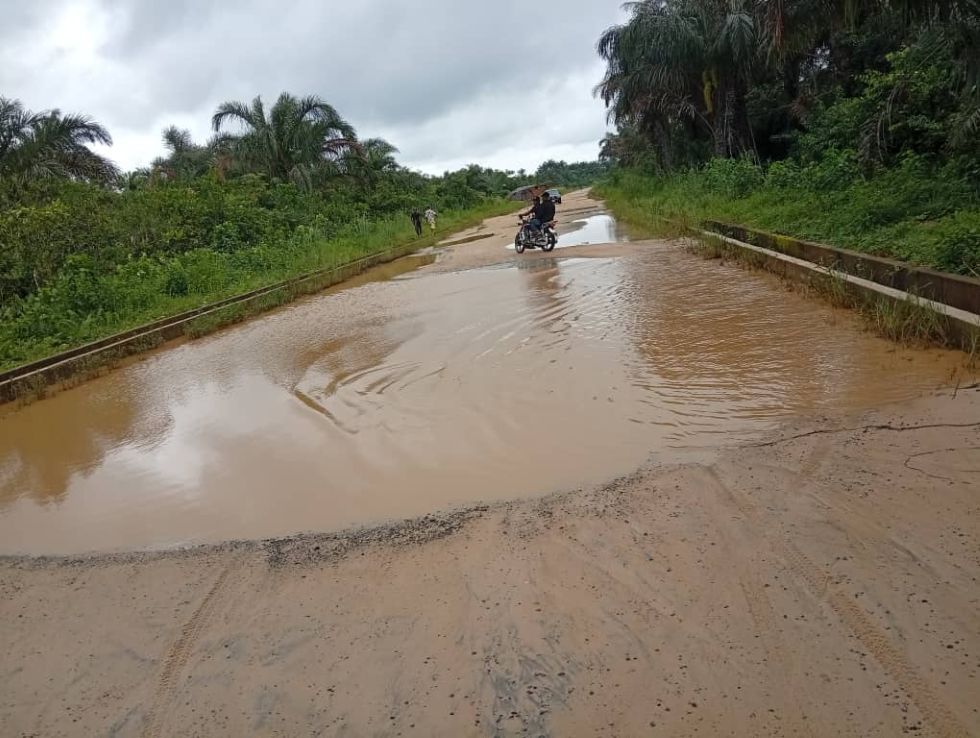
“Since the bridge collapsed, basic daily movement has become extraordinarily difficult and expensive for families,” she lamented. “We used to cross freely to the other side of Unyenge to trade and farm, but now residents are forced to pay exorbitant boat fares just to move around their own community. The burden falls mostly on women and children.”
The protesters insisted that the blockade would remain in place until there is a written commitment and a clear timeline for action from the companies and relevant government agencies. They called on the Akwa Ibom State Government, the Niger Delta Development Commission and the Nigerian Upstream Petroleum Regulatory Commission to intervene and compel the firms to fulfil their corporate social responsibilities.
As at press time, calm had returned to the riverbank, but the protesters maintained their presence, with canopies erected and cooking activities under way at the site, signalling preparation for a prolonged occupation.
Efforts to obtain Savannah Energy’s reaction to the allegations were unsuccessful. Calls to the company’s Community Manager, Ms Arit Bassey, were not answered, while text messages and WhatsApp enquiries sent to her mobile telephone had not received a response as of the time of filing this report.