Iran’s Supreme Leader killed in U.S.-Israeli attacks
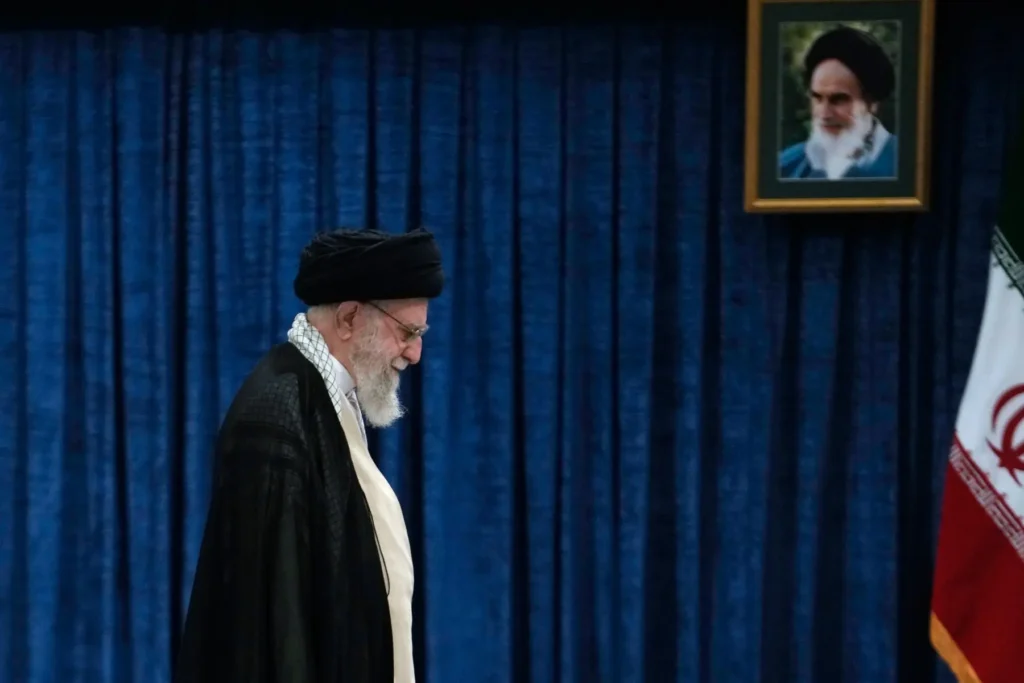
Iran’s Supreme Leader Killed in U.S.-Israeli Attacks
Ali Khamenei
Iran’s Supreme Leader, Ayatollah Ali Khamenei, was killed on Saturday in the opening salvo of a major military campaign launched by the United States and Israel.
President Donald Trump announced his death in a post on Truth Social, writing: “Khamenei, one of the most evil people in History, is dead.”
“This is not only Justice for the people of Iran, but for all Great Americans, and those people from many Countries throughout the World, that have been killed or mutilated by Khamenei and his gang of bloodthirsty THUGS.”
Khamenei, who ruled Iran’s religious autocracy for more than three decades, is believed to have been killed in a strike in his compound in the capital, Tehran.
His assassination followed years of tensions with successive U.S. and Israeli governments over Iran’s nuclear program, and his refusal to give up his country’s right to develop nuclear energy.
It came just weeks after his security forces brutally crushed widespread protests that first broke out across the country over rampant inflation, but spiralled into broader demonstrations against Khamenei and the Islamic regime that has ruled Iran since 1979.
The crackdown killed some 30,000 people, senior health officials told TIME, and spurred President Donald Trump, who had promised to intervene for the protestors, to assemble the U.S. forces that struck Saturday.
Khamenei was killed in the first wave of U.S. and Israeli military strikes against Iran on Saturday, in what Trump said would be a “massive and ongoing” campaign aimed at bringing about a change in the country’s leadership.
Iran responded by launching a wave of missiles at Israel and other U.S. allies across the region. Explosions were heard in the United Arab Emirates capital, Abu Dhabi. Bahrain, which hosts the U.S. Fifth Fleet, was also targeted.
Nuclear ambitions
For decades, Israel and the U.S. have tried to pressure Iran with sanctions and threats of military action to give up its uranium enrichment program, accusing it of using its pursuit of nuclear energy as a smokescreen to develop nuclear weapons.
U.S. intelligence services assessed that Khamenei abandoned a nuclear weapons program in 2003, in the wake of the invasion of neighboring Iraq, and last year said that it continued to assess that “Iran is not building a nuclear weapon and that Khamenei has not reauthorized the nuclear weapons program he suspended in 2003, though pressure has probably built on him to do so.” After Israel and the U.S. bombed its sprawling nuclear infrastructure in June 2025, Trump declared Iran’s nuclear capacity had been “obliterated.”
Still, in announcing the U.S. attack on Iran, President Donald Trump said Iran “can never have a nuclear weapon.” Israeli Prime Minister Benjamin Netanyahu has suggested that Iran is actually pursuing a nuclear weapon in “secret”.
Khamenei came to power in 1989 following the death of Iran’s first Supreme Leader, Ruhollah Khomeini, making him one of the longest-serving heads of state in the world at the time of his death.
During his more than three decades as Supreme Leader, he consolidated power over a system of government he had helped create, sidelined a reformist movement, and crushed multiple mass protests that grew more frequent and intense. Ordinary Iranians objected to the country’s intrusive authoritarian system, an economy crippled by devastating international sanctions intended to coerce the regime to curb its nuclear program, and the mullahs’ preoccupation with international affairs.
Under Khamenei, Tehran made great strides in its mission to “export” the Islamic Revolution, setting up nimble, well-armed proxy forces in Lebanon, Iraq, and Yemen, and riding to the rescue of the Assad regime in Syria. But the network collapsed over the last two years, most catastrophically when Israel decimated Lebanon’s Hezbollah militia, clearing the way to June’s direct assault on Iran. By then, Israeli intelligence had planted a bomb in a Revolutionary Guards guest house that, in addition to killing the political leader of Hamas in Gaza, also demonstrated its ability to penetrate the innermost sanctums of the Iranian regime.
‘Take over your government’
Trump announced the start of the U.S.-Israeli attack on Iran at 2.30 am Eastern, declaring the start of a campaign aimed at “eliminating imminent threats from the Iranian regime, a vicious group of very hard, terrible people.”
Trump also addressed the Iranian people.
“Finally, to the great, proud people of Iran, I say tonight that the hour of your freedom is at hand. Stay sheltered. Don’t leave your home. It’s very dangerous outside. Bombs will be dropping everywhere. When we are finished, take over your government. It will be yours to take,” he said in his speech, which was posted on Truth Social.
The strikes on Khamenei’s compound are believed to have been among the first of the campaign. Soon, further explosions were heard across the country as both the U.S. and Israel targeted military installations and air defense systems.
Iran responded to the initial attack in the first hours with a barrage of missiles that struck U.S. bases and allies across the region.
Its ballistic missiles and drones appeared to strike not just U.S. military targets across the region, but civilian areas of America’s Gulf allies. Five-star resorts in the glitzy tourist areas of Dubai, apartment buildings in Bahrain, and Kuwait’s international airport were all targeted by missiles, the debris of intercepted missiles, or drones.
Courtesy: TheTime.com