Bola Ahmed Tinubu Biography: Age, Family, Education, Career and Net Worth
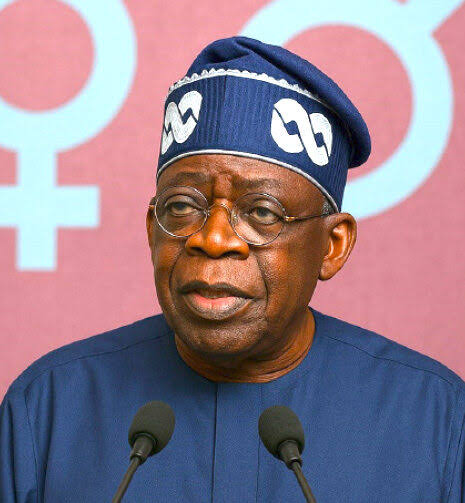
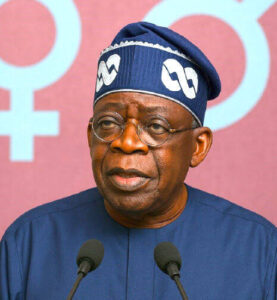
Bola Ahmed Tinubu is a Nigerian politician, accountant, and the 16th president of Nigeria. Born on March 29, 1952, he assumed office on May 29, 2023, after winning the 2023 presidential election under the All Progressives Congress (APC). Before becoming president, Bola Ahmed Tinubu served as governor of Lagos State from 1999 to 2007 and represented Lagos West Senatorial District in the Nigerian Senate during the Third Republic.
Tinubu began his professional career in accounting after studying business administration in the United States. He subsequently worked for several American companies before returning to Nigeria and joining Mobil Nigeria in the 1980s. His transition into politics began in the early 1990s, when he was elected senator and later became involved in the pro-democracy movement opposing military rule.
As governor of Lagos State, Bola Ahmed Tinubu served two consecutive terms and became a prominent figure in southwestern Nigerian politics. Following his departure from office in 2007, he continued building political alliances and played an important role in the formation of the All Progressives Congress in 2013. His political influence grew further after the APC defeated the incumbent Peoples Democratic Party in the 2015 presidential election.
In 2023, Tinubu won the Nigerian presidential election, defeating Atiku Abubakar of the Peoples Democratic Party and Peter Obi of the Labour Party. His presidency has been marked by major economic reforms, including the removal of the petrol subsidy and changes to Nigeria’s foreign exchange policy. His administration has also faced criticism over the economic effects of these policies, security challenges, and controversies surrounding his political career.
This article explores Bola Ahmed Tinubu’s age, early life, education, career, political journey, presidency, family, controversies, and net worth.
Bola Ahmed Tinubu Profile
- Full name: Bola Ahmed Adekunle Tinubu
- Title: Asiwaju
- Date of birth: March 29, 1952
- Place of birth: Lagos, Nigeria
- Nationality: Nigerian
- Ethnicity: Yoruba
- Religion: Islam
- Profession: Politician and accountant
- Political party: All Progressives Congress (APC)
- Current position: President of Nigeria
- Presidential term began: May 29, 2023
- Previous position: Governor of Lagos State (1999–2007)
- Previous legislative position: Senator representing Lagos West
- Education: Chicago State University
- Degree: Bachelor of Science in Business Administration
- Wife: Oluremi Tinubu
- Children: Six children are identified in the supplied biographical account
- Mother: Abibatu Mogaji
- Estimated net worth: Not reliably established through independently verified public information
Bola Ahmed Tinubu Early Life and Family Background
Bola Ahmed Tinubu was born on March 29, 1952, in Lagos, Nigeria, into a Muslim family of Yoruba origin.
His mother, Abibatu Mogaji, was a prominent businesswoman who became widely known as the Iyaloja of Lagos, a traditional title associated with leadership among market traders. Her involvement in commerce and community affairs contributed to the family’s public profile.
Bola Ahmed Tinubu spent his early years in southwestern Nigeria, where he began his education before travelling to the United States for further studies.
Although his date of birth is generally reported as March 29, 1952, questions about his age have periodically surfaced in Nigerian political debates. Nevertheless, 1952 remains the commonly reported birth year in major biographical accounts.
His early experiences in Lagos and subsequent education abroad formed the background to his career in accounting, business, and politics.
Bola Ahmed Tinubu’s Education
Bola Ahmed Tinubu received his early education in Lagos before continuing his studies in the United States.
Primary Education
Tinubu attended St. John’s Primary School in Aroloya, Lagos, where he began his formal education.
He later attended Children Home School in Ibadan, Oyo State.
These early educational experiences preceded his move to the United States, where he pursued higher education.
Education in the United States
In 1975, Tinubu travelled to the United States to continue his education.
He initially attended Richard J. Daley College in Chicago before transferring to Chicago State University.
At Chicago State University, he studied accounting and management as part of a business administration programme.
During his university years, Tinubu reportedly worked several jobs to support himself financially. These included working as a dishwasher, night security guard, and taxi driver.
Despite these challenges, he performed well academically. He was reportedly included on the university’s dean’s list and participated in academic activities related to accounting.
In 1979, Tinubu graduated from Chicago State University with a Bachelor of Science degree in Business Administration, reportedly graduating summa cum laude.
His education in accounting and business administration provided the foundation for his subsequent career in corporate finance and public service.
Bola Ahmed Tinubu’s Career Before Politics
Before entering Nigerian politics, Tinubu worked in the accounting and corporate sectors in the United States and Nigeria.
Career in the United States
Following his graduation in 1979, Tinubu worked as an accountant for several American companies, including Arthur Andersen, Deloitte, and GTE Services Corporation.
His professional responsibilities exposed him to corporate accounting, auditing, financial reporting, and management consultancy.
He also reportedly worked on financial systems and auditing arrangements connected with the oil industry.
These experiences helped him develop professional expertise in financial management before he returned to Nigeria.
Career at Mobil Nigeria
After gaining international work experience, Tinubu returned to Nigeria and joined Mobil Producing Nigeria Unlimited in the 1980s.
He eventually held a senior executive position and served as a treasurer.
His work in the petroleum industry expanded his experience in corporate finance and business administration.
Tinubu’s transition from corporate employment to politics represented a major change in his professional direction. Rather than continue exclusively in the private sector, he became increasingly involved in political organisation and public affairs.
Bola Ahmed Tinubu’s Political Career
Tinubu’s political career developed during a period of significant political change in Nigeria, including the transition from military rule to democratic government.
His involvement in politics began in the early 1990s and later expanded through his participation in pro-democracy activism, state government, and the development of opposition political parties.
Entry into Politics
Tinubu became involved in the Social Democratic Party in the early 1990s.
He participated in political activities during the period leading to the 1993 presidential election, which was won by Moshood Kashimawo Olawale Abiola according to widely accepted accounts of the election’s result.
The annulment of the election by the military government intensified political opposition and contributed to the emergence of pro-democracy organisations.
Election to the Senate in 1992
In 1992, Tinubu was elected to represent Lagos West Senatorial District in the Nigerian Senate.
His legislative responsibilities included participation in national policy discussions and oversight of government activities.
He also chaired the Senate Committee on Banking, Finance, Appropriation, and Currency, according to biographical accounts of his legislative career.
However, his tenure in the Senate was interrupted when the military government dissolved democratic institutions in 1993.
Pro-Democracy Activism and Exile
Following the annulment of the June 12, 1993 presidential election and the consolidation of military rule under General Sani Abacha, Tinubu became involved in the National Democratic Coalition, popularly known as NADECO.
The organisation campaigned for the restoration of democracy and recognition of the June 12 election result.
Tinubu faced political pressure during this period and went into exile in 1994. He continued his pro-democracy activities abroad before returning to Nigeria in 1998, following Abacha’s death and the beginning of a transition towards civilian government.
His involvement in the pro-democracy movement became an important part of his political background.
Governor of Lagos State (1999–2007)
Tinubu’s election as governor of Lagos State in 1999 marked a major turning point in his political career.
He contested under the Alliance for Democracy and won the governorship election as Nigeria returned to civilian rule.
First Term as Governor
Tinubu assumed office as governor of Lagos State on May 29, 1999.
His administration faced the challenge of governing one of Nigeria’s most economically important and densely populated states.
During his first term, his government pursued infrastructure development, road construction, administrative reforms, and changes to local government structures.
Lagos’s rapid population growth and expanding commercial activity placed considerable pressure on its transport networks and public services.
Tinubu’s administration sought to address some of these challenges through infrastructure investment and government restructuring.
Second Term as Governor
In April 2003, Tinubu won re-election for a second term, with Femi Pedro serving as his deputy governor.
His re-election made him one of the few Alliance for Democracy governors in southwestern Nigeria to retain office after the 2003 elections.
During this period, his administration continued to pursue urban development and administrative reforms.
Tinubu also became involved in disputes with the federal government over Lagos State’s creation of additional Local Council Development Areas.
The federal government challenged aspects of the state’s local government arrangements and withheld funds intended for local councils. The dispute eventually involved the courts, which addressed the constitutional and financial issues surrounding the matter.
Lagos State Development and Recognition
Tinubu’s eight-year tenure is frequently discussed in connection with the development of Lagos State’s infrastructure, administrative institutions, and political structures.
He received several awards and honours during his time as governor, according to accounts of his administration.
His political influence also expanded through relationships with political figures, party members, and government officials across southwestern Nigeria.
Tinubu left office on May 29, 2007, when Babatunde Fashola succeeded him as governor of Lagos State.
Although he was no longer governor, his involvement in Lagos and national politics continued.
Bola Ahmed Tinubu’s Political Influence After Governorship
Following his departure from the Lagos State Government in 2007, Tinubu concentrated on opposition politics and the formation of broader political alliances.
His influence became particularly significant during efforts to unite opposition parties against the PDP, which controlled the federal government at the time.
Formation of the All Progressives Congress
In 2013, Tinubu played an important role in the political negotiations that led to the formation of the All Progressives Congress.
The party emerged from the merger of several opposition groups, including the Action Congress of Nigeria, Congress for Progressive Change, and All Nigeria Peoples Party, alongside other political factions.
The formation of the APC created a major opposition platform capable of contesting the PDP’s control of the presidency.
Tinubu supported Muhammadu Buhari’s presidential candidacy in 2015. Buhari subsequently won the election, marking the first time an incumbent Nigerian president lost a re-election contest to an opposition candidate.
Role in the Buhari Administration
Tinubu remained an influential figure within the APC during Buhari’s presidency.
He supported the party’s efforts to retain power in the 2019 general election and continued to participate in internal party politics.
However, tensions and disagreements within the APC periodically affected the political relationships surrounding him.
His long-standing role in party organisation and political coalition-building later became relevant to his own presidential ambition.
Bola Ahmed Tinubu’s Presidential Ambition
Tinubu formally announced his intention to contest the Nigerian presidency in January 2022.
His declaration followed years of political involvement and speculation about whether he would seek the country’s highest elected office.
APC Presidential Primary
On June 8, 2022, Tinubu won the APC presidential primary election.
He received 1,271 votes, defeating Vice President Yemi Osinbajo and former Minister of Transportation Rotimi Amaechi, who received 235 and 316 votes, respectively.
His victory secured the APC presidential ticket for the 2023 general election.
Tinubu selected Kashim Shettima as his running mate.
Victory in the 2023 Presidential Election
The 2023 presidential election was contested by several major candidates, including Atiku Abubakar of the PDP and Peter Obi of the Labour Party.
On March 1, 2023, the Independent National Electoral Commission declared Tinubu the winner.
He received 8,794,726 votes, compared with 6,984,520 for Atiku Abubakar and 6,101,533 for Peter Obi.
The election was disputed by opposition candidates, who raised concerns about the electoral process, reports of irregularities, and the transmission of results.
The disputes subsequently became the subject of legal proceedings. Tinubu nevertheless proceeded to assume office after the election and the associated legal challenges.
Bola Ahmed Tinubu as President of Nigeria
Tinubu was inaugurated as Nigeria’s president on May 29, 2023, at Eagle Square in Abuja.
His administration inherited several major national challenges, including inflation, foreign exchange pressures, public debt, unemployment, and persistent security problems.
Since assuming office, his government has pursued economic reforms and changes to public administration, while also facing criticism about their effects on Nigerian households and businesses.
Removal of the Petrol Subsidy
One of Tinubu’s most consequential early policy announcements was the removal of the petrol subsidy.
He announced the decision during his inaugural address in May 2023.
The policy was intended to reduce government expenditure associated with subsidising petrol consumption and address longstanding fiscal pressures.
However, the removal contributed to a sharp increase in petrol prices and transportation costs, intensifying the cost-of-living crisis faced by many Nigerians.
The policy generated debate among economists, labour organisations, business owners, and households over its immediate economic consequences and potential long-term benefits.
Foreign Exchange Reforms
Tinubu’s administration also introduced changes to Nigeria’s foreign exchange market.
The Central Bank of Nigeria subsequently relaxed restrictions on foreign exchange trading, allowing the naira to adjust more freely in the market.
These measures formed part of the administration’s wider effort to change Nigeria’s monetary and fiscal policy framework.
However, exchange-rate volatility and the rising cost of imported goods remained important economic concerns.
Changes in Government Leadership
Tinubu introduced changes across several government institutions, including appointments and leadership adjustments involving security agencies and financial regulators.
His administration also made changes to the leadership of the armed forces and other public institutions.
These decisions were presented as part of the government’s approach to administration, security coordination, and policy implementation.
Security Challenges
Security remains one of the major challenges facing Tinubu’s presidency.
Nigeria continues to contend with insurgency, banditry, kidnapping, communal violence, and other forms of insecurity in different parts of the country.
Tinubu’s government has pursued military and security cooperation, including engagement with international partners.
His administration’s handling of security incidents and its ability to protect lives and property remain important subjects of public debate.
Foreign Policy
Tinubu has represented Nigeria at international meetings and engaged with foreign governments on economic cooperation, regional security, trade, and investment.
During his presidency, he has participated in diplomatic efforts involving regional organisations and international partners.
His foreign policy agenda has included engagement with West African governments and efforts to attract investment into Nigeria.
Bola Ahmed Tinubu’s Leadership Style and Political Influence
Tinubu is widely known for his role in political coalition-building and party organisation.
His supporters often point to his experience in Lagos State and his participation in the formation of the APC as evidence of his political organising abilities.
Critics, meanwhile, have raised questions about the concentration of political influence, patronage, and the relationship between political alliances and government appointments.
His political style has therefore attracted different interpretations from supporters, opponents, analysts, and civil society groups.
Tinubu’s influence extends beyond his period as Lagos State governor, having shaped opposition politics and party structures at the national level.
Bola Ahmed Tinubu’s Net Worth
Bola Ahmed Tinubu’s exact net worth is not reliably established through independently verified public information.
Tinubu has been associated with business interests, investments, and political activities spanning several decades. Nevertheless, publicly circulating estimates of his wealth vary considerably, and many do not provide sufficient documentation to establish their accuracy.
A credible assessment of his personal net worth would require verifiable information about his assets, liabilities, investments, property holdings, business interests, and other sources of income.
It is important to distinguish between reported estimates and confirmed financial disclosures. His political position and control of public institutions should not be treated as evidence of personal ownership of government resources.
Consequently, claims assigning Tinubu a specific net-worth figure should be approached cautiously unless supported by reliable documentation.
Bola Ahmed Tinubu’s Wife and Marriage
Tinubu is married to Oluremi Tinubu, a Nigerian politician who previously represented Lagos Central Senatorial District in the Nigerian Senate.
The couple married in 1987.
Oluremi Tinubu has had a political career of her own, serving as a senator before becoming Nigeria’s First Lady following her husband’s inauguration in 2023.
As First Lady, she has participated in public programmes and initiatives related to social welfare, family support, and community development.
Their marriage has been a prominent part of Tinubu’s public life throughout his political career.
Bola Ahmed Tinubu’s Children
Tinubu has six children identified in the supplied biographical account, including children from previous relationships.
His children include:
- Zainab Abisola Tinubu
- Habibat Tinubu
- Olayinka Tinubu
- Kazeem Olajide Tinubu
- Folashade Tinubu
- Oluwaseyi Tinubu
His family has attracted public attention because of his long political career and the involvement of some family members in business, public service, and community activities.
His son Kazeem Olajide Tinubu, also known as Jide Tinubu, died in London on October 31, 2017.
Tinubu’s mother, Abibatu Mogaji, died on June 15, 2013, at the age of 96.
Bola Ahmed Tinubu’s Religion
Tinubu is a Muslim and comes from a Yoruba family in southwestern Nigeria.
Religion has occasionally featured in political discussions surrounding his career, particularly during the 2023 presidential election, when the APC’s decision to nominate both a Muslim presidential candidate and a Muslim vice-presidential candidate generated public debate.
The issue attracted different reactions from political parties, religious organisations, and members of the public.
Bola Ahmed Tinubu Controversies and Allegations
Tinubu’s political career has been accompanied by several controversies involving his personal finances, educational history, business transactions, and political influence.
These issues have been discussed in the media and, in some instances, addressed through legal or official processes.
US Asset Forfeiture Case
In 1993, Tinubu forfeited approximately US$460,000 to the United States government in connection with a civil forfeiture case involving bank accounts that US authorities linked to suspected proceeds of heroin trafficking.
The case has remained a subject of public discussion in Nigeria, particularly during election campaigns.
It is important to describe the matter accurately: the forfeiture was a financial and legal action, and references to it should distinguish the underlying allegations and court records from any broader claim about criminal guilt.
Questions About Educational History
Tinubu’s educational background has also attracted political scrutiny, particularly during election periods.
Questions and disputes have arisen over aspects of his personal records and educational documentation.
Such controversies have been discussed in political reporting and legal proceedings. Their details should be assessed through the relevant documentary evidence and judicial records rather than through unsupported claims.
Financial and Business Controversies
Over the years, Tinubu has faced questions and allegations concerning financial dealings, business interests, and the relationship between his private activities and public responsibilities.
Some allegations have been investigated or addressed through official processes, while others have remained subjects of political debate.
A responsible account should distinguish allegations, investigations, official findings, and court judgments instead of presenting all claims as established wrongdoing.
Political Influence in Lagos State
Tinubu is frequently described in Nigerian political commentary as a major power broker in Lagos State.
His political influence has been associated with his role in selecting and supporting candidates, building party structures, and maintaining relationships with political officeholders.
Supporters view this as evidence of his organisational influence, while critics have questioned the degree of power exercised by influential political figures outside elected office.
The debate over Tinubu’s political influence remains part of broader discussions about party politics, patronage, and democratic accountability in Nigeria.
Bola Ahmed Tinubu’s Achievements and Legacy
Tinubu’s career has included several major milestones.
His election to the Senate in 1992 established him as a national political figure during the Third Republic.
His participation in the pro-democracy movement connected him with efforts to restore civilian government after the annulment of the June 12, 1993 presidential election.
His eight years as governor of Lagos State gave him extensive executive experience and helped establish the political network that he later used in national politics.
His role in the formation of the APC in 2013 contributed to the emergence of a major opposition coalition, which won the presidency in 2015.
His election as president in 2023 marked the culmination of a political career spanning more than three decades.
His long-term legacy will depend on the combined record of his state and national leadership, including economic performance, public infrastructure, security, institutional development, and the effects of his policies on Nigerians.
Frequently Asked Questions About Bola Ahmed Tinubu
1. How old is Bola Ahmed Tinubu?
Bola Ahmed Tinubu was born on March 29, 1952.
2. Who is Bola Ahmed Tinubu’s wife?
His wife is Oluremi Tinubu, a former senator representing Lagos Central Senatorial District and Nigeria’s current First Lady.
3. How many children does Bola Ahmed Tinubu have?
Bola Ahmed Tinubu has six children, including children from previous relationships.
4. What did Bola Ahmed Tinubu study?
Bola Ahmed Tinubu studied business administration at Chicago State University in the United States, graduating with a Bachelor of Science degree in 1979.
5. When did Bola Ahmed Tinubu become president?
Tinubu was inaugurated as Nigeria’s president on May 29, 2023.
6. Was Bola Ahmed Tinubu a governor?
Yes. He served as governor of Lagos State from May 29, 1999, to May 29, 2007.
7. Which political party does Bola Ahmed Tinubu belong to?
Tinubu belongs to the All Progressives Congress (APC), the party under which he contested and won the 2023 presidential election.
8. What was Bola Ahmed Tinubu’s profession before politics?
Before entering politics, Tinubu worked as an accountant for companies in the United States and later held a senior executive position at Mobil Producing Nigeria Unlimited.
9. What is Bola Ahmed Tinubu’s net worth?
His exact net worth is not reliably established through independently verified public information. Estimates circulating online should be treated cautiously unless supported by credible financial documentation.
10. Who is Bola Ahmed Tinubu’s mother?
His mother was Abibatu Mogaji, a prominent Lagos businesswoman who held the traditional title of Iyaloja of Lagos. She died in June 2013.
11. Why is Bola Ahmed Tinubu called Asiwaju?
Asiwaju is a Yoruba title associated with leadership and being at the forefront. Tinubu is widely known by the title in recognition of his position and influence in Yoruba political and traditional circles.
12. What are Bola Ahmed Tinubu’s major policies as president?
His major policy initiatives have included removing the petrol subsidy, reforming the foreign exchange market, and making changes to public administration and government institutions.
Conclusion
Bola Ahmed Tinubu’s biography reflects a long journey through accounting, business, legislative service, pro-democracy activism, state government, and national politics.
After studying in the United States and building a career in accounting, he entered Nigerian politics in the early 1990s. His subsequent election as governor of Lagos State, involvement in the formation of the APC, and eventual victory in the 2023 presidential election established him as a major figure in Nigeria’s political history.
His presidency has been defined by substantial economic policy changes, security challenges, and continuing public debate over the consequences of government decisions.
As his administration progresses, the lasting assessment of his leadership will depend on measurable outcomes in economic stability, living standards, security, infrastructure, and democratic governance.
Enjoyed reading this biography? Explore more inspiring and informative biographies of notable personalities, including their early life, education, career, achievements, and net worth. Discover the stories behind the people making headlines and shaping their respective fields in politics, entertainment, business, sports, and beyond. Read more biography articles here.