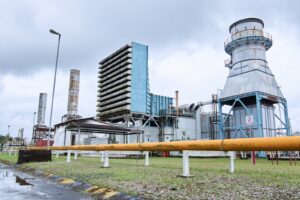
Power minister shuns tariff hike as N2tn subsidy bill looms
The Federal Government is on course to spend about N2tn this year to keep electricity tariffs down, even as power generators warn that much of the subsidy exists only on paper.
The Minister of Power, Joseph Tegbe, ruled out any immediate increase in electricity tariffs on Monday in Abuja, saying the government was focused on making the power sector commercially viable while protecting vulnerable consumers.
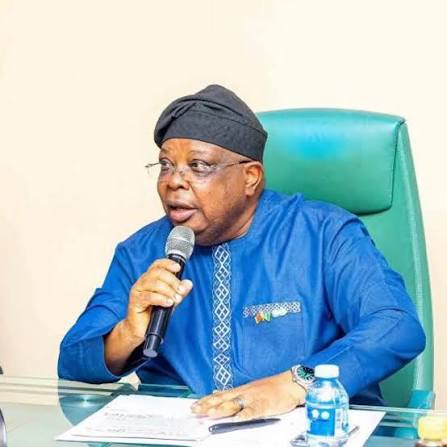
*Minister of Power, Joseph Tegbe
By Abimbola Joseph
The Federal Government is on course to spend about N2tn this year to keep electricity tariffs down, even as power generators warn that much of the subsidy exists only on paper.
The Minister of Power, Joseph Tegbe, ruled out any immediate increase in electricity tariffs on Monday in Abuja, saying the government was focused on making the power sector commercially viable while protecting vulnerable consumers.
“There are no immediate plans to increase electricity tariffs,” Tegbe said as he marked his first 100 days in office.
“Our goal is to build a commercially viable power sector while protecting vulnerable consumers.”
The decision comes at a steep cost. Data from the Nigerian Electricity Regulatory Commission (NERC) showed that the government incurred a N1.93tn electricity subsidy obligation in 2025.
The amount represented 57.44 per cent of the total Nigerian Bulk Electricity Trading (NBET) invoice, equivalent to an average of N160.69bn every month.
The subsidy arises because approved electricity tariffs remain below cost-reflective levels, leaving the government to cover the difference between the cost of supplying electricity and what consumers pay.
The subsidy bill also approached N2tn in 2024, despite the introduction of the Band A to E tariff structure that year. Under the current arrangement, only Band A customers are charged tariffs considered cost-reflective.
Subsidy ‘only on paper’
However, power generation companies have questioned whether the subsidy is being properly funded.
Joy Ogaji, Chief Executive Officer of the Association of Power Generation Companies, said generators had yet to see evidence of the government’s subsidy payments, adding that there was no specific budgetary provision for them.
“We have not seen it,” Ogaji said.
She urged the government to determine what level of subsidy it could afford and provide adequate funding for it, rather than maintain a system she said had contributed to mounting debts across the electricity value chain.
Generators have also expressed concerns over the N4tn Presidential Power Sector Debt Reduction Programme.
They warned that additional liabilities exceeding N7tn could accumulate before the programme is fully implemented because the N4tn provision covers debts only up to December 2024.
Ogaji argued that by the time the proposed seven-year bond matures in 2033, accumulated sector arrears could have doubled the amount being addressed under the programme.
Sector faces multiple challenges
Tegbe said his first 100 days in office, from 8 June to 16 September, had focused on diagnosing the sector’s problems, stabilising infrastructure and restoring discipline in the electricity market.
He identified inadequate gas supply, weak generation capacity, poor payment collections and transmission constraints as some of the major challenges confronting the sector.
On gas supply, the minister said damaged pipelines and unattractive commercial terms were limiting the quantity of gas available to power plants.
He said the generation fleet was also constrained by ageing thermal plants, deferred maintenance and stalled projects, leaving available capacity stranded before it could reach consumers.
The minister added that generating companies received only about 27 per cent of what they were owed, making it difficult for them to maintain their plants or settle their gas bills.
The transmission network, he said, was further weakened by vandalised towers and lines, overstretched equipment and frequent system trips.
NERC said the subsidy was applied to the generation costs that distribution companies owed NBET, with the uncovered portion subsequently invoiced to the Federal Ministry of Finance.
The arrangement was designed partly to prevent unpaid subsidy obligations from accumulating on the balance sheets of distribution companies and weakening their ability to invest in the sector.
For now, the decision to keep electricity tariffs unchanged means the government will continue to shoulder a substantial portion of the cost of electricity while efforts continue to improve revenue collection, infrastructure, gas supply and service delivery.