FG: Over ₦10trn invested in power sector since privatisation
The Federal Government says more than ₦10tn has been invested in Nigeria’s electricity sector since privatisation, but the funding has yet to address the industry’s deep-rooted infrastructure and financing challenges.
It has consequently called for increased private sector participation, warning that continued reliance on government funding is unsustainable if Nigeria is to achieve its ambition of building a $1tn economy.
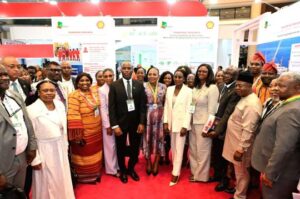
The Managing Director and Chief Executive Officer of FGN Power Company Limited, Kenny Anuwe, made the call on Thursday at the sixth annual conference of the Power Correspondents Association of Nigeria (PCAN) in Abuja.
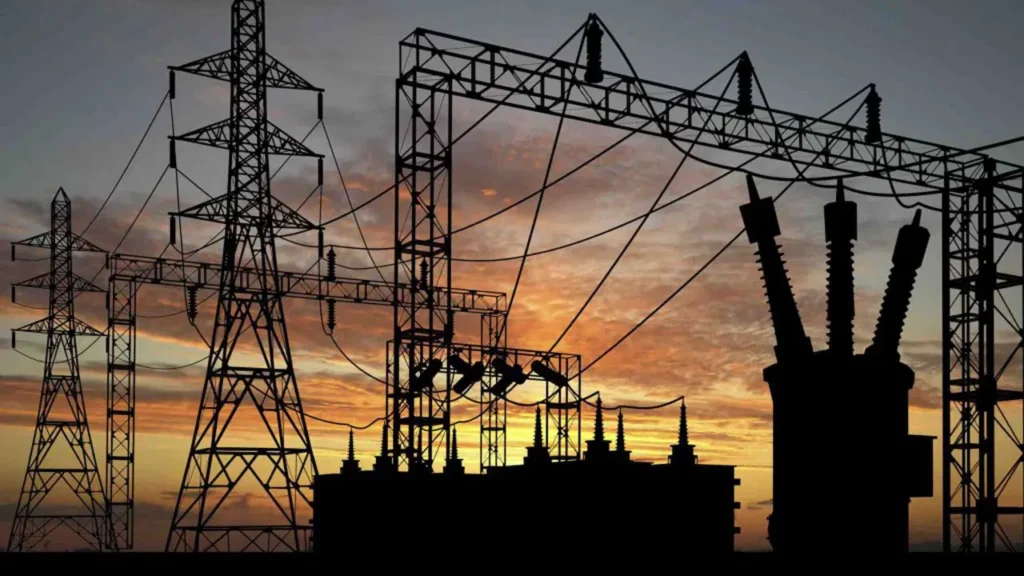
*Electrical power transmission infrastructure
Abimbola Joseph
The Federal Government says more than ₦10tn has been invested in Nigeria’s electricity sector since privatisation, but the funding has yet to address the industry’s deep-rooted infrastructure and financing challenges.
It has consequently called for increased private sector participation, warning that continued reliance on government funding is unsustainable if Nigeria is to achieve its ambition of building a $1tn economy.
The Managing Director and Chief Executive Officer of FGN Power Company Limited, Kenny Anuwe, made the call on Thursday at the sixth annual conference of the Power Correspondents Association of Nigeria (PCAN) in Abuja.
Speaking on the theme, ‘ $1 Trillion Economy: Nigeria’s Roadmap to Reliable and Affordable Power Supply’, Anuwe said government investment had helped sustain the electricity industry but was insufficient to meet its growing infrastructure needs.
“The government has invested over ₦10 trillion in the electricity sector since the advent of privatisation. But is it enough? How much money is enough? If the government didn’t invest that money, the industry would not be standing today,” he said.
He, however, noted that the government still accounted for more than 95 per cent of new infrastructure investments in the sector, describing the situation as unsustainable.
Anuwe argued that the government should concentrate on providing the right policy, regulatory and market conditions to attract private capital rather than shouldering the entire investment burden.
He called for simpler institutional and regulatory processes, clearly defined responsibilities, predictable policies, commercially viable projects and faster decision-making to restore investor confidence.
The FGN Power Company chief disclosed that the organisation was targeting a $2.3bn investment programme, comprising $1.3bn from Europe and $1bn from China.
He added that the company was working to raise at least $1bn in capital, with the Africa Finance Corporation indicating its willingness to match the amount. Other financiers were also expected to mobilise about $18bn for the electricity industry.
According to him, the company is exploring alternative funding arrangements, including viability financing and blended finance, to attract institutional and private investors.
On infrastructure development, Anuwe said the Presidential Power Initiative had completed its pilot phase and commenced the first phase of transmission substations and lines, with most projects expected to be completed in the first quarter of 2027.
He added that the second batch of 12 Siemens substations was expected to commence in the fourth quarter of 2026, subject to the necessary financing approvals.
The ongoing and planned projects, he said, were expected to add 5,540 megawatts to the electricity system by 2029, improve grid reliability by at least 60 per cent and enable about 2,000 industries to reconnect to the national grid.
Earlier, the Minister of Power, Joseph Tegbe, said the Federal Government had approved a ₦3.3tn payment plan to settle verified legacy debts owed to electricity generation companies, with ₦1.23tn already raised.
Represented by his Special Adviser on Administration and Projects, Martins Olajide, the minister said the intervention was designed to ease financial pressures on power generation companies and improve their capacity to pay gas suppliers and maintain their facilities.
Tegbe also disclosed that more than 2.8 million electricity customers had been metered under the Presidential Metering Initiative.
He said the government had added more than 15,000 megavolt-amperes of transmission capacity to the national grid between 2023 and October 2026.
The minister outlined a four-pronged electricity sector reform strategy covering grid stabilisation, financial sustainability, asset optimisation and the expansion of transmission infrastructure.
He identified the Lagos-Ogun, Benin-Enugu-Port Harcourt and Abuja-Kaduna-Kano corridors as priority economic zones where electricity generation, transmission and distribution capacity would be coordinated to support industrial development.
Tegbe also identified vandalism of electricity infrastructure as a major obstacle, disclosing that President Bola Tinubu had approved a coordinated anti-vandalism campaign involving security agencies to protect critical power assets.
In his welcome address, PCAN Chairman, Obas Esiedesa, said reliable and affordable electricity was essential to achieving the Federal Government’s $1tn economy target by 2030.
He urged the government and industry stakeholders to address seasonal declines in electricity generation, particularly between November and March, when reduced water inflows into hydroelectric stations and gas supply constraints often worsen power shortages.
Esiedesa also highlighted inadequate transmission and distribution infrastructure, liquidity constraints, investment shortages and regulatory uncertainties as major challenges confronting the industry. He noted that the decentralisation of the electricity market under the Electricity Act 2023 offered opportunities for increased investment and improved service delivery but stressed the need for effective coordination, clear regulatory frameworks and supporting infrastructure.