Education tops Kano’s ₦1.107tn 2027 budget
The Kano State Government has proposed spending ₦332 billion on education in 2027, representing 30 per cent of its proposed ₦1.107 trillion budget.
Governor Abba Yusuf announced the allocation on Wednesday while presenting the 2027 budget estimates to the state House of Assembly, describing education as a major priority of his administration.
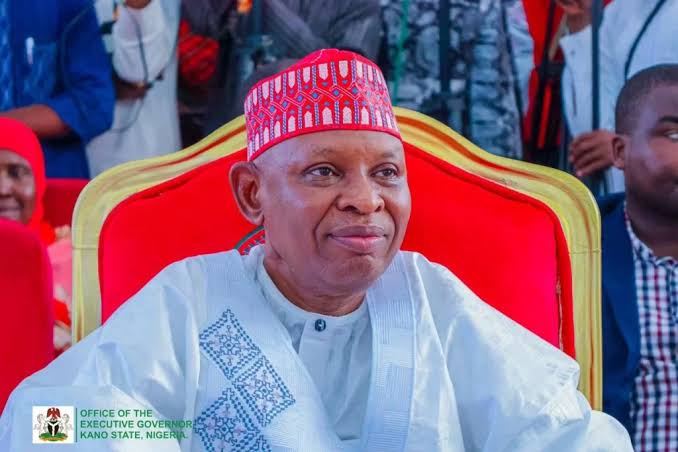
*Governor Abba Yusuf
Abimbola Joseph
The Kano State Government has proposed spending ₦332 billion on education in 2027, representing 30 per cent of its proposed ₦1.107 trillion budget.
Governor Abba Yusuf announced the allocation on Wednesday while presenting the 2027 budget estimates to the state House of Assembly, describing education as a major priority of his administration.
He said the substantial provision was intended to improve access to quality education, strengthen learning institutions and accelerate human capital development across the state.
“This substantial allocation to education demonstrates our determination to consolidate the gains recorded in the sector and sustain reforms that improve learning outcomes across the state,” Yusuf said.
The governor highlighted some of his administration’s interventions in the sector, including the recruitment of 8,588 teachers in the 2026 fiscal year. The figure comprises 4,900 permanent teachers and 3,688 teachers recruited under the Better Education Service Delivery for All (BESDA) programme.
He also disclosed that the government had paid examination fees for more than 150,000 students sitting the National Examinations Council (NECO), National Board for Arabic and Islamic Studies (NBAIS) and National Business and Technical Examinations Board (NABTEB) examinations.
Other interventions include settling outstanding feeding obligations in boarding schools, rehabilitating educational facilities and supporting students taking the Joint Admissions and Matriculation Board’s Unified Tertiary Matriculation Examination (UTME) through free application forms, registration and preparatory training.
Yusuf further said Kano had maintained its leading position in the 2026 NECO performance ranking for the second consecutive year.
He pledged that the government would sustain investments in teacher development, school infrastructure, instructional materials and digital learning facilities.
“We will continue to invest in teacher development, school infrastructure, instructional materials and digital learning facilities to strengthen education as the foundation for sustainable development,” he said.
The proposed allocation comes amid persistent educational challenges in Northern Nigeria, including low school enrolment, teacher shortages, inadequate infrastructure and a high number of out-of-school children.
At 30 per cent, Kano’s proposed education spending exceeds UNESCO’s recommended benchmark of allocating 15 to 20 per cent of national budgets to education.
However, the extent to which the proposed allocation translates into actual expenditure will depend on budget implementation and the timely release of funds.