CCD inaugurates report, seeks disability-inclusive climate policies in Nigeria
The Centre for Citizens with Disabilities (CCD) has called for the full inclusion of persons with disabilities (PWDs) in Nigeria’s climate change policies and governance frameworks, warning that millions remain disproportionately vulnerable to the effects of climate change due to inadequate representation and protection.
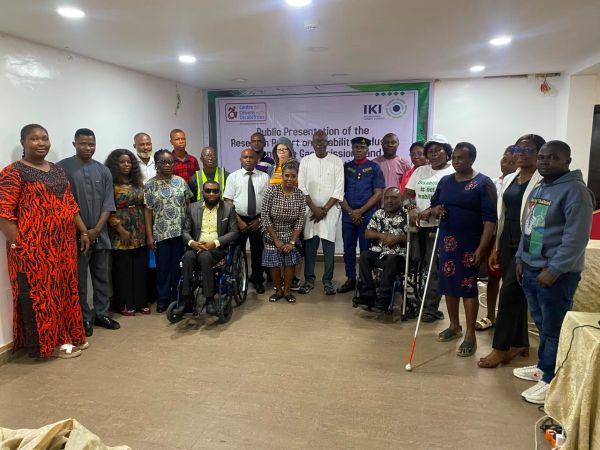
The appeal was made on Wednesday during the public presentation of a research report titled “Disability-Inclusive Greenhouse Gas Emissions, Climate Change Adaptation and Mitigation in Nigeria”, a project funded by the International Climate Initiative (IKI).
Ememobong Okon
The Centre for Citizens with Disabilities (CCD) has called for the full inclusion of persons with disabilities (PWDs) in Nigeria’s climate change policies and governance frameworks, warning that millions remain disproportionately vulnerable to the effects of climate change due to inadequate representation and protection.
The appeal was made on Wednesday during the public presentation of a research report titled “Disability-Inclusive Greenhouse Gas Emissions, Climate Change Adaptation and Mitigation in Nigeria”, a project funded by the International Climate Initiative (IKI).
Presenting the report, CCD Acting Director, Godwin Unumeri, described the study as one of the first comprehensive efforts in Nigeria to examine the intersection of disability, greenhouse gas emissions and climate change.
According to him, the research bridges a significant knowledge gap by documenting the experiences of persons with disabilities and providing practical, evidence-based recommendations for inclusive climate action.
Unumeri acknowledged the contributions of stakeholders who participated in the validation process earlier this year, noting that their input enriched the final report. He urged governments, development partners and civil society organisations to adopt the recommendations as a shared blueprint for action.
“Our recommendations will require sustained collaboration, strong policy commitment, adequate resource mobilisation and coordinated action across sectors,” he said.

The report revealed that while Nigeria’s Climate Change Act 2021 and the Discrimination Against Persons with Disabilities (Prohibition) Act 2018 provide legal frameworks on climate action and disability rights respectively, both operate largely in isolation, resulting in the exclusion of disability concerns from climate governance.
According to the findings, persons with disabilities are often categorised broadly as part of vulnerable groups without specific measures to guarantee accessible infrastructure, inclusive emergency response mechanisms or representation in climate-related decision-making processes.
The report also identified the energy sector, industrial activities, agriculture, forestry, land-use practices and waste management as major contributors to greenhouse gas emissions in Nigeria. It noted that persons with disabilities often bear a disproportionate share of the resulting environmental, health and socio-economic impacts.
Among its key recommendations, the report urged the National Council on Climate Change to develop regulations that explicitly integrate disability inclusion into the implementation of the Climate Change Act. It also called on federal, state and local governments to establish Directorates of Persons with Disabilities across ministries, departments and agencies, while promoting accessible early warning systems, disability-disaggregated data collection and greater participation of persons with disabilities in climate governance.
Speaking on behalf of the Commandant of the Nigeria Security and Civil Defence Corps (NSCDC), Akwa Ibom State Command, Efiok Ekanem described the research as timely, observing that persons with disabilities are among the most affected whenever climate-related disasters occur.
Also speaking, the Akwa Ibom State Special Assistant to the Governor on Persons with Disabilities, Nnene Bassey, said the report aligns with Governor Umo Eno’s ARISE Agenda, which prioritises inclusion and improved welfare for persons with disabilities.

She commended CCD for its sustained advocacy and capacity-building programmes, which she said have empowered persons with disabilities to champion issues affecting their rights and well-being.
Representing the Akwa Ibom State Ministry of Women Affairs and Social Welfare, Sandy Amos described the report as comprehensive and underscored the need for sustainable development policies that leave no one behind.
She reaffirmed the ministry’s commitment to partnering with CCD to advance disability-inclusive climate initiatives across the state.
Goodwill messages were also delivered by representatives of Policy Alert, the Ministry of Health and other civil society organisations, who pledged continuous support for policies and programmes aimed at promoting inclusive climate action in Nigeria.