A’Ibom polytechnic chancellor appointment sparks legal controversy
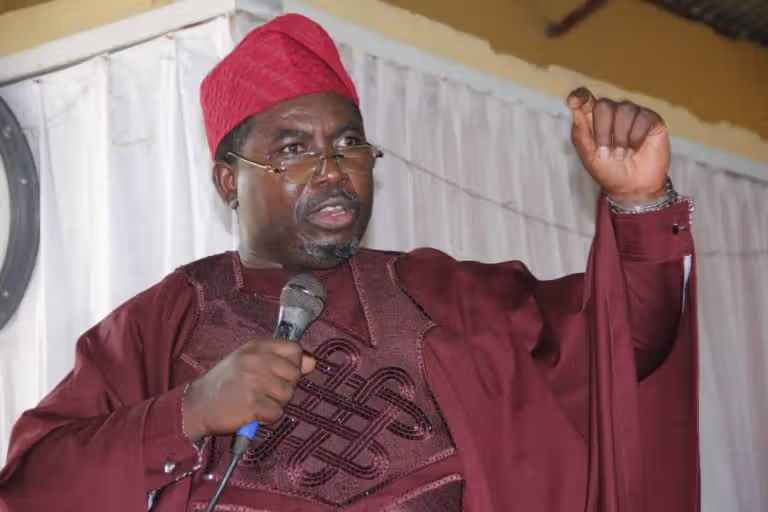
An advocacy group, Open Forum, has urged Akwa Ibom State Governor Umo Eno to withdraw the appointment of the Paramount Ruler of Eket, Edidem E.C.D. Abia, as Chancellor of Akwa Ibom State Polytechnic, Ikot Osurua, describing the decision as legally questionable.
The group argued that the institution’s enabling law does not provide for the office of a chancellor, warning that the appointment could undermine established procedures governing the administration of polytechnics.
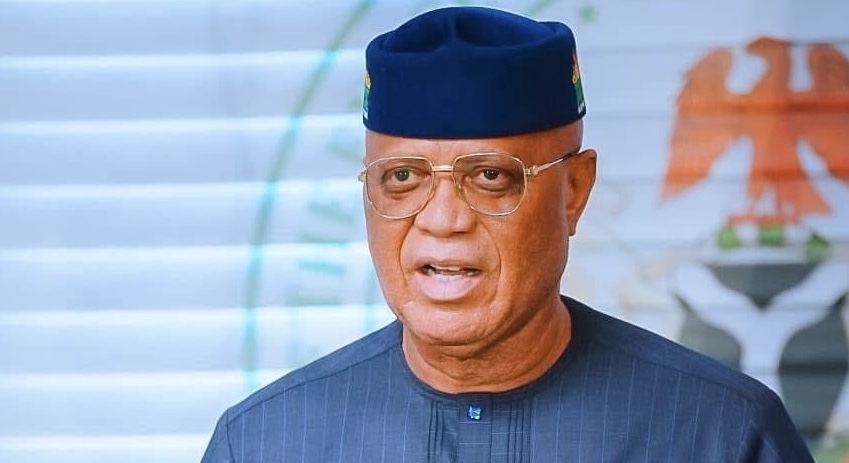
*Umo Eno
Etim Ekpimah
An advocacy group, Open Forum, has urged Akwa Ibom State Governor Umo Eno to withdraw the appointment of the Paramount Ruler of Eket, Edidem E.C.D. Abia, as Chancellor of Akwa Ibom State Polytechnic, Ikot Osurua, describing the decision as legally questionable.
The group argued that the institution’s enabling law does not provide for the office of a chancellor, warning that the appointment could undermine established procedures governing the administration of polytechnics.
In a statement signed by its Founder and President, Citizen Matthew Koffi Okono, Open Forum said Eno announced Abia’s appointment on November 10, 2026, during a visit to the Akwa Ibom State Supreme Council of Traditional Rulers in Uyo.
While acknowledging the traditional ruler’s standing and contributions to society, the organisation maintained that the appointment had no legal foundation under the law establishing the institution.
It explained that the polytechnic was established under Akwa Ibom State Government Edict No. 11 of 1991, which provides for a visitor, governing council, rector and other principal officers as the institution’s governing structure.
According to the group, the polytechnic remains under the regulatory framework of the National Board for Technical Education (NBTE), awarding National Diplomas (ND) and Higher National Diplomas (HND), rather than university degrees.
Open Forum further argued that the institution had not undergone the legal and academic conversion required to operate as a polytechnic university with a chancellor.
Beyond the disputed appointment, the organisation raised concerns about what it described as a leadership vacuum at the institution, noting that it had operated without a substantive governing council since the tenure of the council chaired by Barrister Ekpenyong Ntekim ended in 2019.
It also observed that the Rector, Dr Akanimo Edet, was still serving in an acting capacity, arguing that the institution urgently needed a substantive rector and principal officers appointed through the prescribed legal process.
The group urged the governor to constitute a governing council and address the leadership gaps rather than create an office it said was not recognised by the institution’s enabling law.
It also called on the Attorney-General and Commissioner for Justice, Uko Udom, SAN, to provide a formal legal opinion on the appointment, while urging the Commissioner for Education, Prof. Ubong Umoh, to advise the governor on the need to restore the institution’s substantive governing structure.
Open Forum said that if the state government intended to transform the polytechnic into a polytechnic university, it should pursue the necessary regulatory approvals from the National Universities Commission (NUC) and secure legislative backing through the State House of Assembly.
The organisation cited the conversion of the former Akwa Ibom State College of Education, Afaha Nsit, into the Akwa Ibom State University of Education as an example of the legislative process involved in transforming a tertiary institution.
It stressed that its position was not intended to disrespect the traditional ruler or oppose the governor but to defend institutional integrity and adherence to the rule of law.
“A traditional ruler of the stature of Edidem Abia should not be dragged into an illegal appointment. The best way to honour him is to withdraw the appointment and protect his dignity,” the statement said.
The group warned that allowing appointments unsupported by enabling laws could set a dangerous precedent for other educational institutions in the state. It added that correcting an administrative or legal error should be seen as an act of responsible leadership rather than an admission of weakness.