NCoS reforms face test under Nwakuche’s leadership
The Nigerian Correctional Service (NCoS) faces pressure to prove its reform agenda can deliver more than new uniforms, promotions, and policy changes, as Controller-General Sylvester Ndidi Nwakuche pushes to transform the institution into a modern correctional system focused on security, rehabilitation, and reintegration.
Since taking charge, Nwakuche has pursued reforms targeting personnel discipline, professional development, performance management, custodial security and inmates’ welfare. The ambition is to move the Service beyond its traditional role of keeping offenders behind bars to preparing them for a productive return to society.

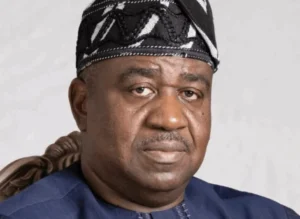
*Controller-General Sylvester Ndidi Nwakuche
Nkereuwem Effiong
The Nigerian Correctional Service (NCoS) faces pressure to prove its reform agenda can deliver more than new uniforms, promotions, and policy changes, as Controller-General Sylvester Ndidi Nwakuche pushes to transform the institution into a modern correctional system focused on security, rehabilitation, and reintegration.
Since taking charge, Nwakuche has pursued reforms targeting personnel discipline, professional development, performance management, custodial security and inmates’ welfare. The ambition is to move the Service beyond its traditional role of keeping offenders behind bars to preparing them for a productive return to society.
One visible aspect of the changes is a renewed emphasis on personnel appearance, grooming, discipline and corporate identity. While a smart uniform may project authority and professionalism, the real test lies in officers’ conduct, integrity, competence, and respect for inmates’ rights.
The administration has also introduced a Performance Management System (PMS) to place greater emphasis on productivity, competence and measurable results in personnel evaluation and career advancement. The initiative is intended to reward excellence, strengthen accountability and discourage a culture in which length of service alone determines progression.
The promotion of 6,207 personnel is another measure aimed at improving career prospects and boosting morale across the Service.
In September 2026, the NCoS introduced a Unified Training Manual and standardised professional course badges across its training institutions. Replacing the 2019 edition, the manual establishes a common training framework for recruits, commissioned officers and personnel undertaking specialised courses. The badges are designed to recognise officers who have completed prescribed professional training.
Beyond personnel reforms, Nwakuche is seeking to strengthen the correctional system’s rehabilitation and reintegration mandate. The expansion of non-custodial measures, including probation, parole, community service and restorative justice, is intended to promote accountability while giving eligible offenders opportunities to rebuild their lives outside prison walls.
The administration has also identified prison decongestion, infrastructure development, custodial security, staff and inmates’ welfare, and strategic partnerships as priority areas.
In October 2025, Nwakuche embarked on a study tour of correctional institutions in Türkiye. The delegation examined approaches to inmate management, vocational training, rehabilitation, facility design, personnel development and reintegration.
President Bola Tinubu’s approval of an extension of Nwakuche’s tenure until May 26, 2028, gives him additional time to pursue the reforms.
But the real measure of success will not be the number of officers promoted, manuals introduced or badges distributed. It will be whether correctional centres become safer, inmates’ rights are protected, personnel welfare improves, and fewer former offenders return to crime. For Nwakuche, the challenge is to translate institutional promises into measurable results. Nigeria needs a correctional system that does more than confine offenders: one that reforms, rehabilitates and gives them a genuine chance to return to society as responsible citizens.