Experts demand tougher sanctions for erring private jet operators
Aviation experts have called for stricter regulation and tougher sanctions against private jet operators violating safety rules, following two recent incidents that have raised concerns about regulatory enforcement in Nigeria’s aviation sector.
The experts urged the Nigerian Civil Aviation Authority (NCAA) and other relevant agencies to strengthen surveillance, improve information-sharing and ensure that operators and pilots responsible for safety breaches face appropriate penalties.
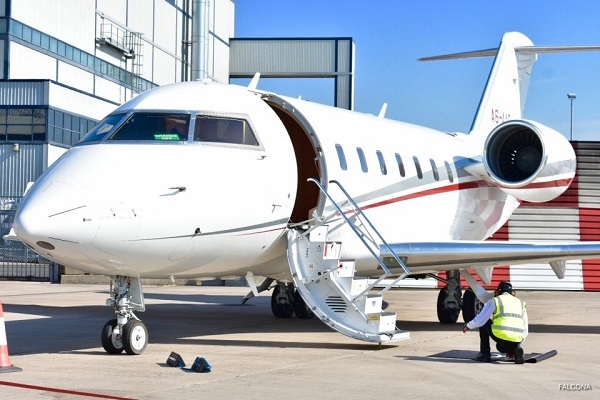
*Private jet
Abimbola Joseph
Aviation experts have called for stricter regulation and tougher sanctions against private jet operators violating safety rules, following two recent incidents that have raised concerns about regulatory enforcement in Nigeria’s aviation sector.
The experts urged the Nigerian Civil Aviation Authority (NCAA) and other relevant agencies to strengthen surveillance, improve information-sharing and ensure that operators and pilots responsible for safety breaches face appropriate penalties.
The concerns followed the landing of a private jet, registration number N989BC, operated by VMO Aero Ltd, on a road in Ogwashi-Uku, Delta State, and a separate incident involving a Challenger 604 aircraft, registration number T7-SEI, operated by Triton Aviation, whose crew reported that a door had opened mid-flight.
General Secretary of the Aviation Safety Round Table Initiative, Olumide Ohunayo, questioned the authorities’ handling of the Ogwashi-Uku incident, particularly the delay in publishing a comprehensive investigation report and disclosing the enforcement measures taken against those involved.
Speaking to Vanguard, Ohunayo said the authorities had yet to explain the outcome of the investigation months after the incident, despite the involvement of the Department of State Services, the Ministry of Aviation, the NCAA and the accident investigation authorities.
He questioned whether the pilot and the company responsible for managing the aircraft had faced prosecution or other regulatory sanctions.
However, he cautioned against panic over the incidents, describing them as serious occurrences that should prompt improvements in aviation safety regulations and enforcement.
Ohunayo noted that private aviation traditionally operated under less stringent requirements than commercial airlines, which face additional layers of safety certification and regulatory scrutiny.
Similarly, aviation security expert, retired Group Captain John Ojikutu, questioned the NCAA’s oversight of foreign-registered private aircraft operating in Nigeria.
He alleged that some operators might be receiving preferential treatment because of their connections to influential individuals, potentially weakening regulatory enforcement.
Ojikutu also questioned whether some private aircraft were being used for commercial charter services without the necessary approvals and security clearances.
He argued that security agencies and aviation regulators should investigate aircraft movements, flight plans and passenger arrangements to establish whether operators were complying with existing regulations.
Former Rector of the Nigerian College of Aviation Technology, Captain Sam Caulcrick, attributed the historical difference in regulatory scrutiny between private and commercial aviation partly to their funding structures.
According to him, commercial airlines contribute to regulatory agencies through charges such as the five per cent Ticket Sales Charge and Cargo Sales Charge, while private jet operators do not generate the same revenue because they do not carry fare-paying passengers.
He nevertheless said the NCAA had intensified its monitoring of private aircraft operations, particularly by examining passenger manifests to identify operators using aircraft approved for non-commercial purposes to run illegal charter businesses.
Caulcrick said the regulator had also suspended Permits for Non-Commercial Flights (PNCFs) issued to operators found breaching the rules.
He said the increased enforcement signalled a shift away from the relatively limited oversight historically associated with private aviation. The experts maintained that recent incidents should serve as a warning to aviation authorities to close regulatory gaps, strengthen accountability and ensure that private aircraft operators are held to the safety standards required by law.