Atiku Abubakar Biography: Age, Wife, Children, Education, Career and Net Worth
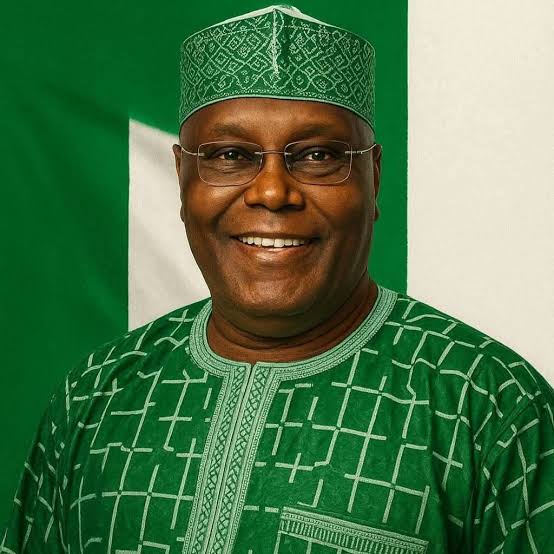
Atiku Abubakar is a Nigerian politician, businessman, and education advocate who served as the country’s vice president from 1999 to 2007 under President Olusegun Obasanjo. Born on November 25, 1946, in Jada, present-day Adamawa State, Nigeria, he is one of the country’s most prominent political figures and has contested several presidential elections.
Before entering politics full-time, Atiku spent approximately two decades working with the Nigeria Customs Service. He later established business interests and became involved in Nigeria’s democratic transition, eventually serving as vice president during the country’s Fourth Republic.
Throughout his political career, Atiku has contested presidential elections under several political parties, including the Social Democratic Party (SDP), Action Congress, People’s Democratic Party (PDP), and All Progressives Congress (APC). He has also advocated for restructuring Nigeria’s federal system and improving access to quality education.
Beyond politics, he is the founder of the American University of Nigeria in Yola, Adamawa State. His political journey has been marked by major electoral campaigns, party defections, public controversies, and persistent efforts to become president.
Atiku Abubakar Profile
| Personal Information | Details |
|---|---|
| Full name | Atiku Abubakar |
| Date of birth | November 25, 1946 |
| Place of birth | Jada, Adamawa State, Nigeria |
| Nationality | Nigerian |
| Ethnicity | Fulani |
| Religion | Islam |
| Occupation | Politician, businessman, education advocate |
| Political party | African Democratic Congress (ADC), according to the supplied material |
| Previous political parties | PDP, APC, Action Congress, SDP |
| Former position | Vice President of Nigeria |
| Vice-presidential tenure | May 29, 1999 – May 29, 2007 |
| President served under | Olusegun Obasanjo |
| Education | Diploma in Hygiene; Law Diploma; master’s degree in International Relations |
| University founded | American University of Nigeria |
| Marital history | Multiple marriages |
| Children | Reportedly 28 |
| State of origin | Adamawa State |
| Traditional titles | Turaki of Adamawa; Waziri of Adamawa |
Atiku Abubakar Early Life and Family Background
Atiku Abubakar was born on November 25, 1946, in Jada, a community in present-day Adamawa State, northeastern Nigeria. At the time of his birth, the area was part of the British Cameroons, which later became associated with Nigeria following the 1961 British Cameroons referendum.
His father, Garba Abubakar, was a trader and farmer, while his mother was Aisha Kande. Atiku Abubakar was named after his paternal grandfather, Atiku Abdulqadir, who originated from Wurno in present-day Sokoto State before migrating to the Jada area.
His maternal grandfather, Inuwa Dutse, was associated with Dutse, now in Jigawa State. Atiku grew up as the only surviving child of his parents after his only sister died in infancy.
In 1957, when Atiku was still a child, his father died by drowning while crossing a river on a journey to Toungo, a neighbouring community. The loss significantly affected his early family life.
His father initially opposed Western-style education and did not want him to attend conventional schools. However, government authorities discovered that Atiku was not attending compulsory school, leading to his father’s brief imprisonment for failing to comply with the education requirements. His mother eventually paid the fine, allowing Atiku to pursue formal education.
These early experiences formed part of the background to his later interest in education and the development of learning opportunities in Nigeria.
Atiku Abubakar Education
Atiku Abubakar began his formal education at Jada Primary School in Adamawa, where he enrolled at the age of eight. He completed his primary education in 1960 and proceeded to Adamawa Provincial Secondary School.
He graduated from secondary school in 1965 after completing the West African Senior School Certificate Examination.
Following secondary school, Atiku briefly attended the Nigeria Police College in Kaduna. However, he left the institution because he could not provide the required O-Level Mathematics result.
He subsequently worked as a tax officer in the regional Ministry of Finance before gaining admission to the School of Hygiene in Kano in 1966. He completed his diploma programme in 1967 and served as interim president of the school’s student union.
That same year, he enrolled for a Law Diploma at the Institute of Administration at Ahmadu Bello University with the support of a regional government scholarship. He completed the programme in 1969.
In addition to his earlier qualifications, Atiku Abubakar pursued postgraduate studies later in life. In 2021, he completed a master’s degree in International Relations at Anglia Ruskin University in the United Kingdom.
His educational journey reflects a combination of formal studies, public service experience, and an enduring interest in higher education.
Atiku Abubakar Career Before Politics
Career in the Nigeria Customs Service
After completing his studies in 1969, Atiku Abubakar joined the Nigeria Customs Service during the Nigerian Civil War.
He worked with the service for approximately 20 years, gradually rising through the ranks to become a deputy director. His career exposed him to Nigeria’s customs administration, trade regulations, revenue collection, and public-sector operations.
Atiku retired from the Nigeria Customs Service in April 1989 and subsequently devoted more time to business and politics.
Business Ventures
Atiku began exploring business opportunities while still working as a customs officer. His early business interests included real estate, an industry in which he reportedly invested during his years in public service.
After retiring from the Customs Service, he expanded his commercial activities and became involved in other business ventures.
His business background later became an important part of his public profile, although the precise value of his assets and business holdings has not been established through a universally accepted public accounting.
Atiku Abubakar’s Political Career
Atiku Abubakar’s political journey spans Nigeria’s transition from military rule to civilian democracy. He participated in political activities during the late 1980s, served as vice president for eight years, and subsequently became a recurring presidential candidate.
Early Political Activities
Atiku’s involvement in politics began before his retirement from the Customs Service. During the early 1980s, he supported the governorship campaign of Bamanga Tukur, who was then associated with the leadership of the Nigeria Ports Authority.
Towards the end of his Customs career, Atiku became involved with political meetings organized by Shehu Musa Yar’Adua, a former senior military officer who later became an influential figure in Nigeria’s democratic transition.
These meetings contributed to the formation of the People’s Front of Nigeria, a political movement that brought together several prominent politicians.
In 1989, Atiku became national vice-chairman of the People’s Front and was elected to represent his constituency at the Constituent Assembly responsible for considering a new constitution for Nigeria.
When the military government declined to register the People’s Front as a political party, the group joined the Social Democratic Party.
Governorship Ambitions in Adamawa State
In 1990, Atiku announced his intention to contest for the governorship of Gongola State. However, the state was subsequently divided into Adamawa and Taraba states.
He went on to win the Social Democratic Party’s governorship primary in Adamawa State in 1991 but was disqualified from contesting the subsequent election.
Atiku continued pursuing his political ambitions and participated in the Social Democratic Party’s presidential primaries in 1993.
He finished behind Moshood Abiola and Baba Gana Kingibe during the primary process. Although discussions reportedly took place about his possible role in Abiola’s campaign, Kingibe ultimately became Abiola’s running mate in the June 12, 1993, presidential election.
Election as Governor and Selection as Vice-Presidential Candidate
In 1998, Atiku joined the People’s Democratic Party and secured its nomination for the Adamawa State governorship election.
He won the election but did not assume the governorship because he was selected as the running mate to the PDP’s presidential candidate, Olusegun Obasanjo.
Obasanjo and Atiku won the 1999 presidential election, ushering in a new period of civilian democratic government after years of military rule.
Atiku Abubakar as Vice President of Nigeria
Atiku Abubakar was sworn in as vice president on May 29, 1999, alongside President Olusegun Obasanjo. He served two consecutive four-year terms, remaining in office until May 29, 2007.
His tenure coincided with Nigeria’s early years under the Fourth Republic and included debates about economic reform, privatization, constitutional arrangements, and democratic governance.
First Term: 1999–2003
During his first term, Atiku chaired the National Economic Council and headed the National Council on Privatization.
He was involved in the federal government’s privatization programme, which sought to reform public enterprises that were considered inefficient, financially unsustainable, or poorly managed.
The privatization programme formed part of broader efforts to restructure sections of the Nigerian economy and increase private-sector participation.
Supporters of the reforms argued that privatization could improve efficiency and reduce the financial burden of maintaining underperforming public enterprises. However, privatization policies also attracted criticism over transparency, implementation, and the outcomes of some transactions.
Second Term: 2003–2007
Atiku Abubakar was re-elected vice president in 2003, but his second term was marked by an increasingly strained relationship with Obasanjo.
The major disagreement concerned proposals to amend the Nigerian Constitution to allow the president to seek another term beyond the existing two-term limit. The proposal became widely known as the Third Term Agenda.
Atiku Abubakar opposed the proposed constitutional changes, which eventually failed to secure the necessary legislative approval.
The dispute deepened divisions within the PDP and contributed to Atiku’s decision to leave the party and pursue his own presidential ambitions ahead of the 2007 election.
The disagreement became one of the defining political episodes of his vice-presidential career.
Atiku Abubakar’s Presidential Campaigns
Atiku has sought Nigeria’s presidency on multiple occasions, participating in party primaries and general elections under different political platforms.
1993 Presidential Primaries
Atiku’s first major presidential ambition emerged during the 1993 transition programme.
He contested the Social Democratic Party’s presidential primaries but finished behind Moshood Abiola and Baba Gana Kingibe.
Although he did not secure the party’s presidential nomination, the contest helped establish his presence in national politics.
2007 Presidential Election
In 2006, Atiku Abubakar left the PDP following his disagreement with President Obasanjo and joined the Action Congress.
He was selected as the party’s presidential candidate for the 2007 general election.
His candidacy faced a legal challenge after the Independent National Electoral Commission initially omitted his name from the list of presidential candidates. Atiku challenged the decision in court, and the Supreme Court ruled that INEC lacked the authority to disqualify him in the manner it had attempted.
He was subsequently allowed to contest the election.
According to the official results, Atiku Abubakar finished third behind Umaru Musa Yar’Adua of the PDP and Muhammadu Buhari of the All Nigeria Peoples Party, receiving approximately 7% of the vote.
He rejected the election outcome and questioned the credibility of the electoral process.
2011 Presidential Election
Atiku returned to the PDP after the 2007 election and again sought the party’s presidential nomination.
During the 2011 PDP presidential primary, he contested against incumbent President Goodluck Jonathan and other aspirants.
Jonathan won the primary decisively, defeating Atiku and securing the party’s nomination for the general election.
2015 Presidential Election
In 2014, Atiku joined the All Progressives Congress, a party formed through the merger of several opposition groups.
He hoped to secure the APC’s presidential ticket for the 2015 election. However, Muhammadu Buhari won the party’s presidential primary, while Atiku finished behind Buhari and Rabiu Kwankwaso.
Buhari went on to win the general election, defeating incumbent President Goodluck Jonathan.
Return to the PDP in 2017
Atiku announced his departure from the APC in November 2017 and formally returned to the PDP in December of that year.
He described the return as a homecoming, explaining that the issues that had prompted his earlier departure had changed.
His return positioned him to seek the PDP’s presidential nomination ahead of the 2019 general election.
2019 Presidential Election
Atiku won the PDP’s presidential primary in October 2018, defeating several aspirants, including Aminu Tambuwal.
He campaigned on issues including economic development, job creation, education, and the privatization of selected state-owned enterprises.
Atiku lost the February 2019 presidential election to incumbent President Muhammadu Buhari. He challenged the outcome in court, arguing that the election had not been conducted credibly.
The courts ultimately rejected his challenge, leaving Buhari’s victory intact.
2023 Presidential Election
Atiku secured the PDP’s presidential ticket again in May 2022 after defeating several aspirants, including former Rivers State governor Nyesom Wike.
He contested the 2023 presidential election against Bola Ahmed Tinubu of the APC, Peter Obi of the Labour Party, and other candidates.
The Independent National Electoral Commission declared Tinubu the winner, while Atiku finished second.
Atiku challenged the result before the Presidential Election Petition Court, seeking legal remedies that included the nullification of Tinubu’s victory or a fresh election.
The election tribunal dismissed his petition, and the Supreme Court subsequently upheld Tinubu’s election.
The result marked another unsuccessful presidential bid for Atiku.
Atiku Abubakar and the African Democratic Congress
In 2025, Atiku left the PDP and became associated with the African Democratic Congress as part of efforts to build an opposition coalition ahead of the 2027 general election.
His move was linked to wider discussions about cooperation among opposition politicians seeking to challenge the APC.
According to the supplied material, Atiku subsequently won the ADC’s presidential primary in 2026 and emerged as the party’s candidate for the 2027 presidential election.
Editorial note: Because political-party affiliations, primary results, and official candidate lists are time-sensitive, verify the latest ADC announcements and INEC records before publishing this section.
Atiku Abubakar Political Ideology and Views
Advocacy for True Federalism
One of Atiku’s most prominent political positions is his advocacy for restructuring Nigeria’s federal system.
In 2017, he launched his True Federalism campaign, arguing that the country’s federating units should exercise greater autonomy and have clearer responsibilities over governance and economic development.
His proposals have included devolving certain powers from the federal government to states, improving fiscal accountability, and encouraging states to develop their local economies.
Atiku has argued that greater decentralization could encourage competition among states, attract investment, and reduce excessive dependence on federal revenue allocations.
His position has attracted support from Nigerians who believe that restructuring could improve governance and economic productivity. However, debates continue over how far decentralization should go and how it should be implemented.
Education Reform
Education has been another major theme in Atiku’s public life.
He has frequently criticized the decline in educational standards and called for increased investment in schools, teacher training, and the development of practical skills.
His advocacy is closely associated with the establishment of the American University of Nigeria, which he founded in Yola in 2005.
The institution was established with an educational model emphasizing critical thinking, classroom participation, problem-solving, and approaches associated with American-style higher education.
Atiku has maintained that teachers and educational institutions are essential to Nigeria’s long-term development.
He has also supported educational assistance initiatives, including scholarships for students affected by insecurity in northeastern Nigeria.
American University of Nigeria
The American University of Nigeria (AUN) is one of Atiku Abubakar’s most prominent initiatives outside politics.
Founded in 2005 in Yola, Adamawa State, the university was established to provide higher education based on an American-style liberal arts model.
The institution emphasizes critical thinking, practical learning, student participation, and the development of skills relevant to contemporary workplaces.
Atiku has explained that his exposure to educational institutions in the United States influenced his desire to establish a university in Nigeria that could provide comparable learning approaches.
AUN has become a significant part of his public legacy and is frequently cited in discussions about his contributions to education and private-sector investment.
Atiku Abubakar’s Business Interests
Atiku’s career as a businessman began while he was still employed by the Nigeria Customs Service.
His early investments reportedly included real estate, and he later expanded his commercial activities after retiring from public service in 1989.
Over the years, his business interests and financial activities have attracted public attention because of his prominence in Nigerian politics.
However, publicly circulated estimates of his personal wealth vary, and there is no universally accepted, independently verified figure that establishes his complete net worth.
When discussing his business career, it is important to distinguish documented business activities from claims about the precise value of his assets.
Atiku Abubakar’s Net Worth
Atiku Abubakar’s exact net worth is not publicly established through a comprehensive, independently verified financial statement.
His wealth is commonly associated with his business ventures, real estate investments, and other commercial interests accumulated over several decades.
However, online estimates of his net worth differ considerably and should not automatically be treated as fact.
A responsible biography should therefore avoid presenting a specific dollar amount as confirmed unless it can be supported by credible financial records or reliable reporting.
Net worth: Not independently verified.
Atiku Abubakar Controversies and Allegations
Atiku Abubakar’s long political and business career has been accompanied by several controversies. Allegations, investigations, court findings, and proven criminal convictions should be distinguished carefully.
The William Jefferson Investigation
One of the most widely reported controversies associated with Atiku concerned a United States corruption investigation involving former congressman William Jefferson.
In the mid-2000s, American investigators examined allegations that Jefferson had solicited bribes from business interests seeking opportunities in Africa. The investigation included claims concerning a proposed business arrangement involving Nigerian interests and Atiku.
Jefferson was convicted in the United States on corruption-related charges in 2009. His case involved bribery and other offenses associated with his dealings with businesses seeking to operate in Africa.
Atiku denied wrongdoing and disputed claims that he had agreed to receive personal financial benefits.
The existence of the investigation and Jefferson’s conviction should not be represented as proof that Atiku was himself convicted of a crime. Any description of the allegations against Atiku should be supported by reliable legal records and clearly distinguish his position from Jefferson’s criminal conviction.
Political Disagreements and Party Defections
Atiku’s repeated changes of political party have attracted criticism from opponents who question his political consistency.
He has moved between the PDP, APC, Action Congress, and other political platforms during different stages of his career.
Atiku has generally presented these decisions as responses to disagreements within political parties and differences over leadership, governance, and political direction.
His supporters, meanwhile, view his continued involvement in national politics as evidence of his persistence and ambition.
Questions About His U.S. Travel
At various times, Atiku’s ability to travel to the United States became a subject of political debate and media reporting.
His representatives publicly addressed speculation about his immigration status, while the U.S. government indicated that it would require his consent before disclosing certain personal immigration information.
Atiku later travelled to the United States in January 2019.
Any account of the issue should avoid claiming that a particular immigration restriction or legal finding existed unless supported by official documentation.
Atiku Abubakar Personal Life: Wife and Children
Atiku Abubakar’s personal life has attracted considerable public interest. He has had multiple marriages and is widely reported to have 28 children.
He has explained that his large family reflects his desire to ensure that his children do not experience the loneliness he remembers from his own childhood.
Atiku Abubakar’s Wives
Atiku has been married to several women over the course of his life. Accounts of his marriages commonly identify the following women:
- Titilayo Albert: Atiku’s first wife, whom he married in 1971.
- Ladi Yakubu: His second wife, whom he married in 1979. The marriage later ended in divorce.
- Princess Rukaiyatu: His wife from 1983 and a daughter of the Lamido of Adamawa, Aliyu Mustafa.
- Jennifer Iwenjiora Douglas: Also known as Jennifer Atiku Abubakar, she married Atiku after his divorce from Ladi Yakubu. She later publicly confirmed their separation.
- Fatima Shettima: Another wife identified in biographical accounts of Atiku’s family.
Because his marital history includes a divorce and changes in the order of his marriages, descriptions of the number of wives he has had should distinguish between current marriages and historical marriages.
Atiku Abubakar’s Children
Atiku is widely reported to have 28 children from his marriages.
His children include Abba, Atiku, Fatima, Halima, Aminu, Aisha, Hadiza, Zainab, Maryam, Ummi-Hauwa, Mustapha, Laila, Abdulsalam, Mohammed, Ahmed, Shehu, and Hafsat, among others.
Some of his children have maintained public profiles through business, professional activities, or involvement in public affairs.
Given the size of his family, published lists may differ in the names and order provided. A complete list should be checked against reliable biographical sources before publication.
Atiku Abubakar Traditional Titles and Awards
Atiku Abubakar has received traditional titles and recognition for his political activities, business interests, and contributions to education.
Turaki of Adamawa
In 1982, Atiku received the traditional title of Turaki of Adamawa from Aliyu Mustafa, the traditional ruler of Adamawa and Atiku’s future father-in-law.
The title was associated with responsibilities within the traditional palace.
Waziri of Adamawa
In June 2017, Atiku was conferred the title of Waziri of Adamawa. His previous title of Turaki was subsequently transferred to his son, Aliyu.
Harris Wofford Global Citizen Award
In 2011, the National Peace Corps Association honoured Atiku with the Harris Wofford Global Citizen Award.
The recognition was associated with his contributions to higher education and public life in Africa.
He had also donated $750,000 to the association in 2012 to support an initiative involving global leaders and discussions about the impact of the Peace Corps. The donation was reported as one of the largest individual contributions in the organization’s history.
Atiku Abubakar’s Legacy
Atiku Abubakar’s political legacy is shaped by his eight years as vice president, his repeated attempts to become president, his advocacy for restructuring Nigeria’s federal system, and his investments in education.
As vice president, he participated in economic reform initiatives and experienced one of the most significant political disputes of the Obasanjo administration over the proposed extension of presidential tenure.
His subsequent presidential campaigns made him a recurring figure in Nigeria’s opposition politics. Although he has not won the presidency, he has remained influential in discussions about electoral competition, political coalitions, and the future structure of the Nigerian federation.
His establishment of the American University of Nigeria represents a major part of his non-political legacy.
Atiku’s career has also generated controversy, particularly around political defections, business interests, and allegations connected to international investigations. These issues continue to shape public debate about his record.
Ultimately, his place in Nigerian history will be assessed through his public service, political decisions, business activities, educational initiatives, and the broader consequences of his participation in the country’s democratic development.
Frequently Asked Questions About Atiku Abubakar
How old is Atiku Abubakar?
Atiku Abubakar was born on November 25, 1946.
Where is Atiku Abubakar from?
He was born in Jada, in present-day Adamawa State, northeastern Nigeria.
Who is Atiku Abubakar?
Atiku Abubakar is a Nigerian politician and businessman who served as vice president from 1999 to 2007 under President Olusegun Obasanjo. He is also the founder of the American University of Nigeria.
Who was Atiku Abubakar’s president?
Atiku served as vice president under Olusegun Obasanjo for two terms, from 1999 to 2007.
How many times has Atiku Abubakar contested for president?
He has participated in several presidential primaries and general-election campaigns, including contests in 1993, 2007, 2011, 2015, 2019, and 2023.
How many wives does Atiku Abubakar have?
Atiku has had multiple marriages. Public biographical accounts identify five women across his marital history, although one of those marriages ended in divorce. The number of current marriages should be verified before publication.
How many children does Atiku Abubakar have?
He is widely reported to have 28 children.
What is Atiku Abubakar’s net worth?
His exact net worth has not been established through a comprehensive, independently verified public financial statement. Online estimates should be treated cautiously.
Which university did Atiku Abubakar establish?
He founded the American University of Nigeria in Yola, Adamawa State, in 2005.
What political party does Atiku Abubakar belong to?
The supplied material identifies him with the African Democratic Congress and states that he won its presidential primary in 2026. This information should be checked against current party announcements and official electoral records before publication.
Conclusion
Atiku Abubakar is one of Nigeria’s most enduring political figures, having served as vice president for eight years and participated in presidential contests spanning several decades.
His journey from the Nigeria Customs Service to the highest levels of national politics reflects a career built around public service, business, political organization, and educational advocacy.
While his presidential ambitions have repeatedly ended in defeat, his influence on opposition politics and debates about federalism has remained significant. His establishment of the American University of Nigeria also represents a lasting contribution beyond electoral politics.
As Nigeria approaches another election cycle, Atiku’s political activities and the future of opposition alliances will continue to attract attention.
Enjoyed reading this biography? Explore more inspiring and informative biographies of notable personalities, including their early life, education, career, achievements, and net worth. Discover the stories behind the people making headlines and shaping their respective fields in politics, entertainment, business, sports, and beyond. Read more biography articles here.