Coalition wants stronger bank rules to protect communities
The Fair Finance Nigeria Coalition has urged the Central Bank of Nigeria (CBN) and the National Assembly to strengthen regulations governing banks and protect host communities from the adverse impacts of bank-funded lending and investments.
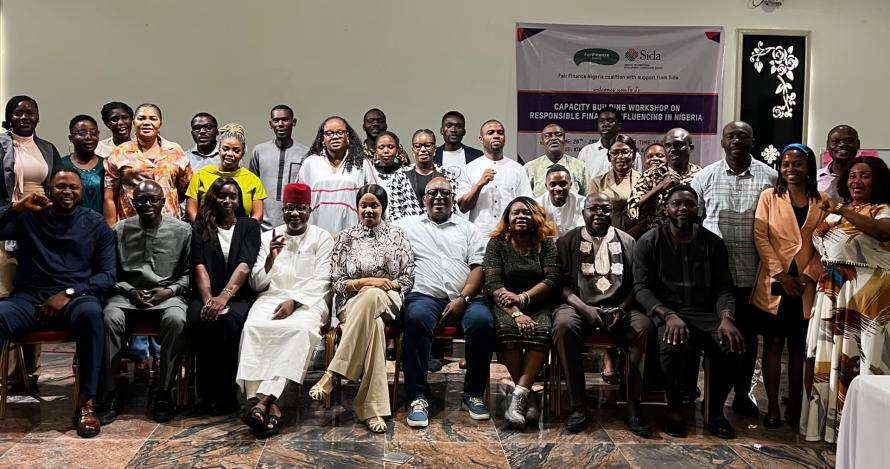
The call was made in Uyo at the end of a three-day capacity-building workshop on responsible finance advocacy in Nigeria.
Udoh Umoh
The Fair Finance Nigeria Coalition has urged the Central Bank of Nigeria (CBN) and the National Assembly to strengthen regulations governing banks and protect host communities from the adverse impacts of bank-funded lending and investments.
The call was made in Uyo at the end of a three-day capacity-building workshop on responsible finance advocacy in Nigeria.
The coalition comprises Oxfam, CODE, CISLAC, BudgIT, STEPS and Policy Alert. The workshop was supported by the Swedish International Development Cooperation Agency (Sida).
Henry Ushie, Accountable Governance Programme Manager at Oxfam Nigeria, said regulators should ensure that financial institutions operated within frameworks that protected citizens and communities affected by bank-financed projects.
Ushie urged the CBN to ensure that existing sustainability policies were effectively implemented rather than left on paper.
He also called on the National Assembly to strengthen its oversight by reviewing relevant laws and scrutinising the implementation of sustainability frameworks in the financial sector.
“We are calling on banks and financial institutions, and their regulator, the Central Bank of Nigeria, to do the needful by improving the regulatory framework.
“The National Assembly should improve its oversight of these banks and their regulators, to make them sit up and review their regulations,” Ushie said.
He said responsible financing should go beyond minimum regulatory compliance, urging banks to adopt clear sustainability policies and directly involve communities affected by their investments.
Ushie identified gaps in areas including corruption, biodiversity, climate justice, human rights, gender, transparency and accountability, expressing concern about the impact of bank-financed activities on host communities.
Another coalition member, Dr Harry Udoh, said the workshop was aimed at mobilising community, media and civil society voices to demand greater transparency and accountability in Environmental, Social and Governance (ESG) practices.
Udoh said the consequences of irresponsible financing were evident in the Niger Delta, citing a survey conducted in Ibeno and Eastern Obolo, where farmlands and fisheries had reportedly been affected by oil company activities financed by banks.
“Financial institutions providing funding for such operations cannot be divorced from their consequences. We want communities to be able to speak up and civil society to engage in bringing about social change within the environment,” he said.
Magaji Mato, Finance and Administration Manager at CISLAC, said the initiative had already produced results through policy assessments, community engagements and a dialogue in Eket.
He said the Eket dialogue led to a petition to relevant authorities over alleged harm suffered by host communities.
Mato expressed optimism that the active participation of stakeholders would translate into stronger advocacy for responsible financing and greater accountability within Nigeria’s financial sector.
The call was made in Uyo at the end of a three-day capacity-building workshop on responsible finance advocacy in Nigeria.