Nwoko urges private investors to boost football development
The Chancellor of the Sports University of Nigeria, Senator Ned Nwoko, has called for stronger collaboration between government institutions and private stakeholders to build a sustainable and competitive football structure in Nigeria.
Nwoko, who represents the Delta North Senatorial District and serves as Vice Chairman of the Senate Committee on Sports and Youth Development, made the call in an interview on Monday.
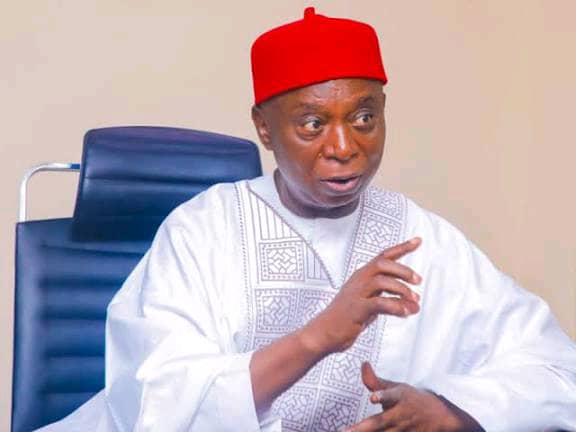
*Nwoko
Nathan Tamarapreye
The Chancellor of the Sports University of Nigeria, Senator Ned Nwoko, has called for stronger collaboration between government institutions and private stakeholders to build a sustainable and competitive football structure in Nigeria.
Nwoko, who represents the Delta North Senatorial District and serves as Vice Chairman of the Senate Committee on Sports and Youth Development, made the call in an interview on Monday.
He stressed that increased private sector participation is essential for the growth of sports in the country and for achieving lasting success both locally and internationally.
According to him, inadequate funding and weak private sector investment remain major constraints to football development nationwide.
“Nigerian investors have both the capacity and the influence to transform football into a thriving industry that benefits the nation economically and socially,” he said.
The lawmaker urged Nigerian billionaires and corporate investors to play a more active role in funding football clubs, noting that the government alone cannot shoulder the responsibility.
“Most of the challenges facing our football ecosystem today are linked to funding. The government cannot do everything.
“Across the world, many successful football clubs are driven by private investors, and Nigeria cannot afford to remain an exception,” he added.
Nwoko further observed that the limited number of professionally run clubs has reduced opportunities for players, coaches, and referees to gain the exposure required for international competitiveness.
“The more clubs we have, the greater the opportunities for engagement, professional development, and international qualification. Without adequate investment, those opportunities remain limited,” he said. He emphasised that private investment in football should not be viewed merely as financial support for sports, but as a broader contribution to youth development, job creation, and national sporting prestige.