NBA faults EFCC over Osun State account freeze
The Nigerian Bar Association (NBA) has criticised the Economic and Financial Crimes Commission (EFCC) over its decision to freeze the Osun State Government’s statutory allocation account, describing the move as unconstitutional without a valid court order.
The EFCC directed First Bank to place a post-no-debit restriction on the state’s statutory allocation account as part of an ongoing investigation into the alleged mismanagement of about ₦11 billion in Ecology Funds, Intervention Funds and Federal Account Allocation Committee (FAAC) allocations.
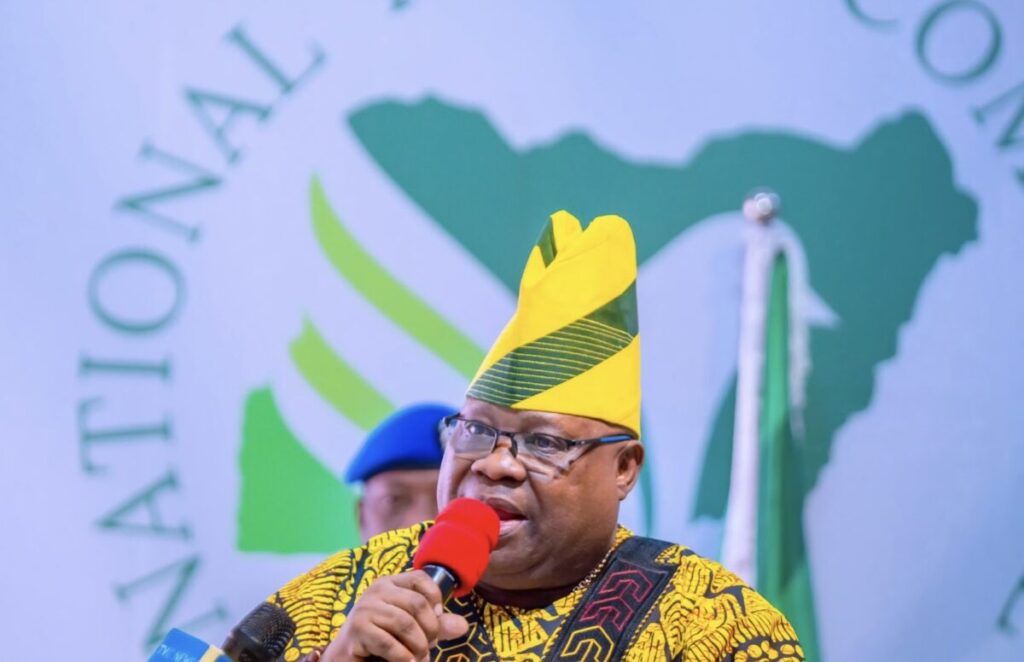
*Gov. Adeleke
The Nigerian Bar Association (NBA) has criticised the Economic and Financial Crimes Commission (EFCC) over its decision to freeze the Osun State Government’s statutory allocation account, describing the move as unconstitutional without a valid court order.
The EFCC directed First Bank to place a post-no-debit restriction on the state’s statutory allocation account as part of an ongoing investigation into the alleged mismanagement of about ₦11 billion in Ecology Funds, Intervention Funds and Federal Account Allocation Committee (FAAC) allocations.
In a letter dated August 5, 2026, the anti-graft agency instructed the bank to suspend all withdrawals from the account pending the conclusion of its investigation. The commission said the action followed suspicious transfers of public funds to several corporate accounts, insisting it was taken to prevent further movement of the money and was not connected to the forthcoming Osun State governorship election.
Speaking on the development, NBA President Afam Osigwe (SAN) argued that the EFCC lacked the constitutional authority to impose a blanket restriction on a state government’s finances without judicial authorisation.
He maintained that while the commission could obtain a court order to freeze specific accounts linked to alleged criminal activities, it could not lawfully freeze all accounts belonging to a state government.
According to Osigwe, such a directive would cripple governance, amount to an abuse of power and violate constitutional provisions governing the operations of state governments. He also advised banks not to comply with any directive seeking to freeze a state’s accounts without a valid court order.
Several Senior Advocates of Nigeria also questioned the legality of the EFCC’s action. Adeyinka Olumide-Fusika (SAN), Isiaka Olagunju (SAN) and Chief Mike Ahamba (SAN) argued that anti-graft agencies must obtain court approval before freezing government accounts, warning that any contrary action would undermine constitutional principles and the rule of law.
However, Professor Damilola Olawuyi (SAN) defended the use of account restrictions as a recognised anti-corruption tool, provided they are exercised strictly within the law. Similarly, Wolemi Esan (SAN) noted that under the Money Laundering (Prevention and Prohibition) Act, the EFCC could issue a temporary stop order for up to 72 hours without prior court approval, but any restriction beyond that period must be backed by a court order.
Civil society organisations expressed mixed reactions. While the Civil Society Legislative Advocacy Centre urged the Osun State Government to seek judicial redress if it believed the restriction was unlawful, the Centre for Anti-Corruption and Open Leadership said the EFCC would be justified if its action was based on credible evidence rather than political considerations.
The development also drew sharp political reactions. Opposition parties, including the African Democratic Congress, Labour Party, Nigeria Democratic Congress, Social Democratic Party and Young Progressives Party, accused the Federal Government of using federal institutions to undermine the Osun State Government ahead of the August 15 governorship election.
The ruling All Progressives Congress, however, defended the EFCC, arguing that the commission should be allowed to carry out lawful investigations without political interference and that there was no evidence it had acted outside its statutory powers.
Meanwhile, Osun State Attorney General and Commissioner for Justice, Oluwole Jimi-Bada, said the state government would challenge the EFCC’s action in court. He insisted that although the commission had the power to investigate the state’s accounts, it could not lawfully freeze them without a court order.
The state’s Commissioner for Finance, Sola Ogungbile, also condemned the restriction, warning that it could disrupt government operations and negatively affect public service delivery.