Lagos transmission upgrades add 208MW to grid
*Power-grid
Lagos has gained an additional 208 megawatts of bulk transmission capacity following the completion of major upgrades at the Ijora and Apapa Road transmission substations, the Federal Government said on Monday.
The projects are expected to ease longstanding transmission constraints and provide more electricity for industrial, commercial and residential areas served by Eko Electricity Distribution Company.
The Minister of Power, Joseph Tegbe, commissioned the upgraded facilities, describing the investment as part of efforts to remove infrastructure bottlenecks that have limited the delivery of available electricity to consumers.
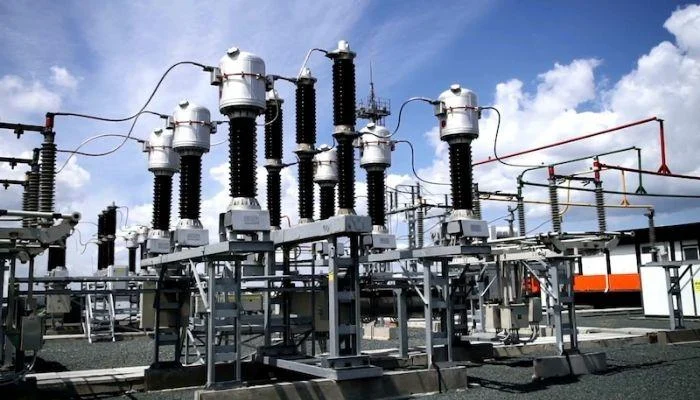
At Ijora, two new 100MVA transformers have raised the substation’s installed capacity from 90MVA to 230MVA, providing an additional 112MW of bulk transmission capacity.
The upgrade is expected to strengthen electricity supply to Ijora, Costain, Oyingbo, Customs and surrounding communities.
Tegbe said the expansion was particularly significant because Ijora serves a densely populated and economically important part of Lagos, with major industrial facilities, commercial centres and port-related activities.
He said the previous infrastructure had become inadequate as population growth and economic activity increased demand for electricity, leaving some consumers with suppressed supply.
“At Ijora, we are changing that story,” the minister said, noting that the additional capacity should create room for greater economic activity in the area.
He stressed that increasing generation alone would not solve Nigeria’s electricity problems without a transmission network capable of moving available power to where it was needed.
At Apapa Road, the installation of two new 60MVA transformers and modern gas-insulated switchgear has increased the substation’s capacity from 60MVA to 180MVA, adding another 96MW to the transmission network.
The upgrade is expected to improve bulk power supply to Apapa Causeway, Ijora, Amukoko, Ajegunle, Apapa Wharf, Tin Can Island and other major commercial and industrial areas.
The Transmission Company of Nigeria’s Managing Director, Sule Ahmed Abdulaziz, said the Apapa project replaced an outdoor transformer that had been installed as a temporary measure after the original facility, commissioned in 1985, was decommissioned.
He said the projects, supported by the Japan International Cooperation Agency and the World Bank in partnership with TCN, formed part of broader efforts to modernise the transmission network and improve grid reliability.
Tegbe said the government’s power-sector strategy was closely linked to President Bola Tinubu’s ambition of expanding Nigeria’s economy, arguing that dependable electricity was essential to industrial growth and investment.
He commended TCN, the Nigerian Independent System Operator and the development and technical partners involved in delivering the projects.
Abdulaziz called for further grant funding to rehabilitate other vulnerable sections of the transmission network, saying continued investment was necessary to sustain improvements in grid capacity and stability.