Kogi LGs repaid ₦2.1bn loan used for Bello children’s fees, court hears
An EFCC investigator tells court that regular payments from local government accounts serviced a loan allegedly used to pay school fees for the former governor’s children.
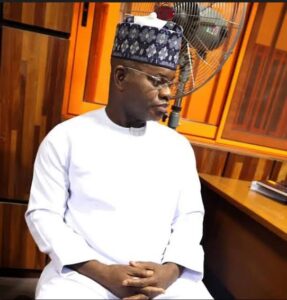
A fresh dimension emerged on Tuesday in the alleged ₦110.4bn fraud trial of former Kogi State Governor Yahaya Bello, as an Economic and Financial Crimes Commission (EFCC) investigator told a court how several local government councils allegedly repaid a ₦2.1bn loan used to finance school fees for Bello’s children.
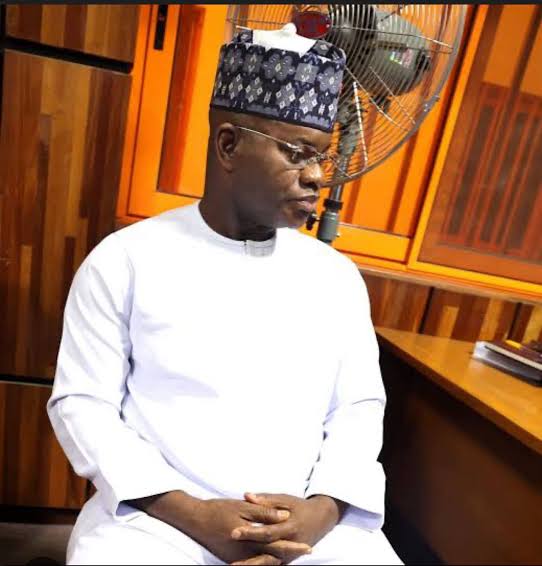
*Yahaya Bello
Etim Ekpimah
An EFCC investigator tells court that regular payments from local government accounts serviced a loan allegedly used to pay school fees for the former governor’s children.
A fresh dimension emerged on Tuesday in the alleged ₦110.4bn fraud trial of former Kogi State Governor Yahaya Bello, as an Economic and Financial Crimes Commission (EFCC) investigator told a court how several local government councils allegedly repaid a ₦2.1bn loan used to finance school fees for Bello’s children.
The investigator, John Justice, who testified as the prosecution’s 20th witness, said the loan was obtained through Keyless Nature Limited, a company allegedly linked to Abba Adaudu, before the proceeds were channelled through intermediaries, including Bureau de Change operators and personal bank accounts.
Testifying before Justice Maryanne Anineh of the Federal Capital Territory High Court in Maitama, Abuja, Justice said investigators traced regular payments from several Kogi local government accounts into Keyless Nature’s account between 2021 and December 2024.
Led in evidence by prosecution counsel, Kemi Pinheiro, SAN, the witness identified Ajaokuta, Ankpa, Ibaji, Omala, Ogori-Magongo, Ofu, Olamaboro, Okehi, Kogi, Kabba-Bunu, Ijumu and Igalamela-Odolu among the councils whose accounts allegedly funded the repayments.
He told the court that the transactions followed a consistent monthly pattern, with the payments described in the account records as principal liquidation.
“These inflows come monthly regularly into the Keyless Nature account. When aggregated, the narration would be principal liquidation,” he said.
According to the investigator, the loan arrangement appeared to have been structured to give the transactions the appearance of legitimate business dealings, while the local governments ultimately carried the repayment burden.
“In essence, my lord, the local governments bear the burden of repaying the loan,” he told the court.
Justice said the EFCC had written to the affected councils to establish the reasons for the payments but had yet to receive responses.
He added that Adaudu, who was invited by the commission, could not produce documents showing that the companies involved had executed contracts for the local governments.
The investigator also said the commission could not establish that Keyless Nature Limited, Hayzma or Forza Oil and Gas had received contracts from the councils.
Hayzma reportedly claimed to have supplied pharmaceutical products to the local governments. However, according to Justice, the company failed to provide details of its suppliers, evidence of registration or licensing by the National Agency for Food and Drug Administration and Control (NAFDAC), or other supporting documents.
He further told the court that Siyaka Adebenege, associated with the business, was an accountant rather than a pharmacist, while Adaudu could not demonstrate how the alleged contracts had been executed.
How the money allegedly moved
The witness said part of the loan proceeds was transferred to Bureau de Change operators, including Jamilu Abdullahi, while other amounts passed through companies and individual accounts.
He identified Kunfayakun Global Limited, E-traders International Limited and Abdullahi’s personal account among the beneficiaries of cash withdrawals.
According to him, investigators discovered that some withdrawals were subsequently treated as cash and redeposited into other accounts, a process allegedly designed to conceal the identities of the ultimate beneficiaries.
Justice said bank officials from Access Bank and Zenith Bank were invited during the investigation and voluntarily provided statements, transaction information and details of their branches’ cash-handling capacities.
The officials reportedly told investigators that some of the withdrawals exceeded the amounts their branches could ordinarily handle, putting their capacity at approximately ₦170m.
The banks also supplied CCTV footage showing how some of the transactions were carried out.
The investigator said further analysis of the accounts revealed that Abdullahi had interests in some of the companies involved in the transactions.
He added that representatives of the companies told investigators they had received the money to purchase US dollars, which were subsequently handed over to Abdullahi.
When questioned, Abdullahi reportedly said he did not know Hayzma, Bibas or Forza Oil and Gas but was acquainted with Adaudu, who allegedly instructed him to facilitate local and international dollar payments.
Justice said Abdullahi subsequently procured companies, including Whales, Forza Oil and Gas and Alyeshua, to facilitate the transactions, while Adaudu supplied details of the intended beneficiaries.
School fees paid through foreign accounts
The EFCC investigator told the court that part of the money was eventually transferred to the American International School of Abuja (AISA), including payments into its account with TD Bank outside Nigeria.
He said the payments were made towards the education of four children of the former governor — Na’ima, Farid, Fatima and Zahra Bello — as well as Zayyan Ali Bello, the son of Bello’s nephew, Ali Bello.
Referring to bank statements and email correspondence admitted as exhibits, Justice identified several dollar transactions that he said matched payments acknowledged by the school.
Among them were transfers of $49,575 and $45,675 recorded in November 2021, as well as payments of $78,125 and $42,145 on January 25 and 26, 2021.
He also identified four deposits totalling $74,920.71 on September 7, 2021, alongside other payments of $44,675 and $10,975 recorded in November that year.
Another $90,000 transfer was recorded on February 15, 2022.
The investigator said email correspondence between the school and Ali Bello corroborated several of the transactions and identified the children for whom the payments were made.
One email, according to him, confirmed receipt of $44,675 for Na’ima Bello, while another acknowledged $78,131 in payments.
He also referred to correspondence concerning $94,250 paid towards the school fees of Zahra and Fatima Bello, with the school requesting details of how the amount should be apportioned between the two pupils.
Another email confirmed receipt of $74,920.71, corresponding with the four deposits recorded in the school’s bank account on September 7, 2021.
Justice further identified correspondence confirming a payment of $10,975 for Farid Bello and another acknowledging $90,000 for Zayyan Ali Bello.
He told the court that although Ali Bello did not personally initiate the $90,000 transfer, the school’s correspondence linked the payment to him.
“Even though he didn’t pay directly, the email confirms that the money came from him,” the witness said.
EFCC recovers $760,910
The court also heard that the school entered into an advance-payment agreement covering tuition and other educational expenses for the five children until graduation.
Justice identified an agreement dated August 21, 2021, signed by Ali Bello on behalf of his uncle and executed by the school’s head.
He explained that the arrangement followed the school’s policy of not accepting payments covering more than two academic terms at a time.
The EFCC subsequently wrote to the school requesting the refund of $760,910.84, which the commission said represented advance payments allegedly made with funds belonging to the Kogi State Government.
According to the witness, the school requested official banking details before making the refund in instalments.
He confirmed that the entire $760,910.84 was eventually returned to the Federal Government through the EFCC.
When asked whether any member of the Bello family had approached the commission to request the recovery of the money, Justice answered in the negative.
The witness also referred to court documents arising from a separate case involving Ali Bello and the Incorporated Trustees of the American International School.
He said an affidavit filed by Ali Bello explained the arrangement for advance payment of school fees for his uncle’s children and his own son.
The court was further told that an application seeking a declaration that the fees paid by Yahaya Bello could not be forfeited or refunded to the government was refused on the grounds that the applicant lacked the legal standing, or locus standi, to seek such relief.
Following the testimony, the prosecution tendered additional documents, which were admitted by the court as Exhibits AY1A and AY1B without objection from defence counsel.
The trial was adjourned until December 2 and 14, 2026, and January 26, February 2 and 3, 2027, for continuation.
Bello is standing trial alongside Umar Shuaibu Oricha and Abdulsalami Hudu on a 16-count charge bordering on criminal breach of trust and money laundering involving ₦110.4bn.