Bayelsa mobilises communities against air pollution
The Bayelsa State Government and environmental non-governmental organisations have called for stronger collaboration to monitor and combat air pollution, particularly in oil-producing communities.
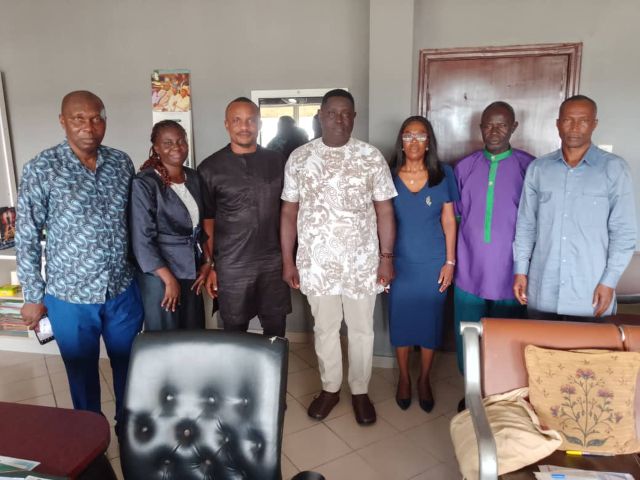
The call was made on Tuesday at a stakeholder meeting organised by the state Ministry of Environment in Yenagoa to strengthen local monitoring initiatives and protect the environment.
Nathan Tamarapreye, Yenagoa
The Bayelsa State Government and environmental non-governmental organisations have called for stronger collaboration to monitor and combat air pollution, particularly in oil-producing communities.
The call was made on Tuesday at a stakeholder meeting organised by the state Ministry of Environment in Yenagoa to strengthen local monitoring initiatives and protect the environment.
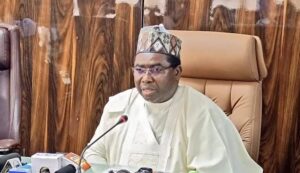
The ministry’s Permanent Secretary, Hamilton Ekeke, who represented the Commissioner for Environment, Dr Ebi Ben-Ololo, reaffirmed the government’s commitment to working with stakeholders to preserve Bayelsa’s ecosystem.
Participants identified gaps in environmental monitoring and response efforts and expressed concern over the World Health Organisation’s estimate that air pollution causes about seven million deaths annually worldwide.
Menidin Egbo, coordinator of the Community Environment and Development Network (CEDEN), said air pollution monitoring should have been incorporated into oil spill assessments since the establishment of the National Oil Spill Detection and Response Agency (NOSDRA) in 2006.
He argued that periodic reviews of NOSDRA’s operations, conducted in collaboration with relevant stakeholders, could have encouraged the development of local technologies to tackle air pollution.
According to Egbo, such measures could also help address soil degradation, water contamination and the destruction of forests and crops associated with oil spills.
Ikechukwu Ahaka of the Media Awareness and Justice Initiative (MAJI) called for capacity-building programmes for stakeholders and government agencies to improve responses to air pollution.
He said MAJI was promoting and installing air-quality monitoring devices powered by open-source technology to track ambient air pollution across the Niger Delta.
Ahaka added that the initiative aimed to strengthen local capacity to monitor air quality and generate empirical data on particulate matter (PM) and volatile organic compounds (VOCs), which pose risks to human health and ecosystems.
Ethel Suamakparaman Onyimbo, president of the Oloibiri Women Association (OWA), commended Governor Douye Diri for supporting collaborative efforts to address environmental pollution in Bayelsa.
She said stronger partnerships among government agencies, civil society organisations and local communities would improve efforts to tackle air pollution through sustained grassroots action.
Onyimbo also cited Bayelsa’s approval to host the governance secretariat of DeltasUnite, a global initiative focused on protecting vulnerable delta environments, as evidence of the state’s commitment to environmental protection.
She recalled Diri’s participation in discussions on China-Africa cooperation in river, coastal and delta governance at East China Normal University in Shanghai, held during the opening of the fifth United Nations Ocean Decade Conference on Mega Deltas.
Onyimbo urged stakeholders to extend the collaborative approach to protecting delta ecosystems to air-pollution control through community-based interventions.
She warned that developing countries bore a disproportionate share of the health burden associated with air pollution, adding that women, children and unborn babies were particularly vulnerable to the harmful effects of outdoor pollution.
The stakeholders called for sustained cooperation among government agencies, civil society organisations and local communities to strengthen air-quality monitoring and reduce pollution across Bayelsa State.