APC propaganda faces test of Nigerians’ reality
The widening gap between the Federal Government’s public messaging and Nigerians’ experience of the economy has become a central criticism of the All Progressives Congress administration, with political commentator Great Imo Jonathan accusing the government of relying too heavily on publicity rather than demonstrable results.
In a commentary titled “APC’s Campaign of Propaganda Versus Nigerians’ Lived Reality: Promises Without Proof,” Jonathan argued that government communication should be measured against verifiable economic and social outcomes rather than campaign videos, photographs and claims circulated across social media.
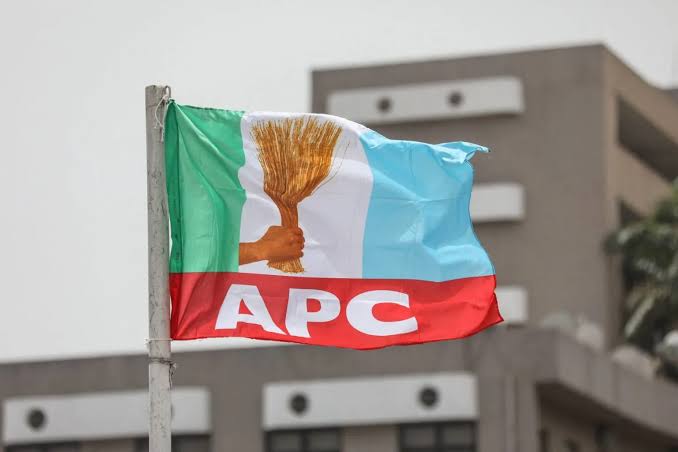
*APC
The widening gap between the Federal Government’s public messaging and Nigerians’ experience of the economy has become a central criticism of the All Progressives Congress administration, with political commentator, Great Imo Jonathan, accusing the government of relying too heavily on publicity rather than demonstrable results.
In a commentary titled “APC’s Campaign of Propaganda Versus Nigerians’ Live Reality: Promises Without Proof,” Jonathan argued that government communication should be measured against verifiable economic and social outcomes rather than campaign videos, photographs and claims circulated across social media.
He contended that the administration’s messaging on platforms such as X, Facebook, Instagram and TikTok often highlights individual projects and interventions, while many Nigerians remain preoccupied with the cost of food, transport, fuel, electricity and other basic necessities.
“The question is not whether government has projects to showcase, but whether those projects are translating into measurable improvements in the lives of Nigerians,” Jonathan wrote.
He identified what he described as three recurring features of APC’s political communication: promises, selective presentation of achievements and the use of social-media influencers.
According to him, the government should publish clear scorecards showing what it promised, what it has delivered, how much was spent and what measurable impact the programmes have had.
Jonathan also criticised what he described as the practice of presenting individual projects or limited interventions as evidence of broader transformation.
He argued that Nigerians should be able to independently verify claims about roads, schools, transport initiatives, electricity and other public projects, including their locations, costs, completion dates and sources of funding.
The commentator further questioned the effectiveness of government’s social-media strategy, arguing that positive online messaging cannot substitute for improvements in household incomes, employment, security and access to basic services.
Several of the economic indicators cited in his commentary, however, require careful qualification. The National Bureau of Statistics put headline inflation at 22.41 per cent in May 2023, the month President Bola Tinubu took office.
Similarly, claims about public debt need to be tied to comparable reporting periods and definitions.
The Debt Management Office publishes quarterly debt figures, including reports for March and June 2026, making it necessary to distinguish between debt inherited by the administration, new borrowing and changes caused by exchange-rate movements when assessing the figures.
Electricity comparisons also require context because tariffs vary according to service bands and location. Under Nigeria’s service-based tariff framework, Band A customers are expected to receive a minimum of 20 hours of supply per day, while lower bands have different service requirements.
Jonathan maintained that such distinctions should not obscure the broader question of whether government policies are producing tangible improvements in living standards.
He said Nigerians judge the economy through everyday experiences: the price of food in markets, the cost of transportation, access to electricity, the availability of jobs and the security of their communities.
“People cannot eat publicity, and they cannot pay their bills with photographs of government projects,” he argued.
He therefore challenged the APC administration to move beyond political messaging and provide verifiable evidence of its performance, including transparent data on projects, spending and outcomes.
Jonathan also argued that citizens should scrutinise government claims independently rather than relying solely on political advertisements or social-media campaigns.
For him, the key test of governance is ultimately whether policies produce measurable improvements in the lives of citizens.
As Nigeria moves towards the 2027 general elections, he suggested that the contest over government performance would increasingly be shaped by the contrast between political messaging and citizens’ assessments of their everyday economic circumstances.