Akwa Ibom seeks tougher bail rules for GBV
The Akwa Ibom State Government has called on the judiciary to reconsider granting bail to offenders accused of severe gender-based violence (GBV), arguing that the practice often places victims and witnesses at greater risk.
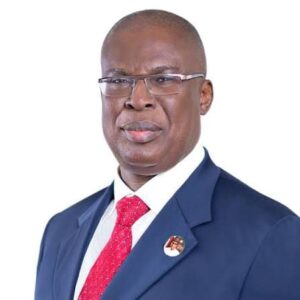
The Attorney General and Commissioner for Justice, Uko Udom (SAN), said granting bail to GBV suspects creates the impression that the freedom of offenders is prioritised over the safety of victims.

Ini Billie, Uyo
The Akwa Ibom State Government has called on the judiciary to reconsider granting bail to offenders accused of severe gender-based violence (GBV), arguing that the practice often places victims and witnesses at greater risk.
The Attorney General and Commissioner for Justice, Uko Udom (SAN), said granting bail to GBV suspects creates the impression that the freedom of offenders is prioritised over the safety of victims.
Speaking in Uyo on Wednesday during the commencement of Gender-Based Violence Awareness Month, Udom said the current approach within the criminal justice system represented a structural failure that must be addressed.
“I must also speak about what happens within our criminal justice system. Our current jurisprudence often leaves judges feeling obliged to grant bail to GBV offenders because, on paper, ‘the offence is bailable’.
“Let me say this plainly: when an abuser who has broken a victim’s bones returns home on bail to the same compound where the survivor and witnesses live, what message have we sent? That his freedom matters more than her safety. The law protects the accused more than the living.
“This is not justice. This is a structural failure that we must address. I am calling on our judiciary to reconsider the application of bail in severe GBV cases, not to abandon the principles of fair hearing, but to recognise that the threat of witness intimidation, retaliation and re-victimisation makes these cases fundamentally different,” he said.
Udom disclosed that Akwa Ibom had recorded a sharp rise in sexual and gender-based violence (SGBV) cases over the past six years, noting that reports continued to increase in 2026.
“Over the last six years, we have recorded a significant spike in reported cases of sexual and gender-based violence. Rape, domestic abuse, child molestation, and economic coercion, more survivors are walking through our doors.
“For decades, these crimes hid in the shadows of stigma, fear and hopelessness. Today, the spike in reporting is a direct reflection of growing trust in our system. Survivors now believe that when they speak, the state will listen, act and deliver justice. That trust has been earned, not given,” he added.
Data from the Sexual and Gender-Based Violence Response Department of the Ministry of Justice in Uyo showed that 99 rape offenders were imprisoned, while 102 convictions were secured between 2020 and 2025 following the passage of the Violence Against Persons Prohibition (VAPP) Law in the state.
The data also revealed that 161 cases were reported between January and May 2026. Spousal battery accounted for the highest number with 61 cases, followed by threats to life and physical assault with 46 cases, rape with 26 cases, abandonment and forceful ejection with 18 cases, and harmful widowhood practices with 10 cases.
The Attorney General attributed violence against women partly to entrenched patriarchal attitudes within society and condemned the practice of pressuring survivors to withdraw cases.
“We cannot celebrate implementation without acknowledging the deep cultural biases that still sabotage our work. We operate in a chauvinistic male society that, in too many quarters, still views girls and women as chattels. This mindset is the foundation upon which violence is built.
“Also, there are disturbing realities of survivors and their families being pressured to discontinue prosecutions. You have heard the phrase: ‘The matter has been settled.’
“Let me be clear, when a person’s ribs are broken, when a child is abused, or when a spouse is battered unconscious, there is no ‘settlement’ that restores dignity. “What these words really mean is that money has changed hands and justice has been buried. We reject this completely,” he stated.