A’Ibom at 39: Development, promises, roads elude Oro

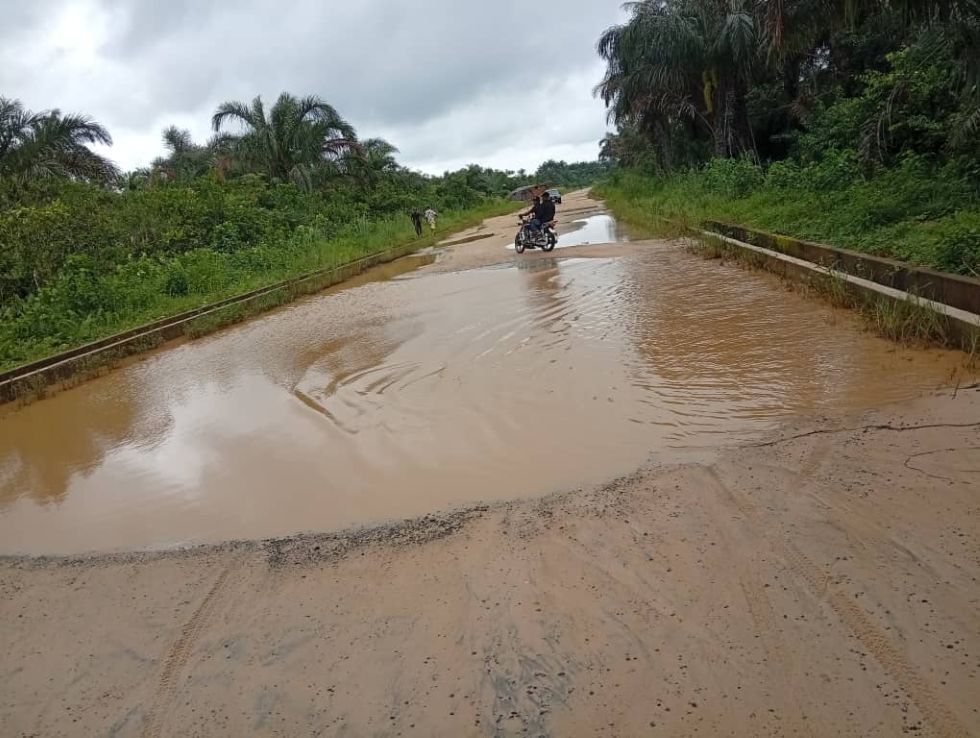
*Collapsed Unyenge bridge
Etim Ekpimah
As Akwa Ibom marks 39 years of statehood, questions persist in Oro communities about the gap between government promises and completed infrastructure, particularly in Mbo Local Government Area.
On Ibaka, in Mbo Local Government Area, the question is deceptively simple: what has actually changed?
Not what has been announced. Not what has been awarded on paper. Not what has been flagged off with speeches, dignitaries and photographs. Not what appears in government project lists. What has physically reached the people?
That question gains greater significance as Akwa Ibom State marks its 39th anniversary on September 23, 2026, with Governor Umo Eno’s administration celebrating projects across the state.
The governor announced 39 projects as part of the anniversary activities, while his administration says it has embarked on more than 1,300 kilometres of roads since 2023, including inherited projects.
But in parts of Oro, particularly the riverine communities of Mbo, celebration is accompanied by another emotion: frustration.
For residents looking at the condition of their roads, the central issue is not whether government has done something in Oro. It plainly has. The harder question is whether the interventions have been sufficiently strategic, continuous, and transformative to connect communities that have remained isolated for decades.
Oro Nation comprises five local government areas—Oron, Okobo, Udung Uko, Urue-Offong/Oruko and Mbo. Mbo itself is officially recognised as an oil- and seafood-producing local government, with extensive agricultural and maritime potential.
Yet the communities around Orukim, Unyenge, Affi Uda and Akprankpan Uda continue to provide a powerful illustration of the infrastructure dilemma.
The road that keeps returning
Few projects capture the frustration better than the Orukim–Unyenge–Universal Energy Road towards the Ibom Deep Seaport.
The project is not new. The 2023 Akwa Ibom Citizens’ Budget listed the construction of the 13.1-kilometre Orukim–Unyenge–Universal Energy Road to the Ibom Deep Seaport, including two bridges and a spur to Affi-Uda in Mbo.
Three years later, the project was still being presented as a major intervention.
In 2026, the state government announced the flag-off of the dualisation of the 13.6-kilometre Unyenge–Universal Energy Road to the Ibom Deep Seaport, with two bridges and a spur to Affi-Uda. The government said more than N100 billion was being budgeted for the projects associated with the exercise.
The official description sounds transformational.
For people who live beyond the ceremonies, however, the test is simple: when will the road become a dependable road?
That distinction matters.
A road can be budgeted, awarded, flagged off, redesigned, re-awarded and celebrated, and still not deliver mobility to the people who need it.
The same argument applies to the Orukim–Oruko and Offi Uda–Akprankpan routes cited by residents. Their significance goes beyond transportation. In a predominantly rural and riverine environment, roads determine whether farmers can reach markets, whether children can reach schools, whether patients can reach hospitals and whether businesses can move goods without prohibitive costs. A road is therefore not merely asphalt. It is an economic and social lifeline.
What previous governments left behind?
It would be inaccurate to suggest that successive administrations completely ignored Mbo or Oro.
Under former Governor Udom Emmanuel, government records show several interventions in Mbo. They included the proposed 55.1-kilometre Ibaka Superhighway, the 19-kilometre Etebi–Enwang Road with two bridges and a 3.2-kilometre road at Ibaka leading to the Delmar Petroleum Harbour and Tank Farm.
Schools and other community projects were also listed among the interventions.
Indeed, a report on Udom’s inter-ministerial projects said 12 projects were commissioned in Mbo, including renovated and reconstructed classroom blocks in Akai Ebughu, Uko Ital, Ewang, Okobo Ebughu, Udesi Isong Inyang, Oduo Ebughu and Ibaka.
But they also expose another issue: the difference between isolated interventions and integrated development.
A renovated classroom cannot compensate for a road that makes the school difficult to reach. A short access road cannot substitute for a regional road network. A project designed to serve an industrial facility cannot automatically transform the wider rural economy.
The history of Mbo, therefore, appears less like a story of total neglect than one of fragmented development alongside long-running infrastructure promises.
From Attah to Akpabio, Udom and Eno
The pattern is not confined to one administration.
Akwa Ibom’s infrastructure story has evolved through the administrations of Victor Attah, Godswill Akpabio, Udom Emmanuel and now Umo Eno. Each administration has inherited unfinished projects, launched new ones and presented infrastructure as a central pillar of development.
That continuity is important
It means the development question in Oro cannot reasonably be reduced to one governor or one political party.
It is a question about how governments have historically prioritised the state’s different geographical and economic spaces.
The argument from Oro is that its strategic advantages—coastline, fisheries, oil and gas, maritime access and proximity to the proposed deep seaport- should have translated into stronger infrastructure much earlier.
Government, on the other hand, points to projects across the five Oro local government areas.
Under Governor Eno, for example, the state says it has commissioned roads and other projects in Oron and has undertaken projects in Okobo, Mbo, Udung Uko and Urue-Offong/Oruko. The government has also listed the Unyenge road, the Ekim–Udesi road, the Oduo Ebughu–Udesi–Isong Inyang road and other projects among its Oro interventions.
In April 2026, Eno also told a meeting of people from Oron Federal Constituency that the administration would ensure that the five local government areas were reflected in its development plans. The state government said N335 million in grants was distributed to farmers, traders and entrepreneurs across the five LGAs.
These interventions matter
But so does the criticism from communities that still cannot point to completed strategic roads.
The politics of unfinished roads
There is another dimension that should not be ignored.
Road projects are political projects. They determine which communities become economically connected, which towns attract investment and which populations remain dependent on longer, more expensive routes.
That is why the repeated appearance of the same road in budgets, promises and flag-off ceremonies can become politically significant.
For the people of Offi Uda, this frustration is not new. As far back as 2017, the traditional ruler of the community publicly complained about abandoned road and bridge projects, saying the poor access had isolated the community and made it difficult for residents to transport goods and sick people to medical facilities.
Nearly a decade later, the persistence of similar complaints raises a fundamental governance question: Why should a strategically important road take so long to move from promise to completion?
That is the question government must answer, not with another commissioning ceremony, but with timelines, funding details, construction milestones and visible work on the ground.
Is Oro part of Akwa Ibom?
The question, “Is Oro not part of Akwa Ibom?” is rhetorical, but it captures a genuine feeling of exclusion.
Legally and administratively, there is no ambiguity: Mbo, Oron, Okobo, Udung Uko and Urue-Offong/Oruko are integral parts of Akwa Ibom State.
The more relevant question is whether citizens in those communities experience the same quality of state investment as citizens elsewhere.
That cannot be answered by photographs from anniversary ceremonies.
It must be answered through measurable indicators: kilometres of completed roads, functioning bridges, reliable healthcare, schools, electricity, potable water, economic infrastructure and access to markets.
The state’s own rhetoric recognises this principle. Governor Eno has repeatedly said his administration is opening up rural areas and has maintained that every local government has received, or has ongoing, government intervention.
That claim should invite scrutiny rather than applause or rejection.
If every local government is receiving projects, what is the value and status of those projects in the most isolated Oro communities?
Beyond anniversary politics
Akwa Ibom’s 39th anniversary should, therefore, be more than an occasion for counting projects.
It should also be an opportunity to audit them.
For Oro, the audit should begin with the roads that have become symbols of unfinished promises: Orukim–Unyenge towards the Atlantic and the deep seaport, Orukim–Oruko, and the Offi Uda–Akprankpan corridor.
The government has already described the Unyenge project as strategically important to the deep seaport and the wider regional economy.
That makes its completion more than an Oro demand. It is a state economic question.
If the proposed deep seaport is to become an engine of industrialisation, the communities around it cannot remain disconnected.
If Mbo’s oil, fisheries, agriculture and maritime resources are to contribute fully to the state’s economy, the roads connecting producers to markets must work. And if Akwa Ibom’s development model is truly intended to reach every part of the state, then geographical location should not determine the speed at which citizens receive basic infrastructure.
Etim Ekpimah
As Akwa Ibom marks 39 years of statehood, questions persist in Oro communities about the gap between government promises and completed infrastructure, particularly in Mbo Local Government Area.
On Ibaka, in Mbo Local Government Area, the question is deceptively simple: what has actually changed?
Not what has been announced. Not what has been awarded on paper. Not what has been flagged off with speeches, dignitaries and photographs. Not what appears in government project lists. What has physically reached the people?
That question gains greater significance as Akwa Ibom State marks its 39th anniversary on September 23, 2026, with Governor Umo Eno’s administration celebrating projects across the state.
The governor announced 39 projects as part of the anniversary activities, while his administration says it has embarked on more than 1,300 kilometres of roads since 2023, including inherited projects.
But in parts of Oro, particularly the riverine communities of Mbo, celebration is accompanied by another emotion: frustration.
For residents looking at the condition of their roads, the central issue is not whether government has done something in Oro. It plainly has. The harder question is whether the interventions have been sufficiently strategic, continuous, and transformative to connect communities that have remained isolated for decades.
Oro Nation comprises five local government areas—Oron, Okobo, Udung Uko, Urue-Offong/Oruko and Mbo. Mbo itself is officially recognised as an oil- and seafood-producing local government, with extensive agricultural and maritime potential.
Yet the communities around Orukim, Unyenge, Affi Uda and Akprankpan Uda continue to provide a powerful illustration of the infrastructure dilemma.
The road that keeps returning
Few projects capture the frustration better than the Orukim–Unyenge–Universal Energy Road towards the Ibom Deep Seaport.
The project is not new. The 2023 Akwa Ibom Citizens’ Budget listed the construction of the 13.1-kilometre Orukim–Unyenge–Universal Energy Road to the Ibom Deep Seaport, including two bridges and a spur to Affi-Uda in Mbo.
Three years later, the project was still being presented as a major intervention.
In 2026, the state government announced the flag-off of the dualisation of the 13.6-kilometre Unyenge–Universal Energy Road to the Ibom Deep Seaport, with two bridges and a spur to Affi-Uda. The government said more than N100 billion was being budgeted for the projects associated with the exercise.
The official description sounds transformational.
For people who live beyond the ceremonies, however, the test is simple: when will the road become a dependable road?
That distinction matters.
A road can be budgeted, awarded, flagged off, redesigned, re-awarded and celebrated, and still not deliver mobility to the people who need it.
The same argument applies to the Orukim–Oruko and Offi Uda–Akprankpan routes cited by residents. Their significance goes beyond transportation. In a predominantly rural and riverine environment, roads determine whether farmers can reach markets, whether children can reach schools, whether patients can reach hospitals and whether businesses can move goods without prohibitive costs. A road is therefore not merely asphalt. It is an economic and social lifeline.
What previous governments left behind?
It would be inaccurate to suggest that successive administrations completely ignored Mbo or Oro.
Under former Governor Udom Emmanuel, government records show several interventions in Mbo. They included the proposed 55.1-kilometre Ibaka Superhighway, the 19-kilometre Etebi–Enwang Road with two bridges and a 3.2-kilometre road at Ibaka leading to the Delmar Petroleum Harbour and Tank Farm.
Schools and other community projects were also listed among the interventions.
Indeed, a report on Udom’s inter-ministerial projects said 12 projects were commissioned in Mbo, including renovated and reconstructed classroom blocks in Akai Ebughu, Uko Ital, Ewang, Okobo Ebughu, Udesi Isong Inyang, Oduo Ebughu and Ibaka.
But they also expose another issue: the difference between isolated interventions and integrated development.
A renovated classroom cannot compensate for a road that makes the school difficult to reach. A short access road cannot substitute for a regional road network. A project designed to serve an industrial facility cannot automatically transform the wider rural economy.
The history of Mbo, therefore, appears less like a story of total neglect than one of fragmented development alongside long-running infrastructure promises.
From Attah to Akpabio, Udom and Eno
The pattern is not confined to one administration.
Akwa Ibom’s infrastructure story has evolved through the administrations of Victor Attah, Godswill Akpabio, Udom Emmanuel and now Umo Eno. Each administration has inherited unfinished projects, launched new ones and presented infrastructure as a central pillar of development.
That continuity is important
It means the development question in Oro cannot reasonably be reduced to one governor or one political party.
It is a question about how governments have historically prioritised the state’s different geographical and economic spaces.
The argument from Oro is that its strategic advantages—coastline, fisheries, oil and gas, maritime access and proximity to the proposed deep seaport- should have translated into stronger infrastructure much earlier.
Government, on the other hand, points to projects across the five Oro local government areas.
Under Governor Eno, for example, the state says it has commissioned roads and other projects in Oron and has undertaken projects in Okobo, Mbo, Udung Uko and Urue-Offong/Oruko. The government has also listed the Unyenge road, the Ekim–Udesi road, the Oduo Ebughu–Udesi–Isong Inyang road and other projects among its Oro interventions.
In April 2026, Eno also told a meeting of people from Oron Federal Constituency that the administration would ensure that the five local government areas were reflected in its development plans. The state government said N335 million in grants was distributed to farmers, traders and entrepreneurs across the five LGAs.
These interventions matter
But so does the criticism from communities that still cannot point to completed strategic roads.
The politics of unfinished roads
There is another dimension that should not be ignored.
Road projects are political projects. They determine which communities become economically connected, which towns attract investment and which populations remain dependent on longer, more expensive routes.
That is why the repeated appearance of the same road in budgets, promises and flag-off ceremonies can become politically significant.
For the people of Offi Uda, this frustration is not new. As far back as 2017, the traditional ruler of the community publicly complained about abandoned road and bridge projects, saying the poor access had isolated the community and made it difficult for residents to transport goods and sick people to medical facilities.
Nearly a decade later, the persistence of similar complaints raises a fundamental governance question: Why should a strategically important road take so long to move from promise to completion?
That is the question government must answer, not with another commissioning ceremony, but with timelines, funding details, construction milestones and visible work on the ground.
Is Oro part of Akwa Ibom?
The question, “Is Oro not part of Akwa Ibom?” is rhetorical, but it captures a genuine feeling of exclusion.
Legally and administratively, there is no ambiguity: Mbo, Oron, Okobo, Udung Uko and Urue-Offong/Oruko are integral parts of Akwa Ibom State.
The more relevant question is whether citizens in those communities experience the same quality of state investment as citizens elsewhere.
That cannot be answered by photographs from anniversary ceremonies.
It must be answered through measurable indicators: kilometres of completed roads, functioning bridges, reliable healthcare, schools, electricity, potable water, economic infrastructure and access to markets.
The state’s own rhetoric recognises this principle. Governor Eno has repeatedly said his administration is opening up rural areas and has maintained that every local government has received, or has ongoing, government intervention.
That claim should invite scrutiny rather than applause or rejection.
If every local government is receiving projects, what is the value and status of those projects in the most isolated Oro communities?
Beyond anniversary politics
Akwa Ibom’s 39th anniversary should, therefore, be more than an occasion for counting projects.
It should also be an opportunity to audit them.
For Oro, the audit should begin with the roads that have become symbols of unfinished promises: Orukim–Unyenge towards the Atlantic and the deep seaport, Orukim–Oruko, and the Offi Uda–Akprankpan corridor.
The government has already described the Unyenge project as strategically important to the deep seaport and the wider regional economy.
That makes its completion more than an Oro demand. It is a state economic question.
If the proposed deep seaport is to become an engine of industrialisation, the communities around it cannot remain disconnected.
If Mbo’s oil, fisheries, agriculture and maritime resources are to contribute fully to the state’s economy, the roads connecting producers to markets must work.
And if Akwa Ibom’s development model is truly intended to reach every part of the state, then geographical location should not determine the speed at which citizens receive basic infrastructure.