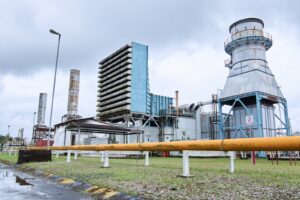
African industrialist urges local processing of minerals
African industrialist Bernard Mahara Mutanga has called on governments across the continent to prioritise the local processing of mineral resources to create jobs, strengthen manufacturing and increase economic benefits for mining communities.
Mutanga made the call while delivering an address titled “Business Not Politics: The Next 100 Years” at the Africa Mining Investment Conference 2026 in Zimbabwe.
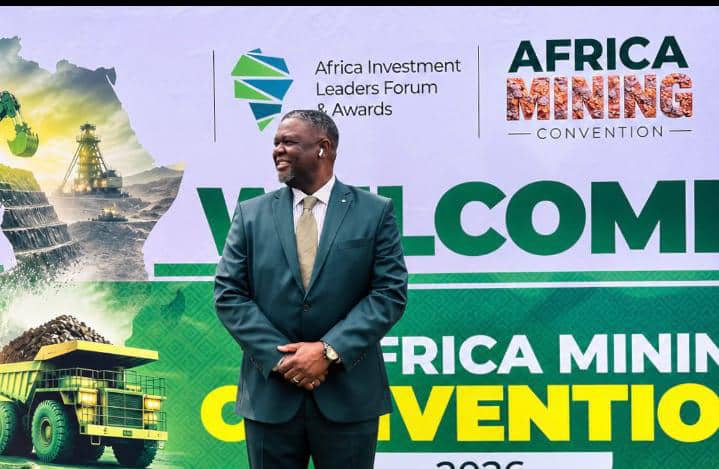
*Bernard Mahara Mutanga, Zimbabwean industrialist and Group Chief Executive Officer of Berhard Development Corporation.
Nathan Tamarapreye
African industrialist Bernard Mahara Mutanga has called on governments across the continent to prioritise the local processing of mineral resources to create jobs, strengthen manufacturing and increase economic benefits for mining communities.
Mutanga made the call while delivering an address titled “Business Not Politics: The Next 100 Years” at the Africa Mining Investment Conference 2026 in Zimbabwe.
He presented a proposed value-addition model showing how a tonne of mineral-bearing rock valued at $40 at the mine gate could generate substantially higher returns through industrial processing.
The Group Chief Executive Officer of Berhard Development Corporation described the proposal as the “Harare Eye Opener”, urging African countries to retain more of the value generated from their mineral resources through local industrial development.
Using a sample of Zimbabwean rock, Mutanga said processing could increase its estimated value from $40 to $22,822 per tonne through an industrial carbonate production process.
He further projected that processing the material into high-purity metals could raise its value to $527,062 per tonne, depending on mineral recovery rates, market prices and production costs.
According to him, the proposed model would involve extracting rubidium, lithium, antimony and gold, with scientific verification and technical support from the University of Zimbabwe.
He proposed engaging 120 young miners operating within a formalised framework, with the use of mercury-free extraction methods, personal protective equipment and blockchain-based traceability systems.
Mutanga said the initiative would connect mineral extraction with research institutions, manufacturing facilities, local communities, financial institutions and international buyers.
Under the proposed arrangement, the University of Zimbabwe would support scientific research and process design, while the Botswana International University of Science and Technology would contribute regional research expertise and supply-chain partnerships.
He added that access to soda ash from Botswana could reduce the cost of producing battery-grade lithium carbonate, strengthening Africa’s participation in electric vehicle supply chains.
The industrialist also advocated establishing mineral-processing facilities close to mining sites to create employment opportunities and reduce the export of unprocessed minerals from Africa.
As part of the proposal, he called for the development of pilot eco-villages in Zimbabwe and Botswana, featuring affordable housing, renewable energy, biogas systems and rainwater harvesting facilities for mining communities.
Mutanga projected that five pilot villages could provide 250 homes and create 1,350 jobs in their first year, subject to the implementation of the proposed plan.
He urged the governments of Zimbabwe and Botswana to facilitate industrial development through efficient licensing procedures, policies that promote local mineral processing and improved logistics infrastructure.
He also called on African financial institutions and development agencies to provide appropriate financing for commercially viable mineral-processing projects.
Mutanga said regional cooperation under the African Continental Free Trade Area (AfCFTA) and the Southern African Development Community (SADC) could help establish integrated mineral-processing and manufacturing networks across the continent.
He argued that Africa could translate its mineral wealth into broader industrial growth if countries coordinated production, research, infrastructure development and access to international markets.
Highlighting potential investment opportunities, Mutanga identified low-carbon steel production, electric vehicle batteries and antimony supplies for industrial and defence applications as areas in which African countries could expand their presence.
He also highlighted the potential applications of rubidium in quantum computing, atomic clocks and specialised medical and defence technologies.
Mutanga contrasted the export of raw minerals with local processing, arguing that value addition could help African economies retain more revenue, create jobs and develop technical expertise.
“If you truly love your neighbour, you will no longer buy his rock for 40 dollars and sell it back for 527,062 dollars,” he said.
He urged African governments, investors, researchers and local communities to collaborate in developing mineral-processing industries capable of delivering broader economic benefits.
Mutanga, a Zimbabwean architect and industrialist, is the Group Chief Executive Officer of Berhard Development Corporation and is associated with the proposed Bern-Win Utopia Eco-Smart City project in Harare.
The financial projections, mineral recovery estimates and production targets cited in this report are based on figures presented by Mutanga at the conference and have not been independently verified.