Ebola scare: 62 contacts cleared as patient recovers
Nigeria has recorded no secondary infections of the Bundibugyo virus disease, a strain of Ebola, after all 62 contacts linked to an imported case completed the mandatory 21-day monitoring period without testing positive.
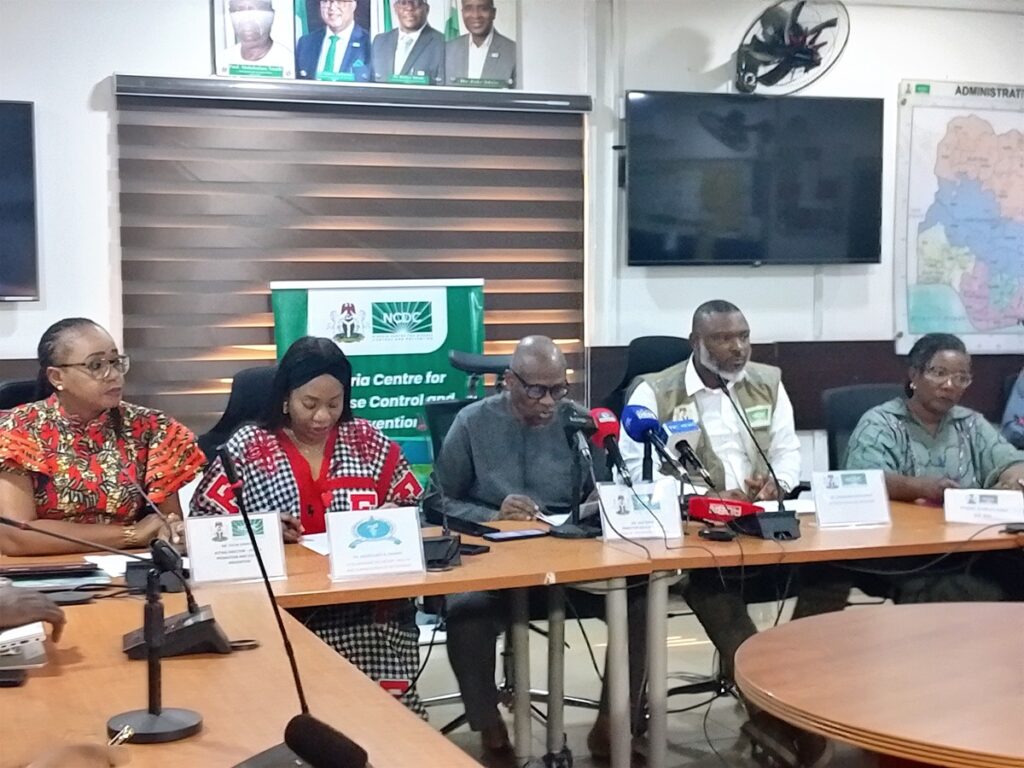
The Nigeria Centre for Disease Control and Prevention (NCDC) announced that the last contact had been discharged from monitoring, confirming that none of the 62 individuals contracted the disease.
*Ebola scare: 62 contacts cleared as patient recovers
Abimbola Joseph
Nigeria has recorded no secondary infections of the Bundibugyo virus disease, a strain of Ebola, after all 62 contacts linked to an imported case completed the mandatory 21-day monitoring period without testing positive.
The Nigeria Centre for Disease Control and Prevention (NCDC) announced that the last contact had been discharged from monitoring, confirming that none of the 62 individuals contracted the disease.
In a related development, the index patient, who was evacuated to Switzerland on October 26 for specialised treatment, has recovered, tested negative for the virus and been discharged from hospital.
The imported case was confirmed in the Federal Capital Territory on October 20, 2026.
NCDC Director-General, Dr Jide Idris, described the outcome as encouraging, attributing the success to early detection, prompt investigation and cooperation between health authorities and affected communities.
He said 13 of the 62 contacts developed fever or other symptoms during the monitoring period but tested negative for the virus.
Similarly, seven suspected cases reported in Adamawa, Rivers, Borno, Lagos and Ekiti states within the past three weeks were investigated, with laboratory tests confirming that none was infected.
Idris explained that the index case was detected after healthcare workers raised an alert through the NCDC’s event-based surveillance system, prompting the activation of an emergency response and immediate investigations.
Under the supervision of the Coordinating Minister of Health and Social Welfare, Professor Muhammad Ali Pate, the National Emergency Operations Centre was activated, while an Incident Management System was established to coordinate containment efforts.
The response included clinical care, contact tracing, infection prevention and control, protection of healthcare workers and strengthened disease surveillance.
According to Idris, contact tracing covered healthcare facilities, households and other locations where the infected person might have had contact with people. Infection prevention measures were also reinforced in health facilities, while healthcare workers received training and protective equipment.
Providing an update on the index patient, the NCDC chief said laboratory tests conducted after her arrival in Switzerland on October 26 initially confirmed that she remained infected.
However, she subsequently responded to treatment, tested negative and was discharged.
Despite the successful monitoring of all identified contacts, Idris cautioned that the development did not amount to a formal declaration that the outbreak was over.
He said the National Emergency Operations Centre remained activated, with the Incident Management System operating at Level 3, the highest response level for Ebola disease.
The agency also warned that continued transmission in the Democratic Republic of Congo required Nigeria to maintain heightened surveillance and preparedness.
Idris particularly urged vigilance ahead of the December festive season, when increased travel, religious gatherings, concerts, festivals, sporting events and political activities could heighten public health risks.
He advised Nigerians and international visitors to seek immediate medical attention if they developed symptoms, particularly after travelling or coming into contact with someone suspected of having an infectious disease.
“Do not assume that every fever is malaria, particularly if you have recently travelled or may have been exposed to an infectious disease,” he warned.
He also urged patients to disclose their travel history and possible exposure to healthcare workers, stressing that such information was essential for early diagnosis and appropriate treatment.
The NCDC cautioned Nigerians against unprotected contact with the blood and other body fluids of anyone suspected of having Ebola or another infectious disease.
Organisers of religious gatherings, political rallies, concerts, festivals and sporting events were also advised to provide adequate sanitation, safe drinking water and access to medical assistance, while promptly reporting suspected infections.
Healthcare workers in public and private facilities were urged to maintain a high level of suspicion, observe infection prevention protocols and report suspected cases without delay.
The agency further reminded international travellers arriving in Nigeria to complete the Nigeria Health Declaration Form and provide accurate information about their health and travel history.
“There is no reason for panic. What is required is continued vigilance, early reporting and cooperation with public health authorities,” Idris said.
He commended President Bola Tinubu, the Federal Ministry of Health and Social Welfare, FCT health authorities, Port Health Services and national and international partners for supporting the response.
The NCDC director-general also praised the private hospital in the FCT where the index patient initially received treatment, noting that the vigilance of its healthcare workers triggered the alert that led to the diagnosis.
He said the incident demonstrated the importance of collaboration between public and private healthcare providers in strengthening Nigeria’s disease surveillance and emergency response capacity.
Idris equally thanked the 62 contacts and their families for complying with monitoring and quarantine requirements, describing their cooperation as crucial to preventing further transmission.