Olusegun Obasanjo Biography: Age, Education, Career, Family and Net Worth
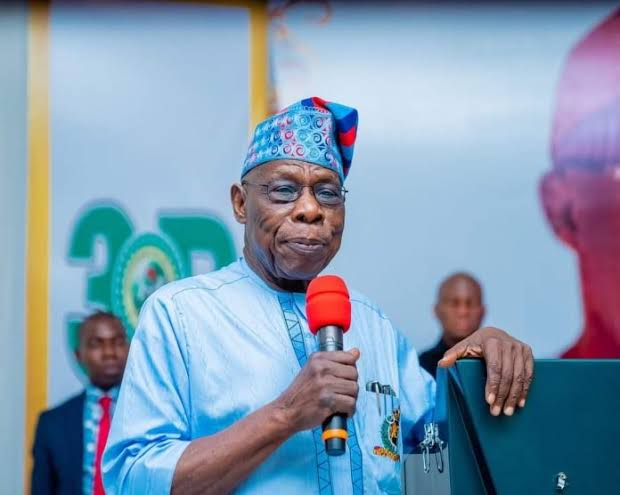
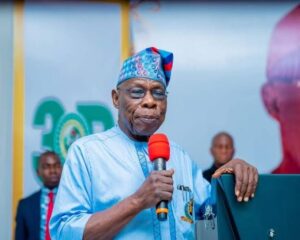
Olusegun Obasanjo whose full name is Chief Olusegun Matthew Okikiola Ogunboye Aremu Obasanjo is a Nigerian statesman, retired military general, farmer, author, and former president of Nigeria. He served as Nigeria’s military head of state from 1976 to 1979 and later returned to power as a democratically elected president from 1999 to 2007. His remarkable political journey spans military leadership, democratic governance, international diplomacy, agriculture, and public service.
Olusegun Obasanjo became a prominent national figure during the Nigerian Civil War, particularly through his role in the final military operations that led to the surrender of Biafran forces in January 1970. As military head of state, he oversaw Nigeria’s transition to civilian rule in 1979, making him one of the country’s most significant military leaders to voluntarily transfer power to an elected civilian administration.
After years away from government, he returned to politics in 1999 following Nigeria’s transition from military rule to democracy. During his eight years as president, his administration pursued economic reforms, debt relief, privatisation, and stronger international cooperation. He also played an influential role in the establishment and development of the African Union.
Despite his achievements, Obasanjo’s career has attracted criticism over issues including human rights, political power, corruption allegations, and his unsuccessful efforts to change the constitutional presidential term limit.
Olusegun Obasanjo Profile
| Category | Details |
|---|---|
| Full name | Olusegun Matthew Okikiola Ogunboye Aremu Obasanjo |
| Popular name | Olusegun Obasanjo |
| Date of birth | 5 March 1937 |
| Place of birth | Ibogun-Olaogun, present-day Ogun State, Nigeria |
| Nationality | Nigerian |
| Ethnicity | Yoruba |
| Religion | Christianity |
| Education | Baptist Boys’ High School; military and engineering institutions |
| Profession | Politician, retired military general, farmer, author, statesman |
| Military rank | General |
| Political party | Peoples Democratic Party (PDP), with periods of political realignment |
| First major national office | Military head of state |
| Military head of state | 1976–1979 |
| President of Nigeria | 1999–2007 |
| Spouse | Oluremi Akinlawon was his first wife; Stella Obasanjo was his second wife |
| Children | Several children |
| Net worth | Not reliably established publicly |
| Known for | Military leadership, Nigeria’s return to civilian rule, presidency, and African diplomacy |
Olusegun Obasanjo Early Life and Background
Olusegun Obasanjo was born on 5 March 1937 in Ibogun-Olaogun, a village in what is now Ogun State, southwestern Nigeria. He was born into a Yoruba family belonging to the Owu branch of the Yoruba people.
His father, Obasanjo Bankole, was a farmer and palm-wine tapper who was associated with the early development of their village. His mother, Bernice Ashabi, engaged in petty trading to support the family. Obasanjo had one surviving sister, Adunni Oluwola.
Although his father was regarded as a relatively established farmer within the community, the family experienced financial difficulties, particularly after his parents’ relationship broke down. His mother had to work hard to support the household and help him continue his education.
Olusegun Obasanjo’s childhood was shaped by discipline, hard work, and financial hardship. While attending school, he undertook various jobs to raise money for his education. These included working on cocoa and kola farms, fishing, collecting firewood, and selling sand to builders. He also performed manual work at school during holidays.
These experiences helped shape his views on work, self-reliance, and responsibility. His upbringing in a rural community also contributed to his lifelong interest in agriculture and rural development.
Olusegun Obasanjo was raised in the Baptist Christian tradition. During his secondary-school years, he began distancing himself from his colonial-era forename, Matthew, reflecting the growing influence of anti-colonial ideas during that period.
Olusegun Obasanjo’s Education
Olusegun Obasanjo received his early education in his home community before continuing his studies in Abeokuta, the capital of present-day Ogun State.
He began primary school at approximately 11 years old. In 1951, he moved to Baptist Day School in Abeokuta’s Owu area and transferred to Baptist Boys’ High School in 1952.
He performed well academically, but financial challenges made continuing his education difficult. After completing his secondary-school examinations in 1956, he considered attending University College Ibadan. Although he passed the entrance examination, he could not afford the tuition fees.
Rather than abandon his ambitions, Olusegun Obasanjo sought another route to professional advancement. In 1958, he enlisted in the Nigerian Army, which offered him the opportunity to receive further education and professional training while earning a salary.
His military education included training at the Regular Officers’ Training School in Teshie, Ghana, and Mons Officer Cadet School in Aldershot, England. He subsequently received engineering training and attended the Royal College of Military Engineering in England.
He also studied at the Defence Services Staff College in Wellington, India, and the School of Engineering in Poona, now Pune. Later in life, Obasanjo continued his education and earned a PhD in theology from the National Open University of Nigeria. He defended his doctoral thesis in December 2017.
His educational journey demonstrates how military training became an alternative path to professional development when financial circumstances prevented him from pursuing his original university plans.
Olusegun Obasanjo’s Military Career
Joining the Nigerian Army
Olusegun Obasanjo joined the Nigerian Army in March 1958. At the time, Nigeria was approaching independence from British colonial rule, and the military was gradually expanding opportunities for Nigerian officers to assume senior positions.
He received officer training in Ghana and the United Kingdom, where he developed expertise in engineering and military administration. Following his initial training, he returned to Nigeria and served with the Fifth Battalion in Kaduna.
His military career gave him opportunities to work in different countries, interact with people from diverse backgrounds, and develop a broader understanding of African politics and international affairs.
Service in the Congo
In 1960, Obasanjo served in the Congo as part of a United Nations peacekeeping operation during the Congo Crisis.
His unit was involved in protecting civilians during a period of political instability and military unrest. In February 1961, he was captured by mutineers while evacuating Roman Catholic missionaries near Bukavu but was subsequently released.
His experience in the Congo strengthened his interest in African unity and influenced his later commitment to Pan-African cooperation.
Role in the Nigerian Civil War
One of the most significant periods of Obasanjo’s military career was the Nigerian Civil War, fought between the federal government and the breakaway Republic of Biafra from 1967 to 1970.
During the conflict, Obasanjo held several military responsibilities and eventually became a senior commander in the Nigerian Army. In May 1969, he took command of the Third Marine Commando Division, which played a major role in the final federal military campaign.
His forces participated in operations that culminated in the capture of key Biafran positions. In January 1970, Biafran military representatives agreed to surrender, and Obasanjo met with Biafran commander Philip Effiong as the conflict came to an end.
Olusegun Obasanjo subsequently became involved in efforts to restore normal life in the former Biafran territories. His approach included measures to restore essential services, particularly water supplies, and to reintegrate the affected region into Nigeria.
His role in the final phase of the war made him a nationally recognised military figure. However, the wider history of the civil war remains deeply significant and painful because of the enormous loss of life, displacement, and suffering experienced by civilians.
Rise Through Military Leadership
Following the civil war, Obasanjo continued to rise through the ranks of the Nigerian Army. In 1974, he attended a course at the Royal College of Defence Studies in the United Kingdom.
In January 1975, General Yakubu Gowon’s military government appointed him Commissioner for Works and Housing. He held the position for approximately seven months before Gowon was overthrown in a military coup in July 1975.
The new administration was led by General Murtala Muhammed, with Obasanjo serving as his deputy and Chief of Staff at Supreme Headquarters.
This appointment placed Obasanjo among Nigeria’s most influential military leaders and positioned him for an unexpected rise to the country’s highest office.
Olusegun Obasanjo as Military Head of State (1976–1979)
In February 1976, General Murtala Muhammed was assassinated during an attempted military coup led by Lieutenant Colonel Buka Suka Dimka. Obasanjo survived the incident and was subsequently appointed head of state by the Supreme Military Council.
He assumed leadership at a difficult time, with the government facing security concerns and the need to maintain political stability.
Obasanjo pledged to continue Muhammed’s programme, particularly the commitment to return Nigeria to civilian rule. His administration maintained the transition timetable and organised the process that culminated in the 1979 general election.
Economic and Agricultural Policies
Obasanjo’s military administration introduced measures intended to manage inflation and public spending. It continued agricultural development projects and initiated programmes aimed at increasing food production.
In 1976, he launched Operation Feed the Nation, an agricultural initiative designed to encourage Nigerians, including students, to participate in farming and reduce the country’s dependence on imported food.
His government also pursued irrigation projects, expanded agricultural support programmes, and introduced policies affecting land ownership and land use. The Land Use Decree of 1978 became one of the most consequential land-policy measures associated with his first period in national leadership.
Although these initiatives reflected a strong interest in agriculture and national development, their long-term effects varied, and some projects faced practical and economic difficulties.
Education Reforms
Education was another major focus of Obasanjo’s military administration.
His government continued the expansion of primary education and introduced legislation supporting access to basic schooling. It also moved towards free secondary education in technical subjects before extending the policy more broadly.
Primary-school enrolment increased significantly during this period. However, the rapid growth in enrolment also placed pressure on schools, teachers, and educational resources.
Return to Civilian Rule
Obasanjo’s most important achievement as military head of state was overseeing Nigeria’s transition to civilian government.
Following the 1979 general election, he transferred power to Shehu Shagari, who became Nigeria’s democratically elected president under the new constitutional arrangement.
The transfer took place on 1 October 1979. Obasanjo subsequently retired from the military and returned to civilian life.
His decision to hand over power rather than remain in office helped establish an important precedent in Nigeria’s political history, although later debates about military rule and democratic accountability continued.
Olusegun Obasanjo Life After Military Rule
After leaving office in 1979, Obasanjo settled in Ota, Ogun State, where he concentrated on agriculture, writing, and international public service.
He expanded his farming activities through businesses associated with his agricultural interests, including poultry farming. His agricultural ventures became an important part of his life outside government.
Olusegun Obasanjo also wrote books about military affairs, governance, democracy, and Nigeria’s political development. Among his notable publications are My Command, Not My Will, and the three-volume My Watch series.
Beyond farming and writing, he became involved in international initiatives addressing African development, peace, disarmament, and political cooperation. He participated in international commissions and diplomatic efforts and developed a reputation as a former leader willing to engage with issues beyond Nigeria’s borders.
However, his withdrawal from government did not mean the end of his political career. His outspoken views on Nigerian leadership and governance continued to attract public attention.
Imprisonment Under Sani Abacha
Obasanjo’s life took a dramatic turn following the rise of General Sani Abacha, who seized power in 1993.
Obasanjo became a critic of Abacha’s military government. In 1995, he was arrested and convicted in connection with an alleged coup plot. He maintained that he was innocent and disputed the accusations against him.
His imprisonment became one of the defining experiences of his later life. During this period, he deepened his Christian faith and began writing more extensively about spirituality, morality, and leadership.
Following Abacha’s death in June 1998, Obasanjo was released from prison. Nigeria subsequently began another transition towards civilian government.
His release brought him back into national politics at a time when the country was preparing for a return to democratic rule.
Olusegun Obasanjo’s Presidency (1999–2007)
In 1999, Olusegun Obasanjo became the presidential candidate of the Peoples Democratic Party (PDP). He won the presidential election with Atiku Abubakar as vise president and was inaugurated on 29 May 1999, becoming Nigeria’s civilian president after years of military government.
His election marked a significant moment in the country’s political history. Having previously led a military administration, Obasanjo returned to power through an electoral process.
He won re-election in 2003 and remained president until May 2007.
Economic Reforms and Debt Relief
One of the major economic developments during Obasanjo’s presidency was Nigeria’s effort to reduce its external debt burden.
His administration pursued negotiations with international creditors, including the Paris Club. In 2005, Nigeria secured a debt-relief agreement that involved substantial cancellation of eligible debt in exchange for a repayment arrangement.
The agreement was widely regarded as a major economic milestone because it reduced pressure on the country’s public finances and created more room for government spending.
His administration also pursued privatisation and reforms involving public enterprises. Supporters argued that these measures could improve efficiency, attract investment, and reduce the financial burden on the government. Critics, however, questioned the transparency, implementation, and wider social consequences of some of the reforms.
Privatisation and Economic Management
Obasanjo’s government promoted a more market-oriented economic approach, including efforts to restructure state-owned enterprises and encourage private-sector participation.
The administration also pursued financial and institutional reforms intended to improve economic management.
While Nigeria experienced periods of economic growth during his presidency, the benefits were uneven, and concerns about unemployment, poverty, infrastructure, and corruption remained prominent in public debate.
Security and National Unity
Nigeria faced significant security challenges during Obasanjo’s presidency, including ethnic and religious violence, communal conflicts, and separatist tensions.
His administration used a combination of policing, military deployment, and political measures to respond to unrest. The government also withdrew Nigerian troops from Sierra Leone as part of changes in its regional security commitments.
Some security operations drew criticism over allegations of excessive force and civilian casualties. The military response to violence in Odi, Bayelsa State, in 1999 and Zaki Biam, Benue State, in 2001 became particularly controversial.
These incidents remain important parts of assessments of Obasanjo’s record on human rights and the use of state power.
Role in the African Union
Olusegun Obasanjo was a strong supporter of African regional cooperation and helped advance efforts to establish the African Union, which replaced the Organisation of African Unity in 2002.
He served as chairperson of the African Union from 2004 to 2006. During this period, he advocated greater cooperation among African countries and supported initiatives addressing conflict resolution, economic development, and continental integration.
His diplomatic activities contributed to his reputation as an influential African statesman beyond Nigeria.
Third-Term Controversy
One of the most controversial episodes of Obasanjo’s presidency was the attempt to change Nigeria’s constitutional framework in a way that would have enabled him to remain in office beyond the two-term limit.
The proposal generated widespread opposition from politicians, civil society groups, and members of the public who believed it threatened the democratic principle of regular leadership change.
The proposed constitutional amendments failed to secure approval in the National Assembly in 2006. Olusegun Obasanjo consequently left office in May 2007 at the end of his second elected term.
The controversy remains central to debates about his legacy, with supporters highlighting his economic and diplomatic achievements while critics argue that the attempt to extend his tenure undermined democratic norms.
Olusegun Obasanjo’s Political Career After 2007
After leaving the presidency, Olusegun Obasanjo remained an influential voice in Nigerian politics.
He initially continued to play a prominent role within the PDP, including serving as chairman of its Board of Trustees. Over time, however, he became increasingly critical of the party and successive Nigerian administrations.
In February 2015, he publicly left the PDP and directed that his membership card be torn during a press conference. He later became involved in efforts to encourage political alternatives and national political reform.
In 2018, Obasanjo announced his return to the PDP. In January of that year, he had also publicly advised President Muhammadu Buhari not to seek re-election in 2019, reflecting his continuing willingness to comment on national leadership.
In January 2022, Obasanjo stated that he had retired from partisan politics. Nevertheless, he continued to participate in diplomacy, public debate, and initiatives related to peace and governance.
International Mediation and Diplomacy
Obasanjo’s post-presidential activities have included international mediation and peacebuilding.
He served as a special envoy in efforts relating to the Democratic Republic of the Congo and participated in African Union election-observation activities.
In 2022, he played an important mediation role in efforts to end the conflict in Ethiopia’s Tigray region. The process contributed to the agreement reached in November 2022 to cease hostilities.
His continuing diplomatic work demonstrates the influence that former African heads of state can retain in regional and international affairs.
Olusegun Obasanjo’s Books and Publications
Olusegun Obasanjo is also known for his writing on military history, governance, leadership, religion, agriculture, and African development.
Some of his notable books include:
- My Command — an account of his experiences during the Nigerian Civil War.
- Not My Will — a reflection on his time as military head of state.
- Nzeogwu — a book about military officer Chukwuma Kaduna Nzeogwu.
- My Watch — a three-volume account covering his early life, military career, political experiences, and public affairs.
- Africa Through the Eyes of a Patriot — a discussion of African affairs and development.
- Making Africa Work: A Handbook — a book focused on Africa’s development and economic prospects.
- Democracy Works: Re-Wiring Politics to Africa’s Advantage — a work examining democracy and political development in Africa.
His publications provide insight into how he interprets Nigeria’s political history, his leadership experiences, and the challenges facing African countries.
Olusegun Obasanjo’s Wife and Marriages
Olusegun Obasanjo has had more than one marriage during his lifetime.
His first wife was Oluremi Akinlawon, whom he married in London in June 1963. Their marriage later ended in divorce.
In 1976, he married Stella Abebe, who later became Nigeria’s first lady during his elected presidency. Stella Obasanjo died on 23 October 2005 in Spain following cosmetic surgery.
Her death attracted considerable public attention, and the doctor involved was later convicted of negligence by a Spanish court.
Olusegun Obasanjo’s family life has remained a subject of public interest, although he has generally maintained a degree of privacy concerning his personal relationships.
Olusegun Obasanjo’s Children
Olusegun Obasanjo has several children from his relationships and marriages. His children include:
- Iyabo Obasanjo, a medical doctor and politician who served as a senator representing Ogun Central.
- Adeboye Obasanjo, who has served as a senior officer in the Nigerian Army.
- Other children from his marriages and relationships.
His family members have pursued different professional and personal paths. Some have entered public service, while others have maintained a lower public profile.
Olusegun Obasanjo’s Religion
Olusegun Obasanjo was raised in the Baptist Christian tradition and became more deeply committed to Christianity during his imprisonment in the 1990s.
His religious beliefs subsequently became an important part of his public writing and worldview. He has written extensively about faith, morality, leadership, and the relationship between religion and public life.
He also completed a PhD in theology at the National Open University of Nigeria, defending his thesis in December 2017.
His religious outlook has influenced his public statements and his interpretation of personal and national events.
Olusegun Obasanjo’s Net Worth
Olusegun Obasanjo’s exact net worth is not reliably established in the public domain. Although various online publications have published estimates of his wealth, these figures are often unsupported by independently verifiable financial records.
Obasanjo’s financial interests have included agriculture, poultry farming, property, and business ventures. He established agricultural enterprises and invested in land and real estate during and after his military career.
His farming operations, including businesses associated with Obasanjo’s Farms, have contributed to his public identity as an agricultural entrepreneur.
However, the value of his assets, investments, business interests, liabilities, and other financial holdings is not comprehensively available from reliable public sources. For this reason, a specific net-worth figure should not be presented as established fact without credible documentation.
His wealth is best discussed in the context of his known agricultural and business activities rather than relying on speculative online estimates.
Olusegun Obasanjo Achievements and Legacy
Olusegun Obasanjo occupies a distinctive place in Nigeria’s political history because he led the country under two different systems of government.
As military head of state, he oversaw the transition to civilian rule in 1979. Two decades later, he returned as an elected president following another period of military government.
His major achievements and contributions include:
- Transfer of power in 1979: He handed over government to an elected civilian administration.
- Return to elected leadership in 1999: His election marked the beginning of Nigeria’s Fourth Republic.
- External debt relief: His administration negotiated a major debt-relief agreement with international creditors.
- African Union leadership: He supported continental cooperation and served as chairperson of the African Union from 2004 to 2006.
- Agricultural development: He maintained a long-standing interest in farming and agricultural production.
- Publications and scholarship: He wrote numerous books on Nigeria, military affairs, leadership, democracy, and African development.
- International diplomacy: He participated in peacebuilding and mediation efforts across Africa.
His legacy is nevertheless contested. While supporters credit him with strengthening Nigeria’s international standing, pursuing economic reforms, and supporting democratic government, critics point to human rights controversies, allegations of corruption, and his attempt to extend his presidency beyond the constitutional two-term limit.
A balanced assessment of Obasanjo’s life must recognise both his major contributions and the controversies that accompanied his time in power.
Frequently Asked Questions About Olusegun Obasanjo
How old is Olusegun Obasanjo?
Olusegun Obasanjo was born 5 March 1937.
When was Olusegun Obasanjo president of Nigeria?
Olusegun Obasanjo served as Nigeria’s elected president from 29 May 1999 to 29 May 2007. Before that, he was the country’s military head of state from 1976 to 1979.
Was Olusegun Obasanjo a military general?
Yes. Olusegun Obasanjo served in the Nigerian Army and rose to the rank of general. His military career included service in the Congo, engineering assignments, and a senior command role during the Nigerian Civil War.
Where was Olusegun Obasanjo born?
Olusegun Obasanjo was born in Ibogun-Olaogun, in present-day Ogun State, southwestern Nigeria.
What did Olusegun Obasanjo study?
Olusegun Obasanjo attended Baptist Boys’ High School in Abeokuta and later received military and engineering training in Ghana, England, and India. Olusegun Obasanjo subsequently earned a PhD in theology from the National Open University of Nigeria.
Who was Olusegun Obasanjo’s wife?
Olusegun Obasanjo’s first wife was Oluremi Akinlawon. He later married Stella Abebe, who served as Nigeria’s first lady during his elected presidency and died in 2005.
How many children does Olusegun Obasanjo have?
Olusegun Obasanjo has several children from his marriages and relationships. His children include politician Iyabo Obasanjo and military officer Adeboye Obasanjo.
What is Olusegun Obasanjo’s net worth?
His exact net worth is not reliably established through publicly verifiable financial information. Online estimates should therefore be treated cautiously.
What is Olusegun Obasanjo famous for?
Olusegun Obasanjo is known for serving as Nigeria’s military head of state and later as an elected president, overseeing the 1979 transition to civilian rule, implementing economic reforms, supporting the African Union, and participating in international diplomacy.
Is Olusegun Obasanjo still active in public affairs?
Although he stated in 2022 that he had retired from partisan politics, Olusegun Obasanjo has continued to participate in public debate and international peacebuilding and mediation efforts.
Conclusion
Olusegun Obasanjo is one of the most influential and debated figures in modern Nigerian history. From his modest upbringing in Ogun State to his rise through the military, his leadership during the Nigerian Civil War, and his two periods as national leader, his life has been closely connected to Nigeria’s political development.
His contributions to the transition to civilian government, economic reform, debt relief, African cooperation, and international diplomacy have secured him a lasting place in public life. At the same time, controversies surrounding human rights, political power, and the proposed extension of his presidency continue to shape assessments of his legacy.
Beyond politics, Olusegun Obasanjo has established a public identity as a farmer, author, and advocate for African development. His long career offers a complex picture of leadership, national ambition, political compromise, and the continuing struggle to strengthen democratic governance in Nigeria.
Enjoyed reading this biography? Explore more inspiring and informative biographies of notable personalities, including their early life, education, career, achievements, and net worth. Discover the stories behind the people making headlines and shaping their respective fields in politics, entertainment, business, sports, and beyond. Read more biography articles here.