Banjul security summit exposes Africa’s regional transport deficit
A gruelling, multi-stop return journey from Banjul to Lagos has brought into sharp focus one of Africa’s most persistent economic and integration challenges: fragmented regional air connectivity.
Despite the close geographical proximity of many West African capitals, travel between them remains unnecessarily difficult, expensive and time-consuming.
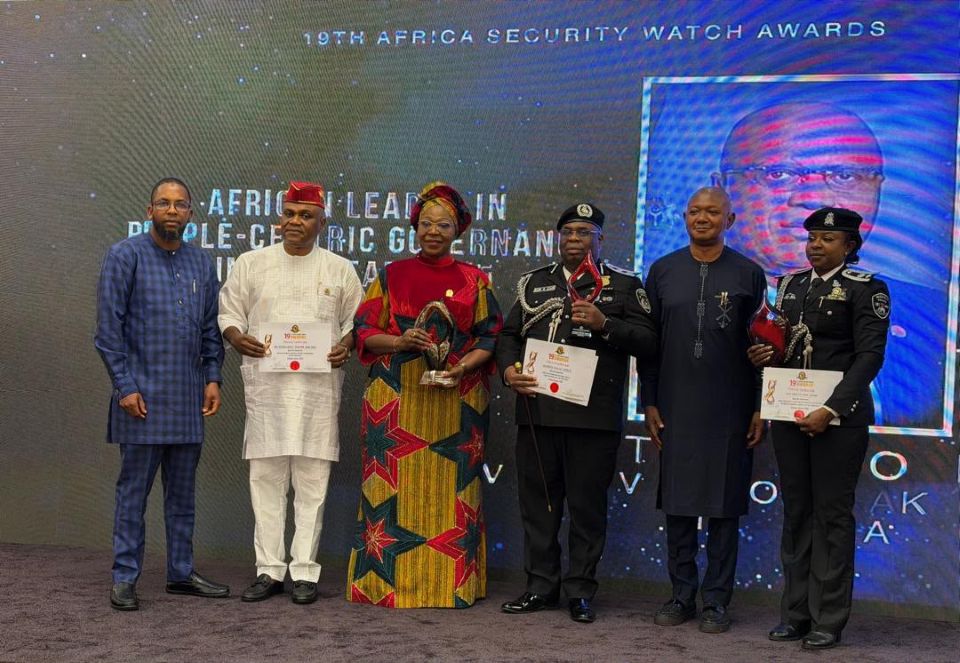
*Delegates at the security conference in Banjul, The Gambia
A difficult return journey from Banjul to Lagos exposed the transport barriers undermining West Africa’s integration, even as leaders renewed calls for regional cooperation, writes ANIEKAN UMANAH
A gruelling, multi-stop return journey from Banjul to Lagos has brought into sharp focus one of Africa’s most persistent economic and integration challenges: fragmented regional air connectivity.
Despite the close geographical proximity of many West African capitals, travel between them remains unnecessarily difficult, expensive and time-consuming.
While the outbound journey from Uyo to Banjul took about three hours and 20 minutes, the return trip exposed significant gaps in the region’s aviation and transport systems.
The journey began at the newly completed smart terminal of Victor Attah International Airport in Uyo. However, with no direct flight available from Banjul to Lagos, members of the delegation had to travel through Dakar, Senegal, and Abidjan, Côte d’Ivoire, before arriving in Lagos.
Extended ground delays for refuelling, passenger processing and aircraft handling in Dakar and Abidjan turned what should have been a relatively short regional journey into an exhausting ordeal. The experience also highlighted the limited availability of efficient intra-African flight connections and the continued dependence on complex transit routes.
The contrast reflects a major contradiction confronting the continent. African leaders frequently promote the African Continental Free Trade Area, regional integration and the free movement of people, yet travelling between neighbouring countries remains cumbersome.
A continent cannot fully realise its trade, cooperation and economic potential when poor transport connectivity and inefficient logistics restrict the movement of people, goods and services.
The expansion of regional airlines could help address this challenge. Ibom Air, for instance, is exploring opportunities to extend its international operations beyond Accra to other West African destinations, including Banjul. Such expansion could help translate regional integration from a political aspiration into a practical reality for businesses and citizens.
Continental recognition for Akwa Ibom’s governance model
The travel difficulties contrasted sharply with the purpose of the visit: the 19th Security Watch Africa Conference and Awards, held at the Sir Dawda Kairaba Jawara International Conference Centre in Banjul, The Gambia, on Wednesday, 22 July 2026.
The gathering brought together government officials, senior security personnel, policymakers, development partners and security experts to discuss democratic governance, peace, public safety and sustainable development across Africa.
At the event, the Governor of Akwa Ibom State, Pastor Umo Eno, received the African Leader in People-Centric Governance Award in recognition of his administration’s efforts in public service delivery, infrastructure development, social welfare and public safety.

The governor was represented by the Deputy Governor, Senator Akon Eyakenyi, who delivered his address and received the award on his behalf.
In the address, Governor Eno commended President Bola Ahmed Tinubu for efforts to strengthen Nigeria’s security architecture through improved inter-agency collaboration. He also highlighted the importance of peace and stability to development across West Africa.
The governor noted that transnational security threats, including insurgency, organised crime and economic offences, could not be effectively addressed by individual countries acting alone.
He called for stronger regional cooperation, improved intelligence sharing and deeper partnerships among governments, security agencies and regional institutions.
Measurable progress under ARISE Agenda
The conference also provided an opportunity to highlight developments recorded under the Akwa Ibom State Government’s ARISE Agenda.
According to presentations at the summit, the assessment that informed the award considered initiatives and projects across infrastructure, agriculture, healthcare, social welfare and economic development.
Key areas highlighted included:
Infrastructure: More than 1,346 kilometres of roads and bridges have been completed or are under construction.
Agriculture and investment: The Ibom Model Farm, the Tree Crop Revolution, the ARISE Palm Resort, the ARISE Shopping City and ongoing efforts towards the development of the Ibom Deep Seaport.
Healthcare and social welfare: The 350-bed Ibom International Hospital, the enrolment of nearly 300,000 vulnerable residents in the State Health Insurance Scheme, and the delivery of more than 465 solar-powered Compassionate Homes to vulnerable citizens.
The presentations underscored the growing emphasis on measurable development outcomes and people-focused governance as key indicators of effective leadership.
Broader recognition for African leaders, security institutions
The summit also recognised leaders and institutions contributing to peace, democratic governance and public safety across Africa.
The President of The Gambia, Adama Barrow, was honoured for his contributions to democratic governance and peace. The award was received on his behalf by the Minister of Interior, Abdoulie Sanyang.
Several security institutions were also recognised, including the Nigerian Army, the Gambia Police Force, the South African National Defence Force, the Gambia Immigration Department and the Nigeria Police Force.
The Akwa Ibom State Police Command, the Commissioner of Police and the Governor’s Chief Security Officer also received special recognition for their contributions to maintaining public safety and law and order in the state.
The imperative of genuine regional integration
Beyond the conference, Banjul offered a broader lesson on the economic value of peace, stability and hospitality.
The Gambia, Africa’s smallest mainland country, has continued to leverage its relative stability, tourism potential, agriculture and service sector to support economic development.
With a land area of about 11,300 square kilometres and a population of roughly 2.8 million, the country demonstrates how peace and effective governance can strengthen tourism, investment and international engagement.

However, the difficult journey from Banjul to Lagos reinforced a central lesson: West Africa’s enormous potential cannot be fully realised without stronger physical and economic connections.
The region possesses many of the ingredients needed for shared prosperity, including abundant natural resources, a youthful population, expanding markets and growing political commitment to cooperation.
Yet these advantages must be supported by efficient transport systems, improved aviation links and practical policies that make cross-border movement easier.
Infrastructure, open skies and reliable regional transport networks are not merely development projects. They are essential foundations for trade, security cooperation, tourism, investment and continental unity.
The conversations in Banjul highlighted Africa’s commitment to peace, people-centred governance and regional collaboration. The journey home, however, revealed how much work remains to connect those ambitions to everyday realities.
For West Africa, genuine integration will not be measured only by agreements signed at conferences. It will also be reflected in how easily people can travel, how efficiently goods can move and how effectively neighbouring countries can connect their economies and communities.
Aniekan Umanah is the Akwa Ibom State Commissioner for Information, a journalist, media practitioner and public affairs analyst with interests in governance, development, security, infrastructure and regional integration.