Tinubu cuts 2026 budget By ₦3.15tn, retains borrowing plan
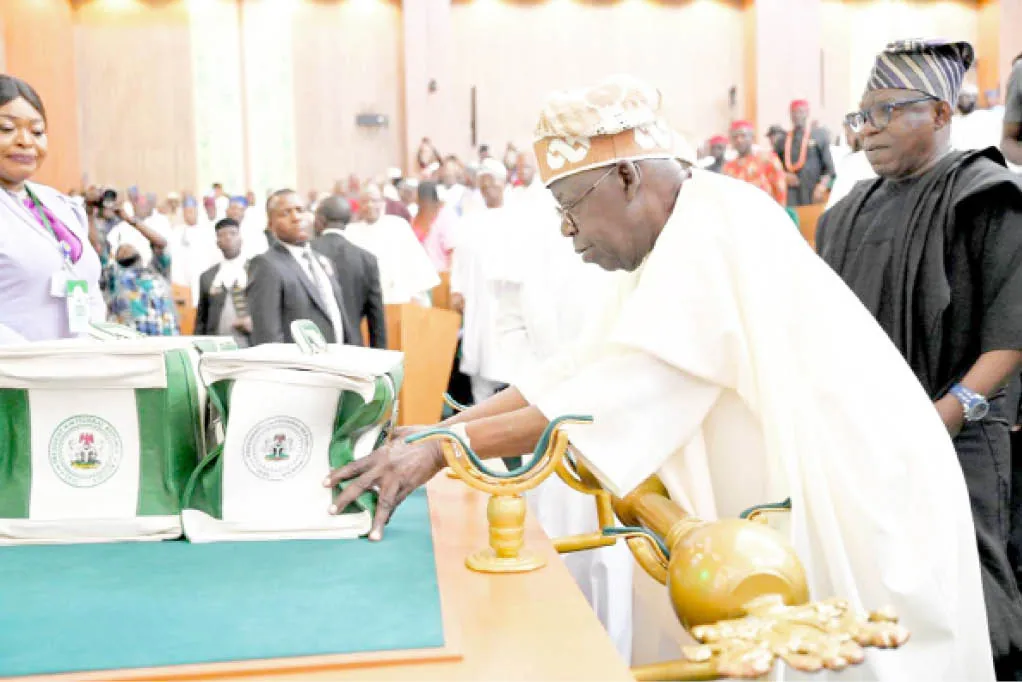
President Bola Tinubu has asked the National Assembly to repeal and re-enact the 2026 Appropriation Act, proposing to reduce total expenditure from ₦68.323tn to ₦65.176tn while retaining the government’s borrowing target of ₦29.218tn.
The proposed reduction of ₦3.147tn is intended to align the budget with available resources, existing financial obligations and outstanding government commitments.
*Bola Tinubu
Nkereuwem Effiong
President Bola Tinubu has asked the National Assembly to repeal and re-enact the 2026 Appropriation Act, proposing to reduce total expenditure from ₦68.323tn to ₦65.176tn while retaining the government’s borrowing target of ₦29.218tn.
The proposed reduction of ₦3.147tn is intended to align the budget with available resources, existing financial obligations and outstanding government commitments.
Tinubu’s request, contained in a letter dated November 20, 2026, was read during Tuesday’s plenary sessions of the Senate and House of Representatives.
The President said the adjustment would address funding gaps identified during budget implementation, prioritise existing commitments and improve the execution of capital projects.
Under the revised proposal, projected Federal Government revenue, including earnings from government-owned enterprises, stands at ₦33.720tn, while capital expenditure is put at ₦26.232tn.
The fiscal deficit remains unchanged at ₦31.457tn, representing 5.64 per cent of Gross Domestic Product.
The borrowing plan also remains unchanged at ₦29.218tn, comprising ₦18.428tn in domestic borrowing and ₦10.790tn in foreign borrowing.
Tinubu urged lawmakers to expedite consideration and passage of the proposed legislation to facilitate the implementation of the revised budget and settlement of outstanding obligations.
The President initially presented a ₦58.47tn budget for 2026 in December 2025 but requested an additional ₦9.81tn on March 31, 2026, raising the total to ₦68.323tn. He signed the Appropriation Act in April.
Reacting to the proposed reduction, economist and public affairs analyst, Dr Marcel Okeke, questioned why the government waited until the closing weeks of the financial year to review its expenditure plans.
He argued that governments should adequately assess projected revenue, financial obligations and expenditure requirements before presenting annual budgets.
Another economist, Professor Ndubisi Nwokoma, described the simultaneous implementation of multiple budgets as fiscal rascality, accusing the Tinubu administration of lacking discipline in public financial management.
He called for a predictable budget cycle, transparent expenditure reporting and an end to the practice of implementing several budgets simultaneously.
Similarly, Dr Muhammad-Bashir Yusuf, a lecturer at Al-Hikmah University, Ilorin, said the budget reduction might indicate fiscal restraint but would do little to address Nigeria’s dependence on borrowing.
He noted that projected revenue of ₦33.72tn would cover only about 51.6 per cent of the revised expenditure, leaving a substantial financing gap.
Yusuf warned that retaining the borrowing target despite reducing expenditure could worsen the country’s debt burden and limit funds available for development.
He urged the government to ensure that borrowed funds were invested in productive infrastructure and projects capable of generating economic growth and revenue.
He also called for transparency over the areas affected by the proposed cuts, warning that reductions in programmes directly benefiting ordinary Nigerians could undermine public welfare.
The economist said reducing the borrowing target alongside the budget would have demonstrated a stronger commitment to fiscal discipline.