Nwoko challenges Senate over selective justice in Nigeria
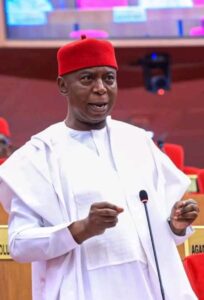
Senator Ned Nwoko has challenged the National Assembly to adopt a consistent approach to investigating deaths linked to security operations, warning against what he describes as selective outrage based on geographical location.
The Delta North lawmaker made the call during a Senate debate on the deaths of 37 suspected illegal miners in Niger State, drawing parallels with incidents involving young people in oil-producing communities across the South-South.
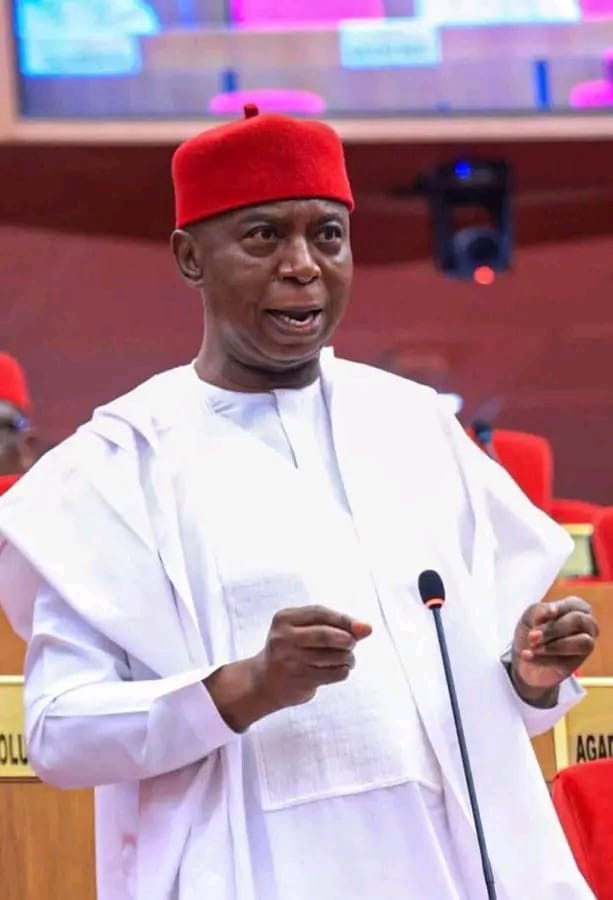
*Senator Ned Nwoko
Etinum Ogunde
Senator Ned Nwoko has challenged the National Assembly to adopt a consistent approach to investigating deaths linked to security operations, warning against what he describes as selective outrage based on geographical location.
The Delta North lawmaker made the call during a Senate debate on the deaths of 37 suspected illegal miners in Niger State, drawing parallels with incidents involving young people in oil-producing communities across the South-South.
Nwoko, who seconded the motion on the Niger State incident, described the deaths as a national tragedy, arguing that allegations of criminal activity should not diminish the value of human life or deny anyone the right to justice.
He questioned why deaths in some parts of the country attract widespread legislative attention while similar incidents involving young Nigerians in other regions receive comparatively less scrutiny.
“Life is life, regardless of the circumstances. We should be consistent in how we respond to such incidents,” he maintained.
The senator cited reported deaths involving young people during military and other security operations targeting illegal activities, including oil bunkering, in oil-producing communities.
He argued that the National Assembly must apply the same standards of investigation, justice and accountability, irrespective of where such incidents occur.
Nwoko stressed that his position should not be interpreted as defending illegal mining or oil bunkering but as emphasising the distinction between enforcing the law and respecting the fundamental rights of citizens.
The Senate debate also featured calls for stronger measures against illegal mining, with lawmakers insisting that criminal activities must not be allowed to flourish.
Senate President Godswill Akpabio, however, stressed that the deceased miners had not been convicted of any offence and were therefore entitled to the presumption of innocence.
The Senate subsequently called for the implementation of recommendations arising from an investigation into the incident, including appropriate sanctions and institutional reforms.
The question of equal justice
Nwoko’s intervention has brought renewed attention to longstanding concerns about the treatment of residents of oil-producing communities during security operations targeting illegal activities.
His argument challenges lawmakers to demonstrate the same urgency in demanding investigations and accountability whenever civilians die in controversial circumstances involving security personnel.
At the heart of his position is the principle that allegations of criminal conduct do not strip anyone of the right to life, due process and lawful treatment.
For communities in the South-South, the comparison touches on concerns about young people who reportedly lose their lives during military operations against oil theft and other illegal activities.
The senator’s intervention also raises a broader question about the responsibility of national institutions to ensure that justice is not influenced by geography, ethnicity or political considerations.
Anioma State and structural imbalance
Nwoko’s argument for equal treatment also resonates with another major constitutional issue he has pursued in the Senate: the proposed creation of Anioma State.
The lawmaker has sponsored a constitutional amendment seeking to carve Anioma State out of the present Delta State and make it part of the South-East geopolitical zone.
His campaign is anchored on what he considers an imbalance in Nigeria’s federal structure, particularly the South-East’s representation in the federation.
The geopolitical zone currently has five states, compared with six in the South-South, North-Central, North-East and North-West, and seven in the South-West.
Nwoko argues that the disparity has implications for political representation, federal appointments, resource allocation and the region’s influence in national affairs.
The proposed Anioma State would become the South-East’s sixth state, potentially addressing what its proponents describe as a longstanding structural disadvantage.
The initiative, contained in Senate Bill 481, has attracted legislative attention, with reports in 2025 indicating that several senators had endorsed the proposal following Nwoko’s consultations and lobbying efforts.
Beyond the legislative process, the proposal has generated debate about Anioma’s historical, cultural and political relationship with the wider Igbo nation.
However, the creation of a new state remains subject to the constitutional requirements and legislative procedures prescribed for boundary and state restructuring.
2027 and the politics of representation
With the 2027 general election approaching, Nwoko’s legislative activities are increasingly becoming part of discussions about political representation, accountability and the future of Delta North.
His supporters regard his intervention on the Niger State deaths and his campaign for Anioma State as evidence of a lawmaker willing to address issues beyond the immediate interests of his constituency.
However, his activities also attract political interpretations as parties and political actors begin positioning themselves ahead of the next general election.
Ultimately, the significance of Nwoko’s latest intervention lies in the question he has placed before the National Assembly: should the demand for justice depend on where a Nigerian loses his or her life?
Whether in a mining community in Niger State or an oil-producing settlement in Delta, Bayelsa or Rivers, the circumstances surrounding a death may differ, but the demand for credible investigation, justice and accountability should remain the same.
As Nwoko’s argument suggests, national unity cannot thrive on selective empathy, while public confidence in the justice system cannot be sustained if accountability appears to depend on geography.