Atiku suffers court setback, demands INEC AI audit
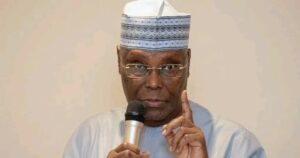
Former Vice-President Atiku Abubakar has suffered a legal setback in his bid to stop President Bola Tinubu from contesting the 2027 presidential election, as the Federal High Court in Abuja rejected his application to introduce fresh evidence in the case.
The ruling came as Atiku separately demanded an independent audit of the artificial intelligence (AI) system the Independent National Electoral Commission (INEC) plans to deploy in processing election results in 2027.
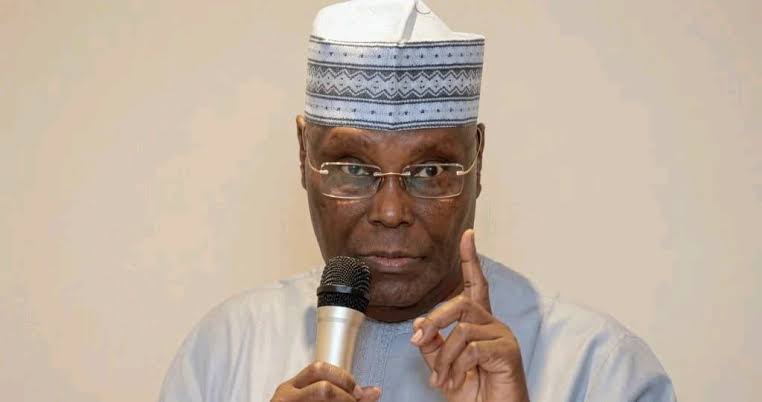
*Atiku Abubakar
Nkereuwem Effiong
Former Vice-President Atiku Abubakar has suffered a legal setback in his bid to stop President Bola Tinubu from contesting the 2027 presidential election, as the Federal High Court in Abuja rejected his application to introduce fresh evidence in the case.
The ruling came as Atiku separately demanded an independent audit of the artificial intelligence (AI) system the Independent National Electoral Commission (INEC) plans to deploy in processing election results in 2027.
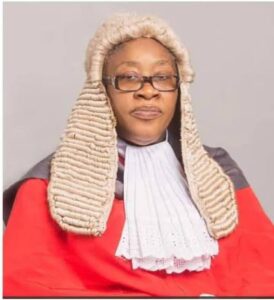
Justice Inyang Ekwo, on Friday, dismissed an application by Atiku and the African Democratic Congress (ADC) to amend their suit challenging Tinubu’s eligibility over an alleged forgery of his National Youth Service Corps (NYSC) discharge certificate.
The judge held that the proposed amendments sought to introduce fresh facts and evidence outside the 14-day constitutional period prescribed for pre-election matters under Section 285(9) of the 1999 Constitution, as amended.
He agreed with arguments by Tinubu, the All Progressives Congress (APC) and INEC that allowing the amendments would fundamentally alter the original case and undermine the constitutional deadline.
Justice Ekwo described pre-election disputes as matters governed by strict procedural requirements, insisting that parties must present all relevant facts and documents when instituting their cases.
He warned that allowing litigants to introduce fresh evidence after the statutory deadline would amount to circumventing the Constitution and cause injustice to the defendants.
The judge consequently dismissed the application, ruling that he found no merit in the request to introduce additional evidence.
However, the court fixed December 2 for the hearing of the substantive suit following an agreement among counsel to the parties.
Atiku and the ADC instituted the case against Tinubu, the APC and INEC, seeking an order compelling the electoral commission to remove the President’s name and that of the ruling party from the list of candidates and political parties for the 2027 presidential election.
They alleged that the APC submitted a forged NYSC discharge certificate belonging to Tinubu to INEC, claiming that the document bore the name ‘Tinubu Bola Adekunle’ rather than Bola Ahmed Tinubu.
The plaintiffs also sought to amend their originating summons to correct errors in their court documents, provide clearer copies of exhibits, supply additional particulars of the alleged fraud and include a written deposition by Atiku.
Tinubu and the APC opposed the application, arguing that the proposed amendments would introduce a new case rather than merely correct errors. They also denied submitting any forged certificate to INEC.
INEC equally challenged the competence of the substantive suit, arguing that it was statute-barred and that the plaintiffs lacked the legal standing to institute the action.
Atiku demands independent audit of INEC’s AI system
Separately, Atiku has called on INEC to subject its proposed AI-powered election results processing system to an independent technical audit before the 2027 general elections.
In a statement issued on Thursday by Phrank Shaibu, Director of Strategic Communication of the ADC Presidential Campaign Council, Atiku said Nigerians must be assured that automated technology would not arbitrarily delay, reject or interfere with valid polling-unit results.
The former Vice-President said he had written to INEC Chairman, Joash Amupitan, demanding transparency over the technology, independent scrutiny and clear guidelines for human supervision.
His concerns followed INEC’s announcement that it planned to integrate AI and intelligent document processing into the process linking its Data Verification and Authentication System (DIVAS) with the INEC Result Viewing Portal (IReV).
Atiku urged the commission to disclose the system’s source code, training data, decision logs, operational procedures and the identities of its developers and third-party technology providers.
He also called for independent cybersecurity experts, political parties’ technology representatives and civil society organisations to be granted access to the system for a comprehensive audit.
According to him, the commission must explain the criteria its AI system will use to flag discrepancies in polling-unit result sheets and establish transparent procedures for reviewing rejected or delayed uploads.
He warned that poor image quality, handwriting differences and damaged result sheets could trigger automated errors capable of affecting the electronic processing of election results.
Atiku further insisted that INEC must clarify the legal status of Form EC8A, the physical polling-unit result sheet, particularly where an AI assessment conflicts with the document completed and signed at the polling unit.
He maintained that artificial intelligence should serve only as an administrative tool under human supervision and must not be allowed to independently alter, delete or permanently block election results.
Atiku also urged the National Assembly to summon INEC’s leadership and its Information and Communication Technology Directorate to explain the system’s design, safeguards and independent audit arrangements.
He called for real-time monitoring access for political parties to enable them to identify unusual patterns of delayed uploads, rejected results or other irregularities during the elections.
The former Vice-President warned that Nigerians’ confidence in the 2027 elections would depend partly on INEC’s willingness to make its digital election infrastructure transparent and accountable.